Originally developed for prototyping and hobbyist use, filament 3D printing has evolved into a practical tool for businesses of all sizes. Companies now use it for rapid prototyping, low-volume production, tooling, and even custom end-use parts.
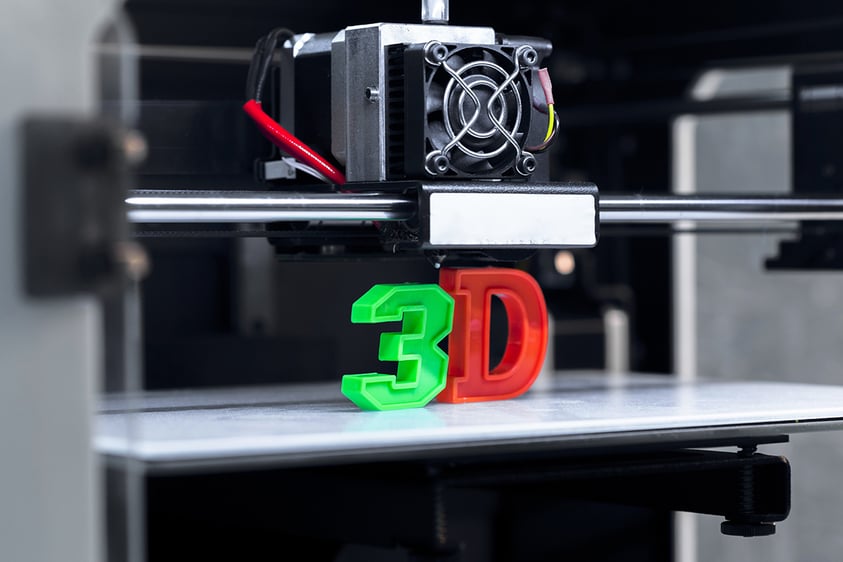
Its popularity comes from its accessibility, affordability, and growing range of materials, making it an important part of modern manufacturing and product development workflows.
Why Filament 3D Printing Matters for Business
As industries continue to seek faster and more cost-effective methods of production, filament 3D printing is becoming a valuable asset. It matters because it provides real-world solutions for common business challenges such as long lead times, high prototyping costs, and the need for rapid product development.
Who It Benefits
Startups and small businesses use it to prototype quickly without relying on external vendors.
Manufacturing companies apply it for jigs, fixtures, and functional parts.
Educational institutions utilize it for training, research, and small-scale manufacturing.
Designers and engineers use it to visualize and test ideas in-house.
Medical and dental professionals are turning to it for custom orthotics and surgical guides.
Key Problems It Solves
Reduces time to market for new products
Lowers prototyping and iteration costs
Enables customization and low-volume production
Reduces reliance on external suppliers
Allows on-demand manufacturing and inventory reduction
Filament 3D printing is helping businesses become more agile, efficient, and adaptable in a competitive landscape.
Recent Updates and Trends
Filament 3D printing continues to advance in capability and adoption. Several updates and trends from the past year are shaping its role in business.
Growing Material Options
In 2024, several companies released advanced composite filaments containing carbon fiber, metal, or ceramic additives. These materials offer increased strength, durability, and thermal resistance, enabling more demanding applications in industries such as aerospace, automotive, and manufacturing.
Sustainability Focus
Filament 3D printing is becoming more eco-friendly. New biodegradable filaments, like PLA blends made from recycled materials, gained popularity in 2024. Businesses are also investing in filament recycling systems to reduce plastic waste.
Integration with Digital Workflows
Many businesses are integrating 3D printers with CAD platforms and cloud-based project management tools. This streamlines prototyping and production workflows, especially for remote and distributed teams.
Localized and On-Demand Manufacturing
During supply chain disruptions in early 2024, companies turned to filament 3D printing to produce spare parts and tooling on-site. This trend continues in 2025, with businesses using printers to decentralize small-batch production.
Regulatory and Policy Considerations
The adoption of filament 3D printing is influenced by various regulations, depending on location and industry.
Intellectual Property (IP) Concerns
Businesses must be cautious about copyrighted designs and patented components. Reproducing parts without permission can lead to legal issues. Many countries, including the United States and those in the European Union, have reinforced IP laws around digital manufacturing files.
Safety Standards
Some industries, such as aerospace and medical devices, require parts to meet specific standards. FDM parts may not always qualify unless produced under certified conditions. Regulatory bodies like the FDA in the U.S. have released guidance for 3D printed medical devices.
Export and Import Controls
Exporting 3D printed products or designs may fall under national trade or defense regulations, especially if the components are for military or sensitive applications.
Environmental Policies
Regions like the EU are encouraging sustainable practices in 3D printing, including proper filament disposal and recycling, through extended producer responsibility (EPR) programs.
Tools and Resources for Filament 3D Printing
A wide range of tools and resources can support businesses in adopting and optimizing filament 3D printing.
Software Tools
Ultimaker Cura: Free slicing software compatible with most FDM printers
Autodesk Fusion 360: CAD tool with integrated 3D printing workflows
PrusaSlicer: Powerful slicer developed by Prusa Research with customizable settings
Tinkercad: Beginner-friendly online design platform by Autodesk
Hardware and Accessories
Nozzle kits: Different diameters for varied detail and speed
Filament dryers: Maintain material quality in humid environments
Enclosures: Improve temperature stability and safety
Build surface sheets: Help improve adhesion and reduce warping
Online Marketplaces and Services
Thingiverse: Free library of printable designs
Printables.com: Design sharing platform with business-use licenses
3D Hubs: Network for on-demand part production
Materialise: Offers software and industrial 3D printing services
Educational and Certification Resources
3D Printing Industry News: www.3dprintingindustry.com
Additive Manufacturing Certification (from MIT, Coursera, or edX)
Manufacturing USA (in the U.S.): Supports advanced manufacturing education and innovation
Frequently Asked Questions
What are the most common filament types used in business?
The most widely used filaments include:
PLA (Polylactic Acid): Easy to print and biodegradable, ideal for prototypes.
ABS (Acrylonitrile Butadiene Styrene): Durable and heat-resistant.
PETG (Polyethylene Terephthalate Glycol): Strong, flexible, and food-safe.
TPU (Thermoplastic Polyurethane): Flexible material used in gaskets and wearable parts.
Nylon and Carbon Fiber Composites: Used for tooling and functional parts due to high strength.
Is filament 3D printing suitable for mass production?
Filament 3D printing is best suited for prototyping, customization, and low-volume production. For large-scale manufacturing, other methods like injection molding or industrial resin printing may be more efficient. However, FDM is increasingly used for bridge manufacturing and pilot runs.
Can filament 3D printing be automated?
Yes. Businesses can automate workflows using print farms, robotic part removal, and API integrations with cloud services. Some systems offer remote monitoring and queuing of print jobs, making it feasible for continuous production.
What are the limitations of filament 3D printing?
Limitations include:
Surface finish: Layer lines are visible and may require post-processing.
Material properties: Lower strength and heat resistance compared to metal or resin printing.
Speed: Slower than traditional manufacturing for large quantities.
Tolerance: Less precise than CNC machining or SLA printing for fine-detail parts.
Final Thoughts
Filament 3D printing has matured into a practical, cost-effective tool that supports innovation, customization, and localized production. From startups to large-scale manufacturers, many businesses are leveraging this technology to cut costs, reduce lead times, and bring ideas to life faster.
Understanding the basics, staying informed about regulations, and using the right tools can help businesses integrate filament 3D printing successfully into their operations. It’s not a one-size-fits-all solution, but when used strategically, it opens new possibilities in how products are designed and made.
For organizations looking to future-proof their development and manufacturing processes, now is a great time to explore how filament 3D printing can fit into their long-term strategy.