Discover Hot Isostatic Pressing: Process Explanation, Materials, and Uses
Hot Isostatic Pressing (HIP) is a manufacturing process that combines high temperature and uniform gas pressure to improve the internal structure of materials.
It is widely used in industries where density, strength, dimensional stability, and material integrity are important.
The hot isostatic pressing process can reduce internal pores and voids in components made from metals, ceramics, and other specialized materials. Understanding HIP materials, applications, equipment, and current developments helps explain why this technology is used for demanding manufacturing processes.
Context
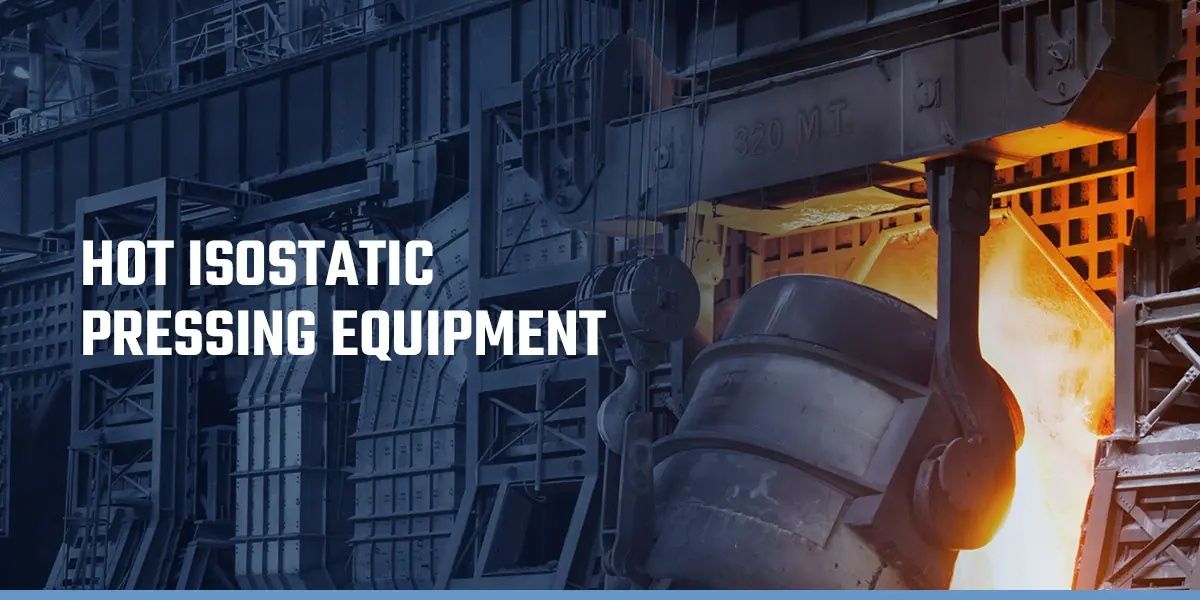
Hot Isostatic Pressing uses high temperature and gas pressure to treat a component inside a sealed pressure vessel. Unlike conventional pressing, pressure is applied uniformly from all directions, which is why the process is described as “isostatic.”
The pressure medium is commonly an inert gas such as argon. A component is placed inside the HIP vessel, heated to a controlled temperature, and exposed to elevated gas pressure. Under these conditions, internal pores can shrink or close through mechanisms such as plastic deformation, creep, and diffusion.
The basic HIP process generally involves:
- Preparing the material or component
- Loading it into the pressure vessel
- Raising temperature and gas pressure
- Holding the material under controlled conditions
- Cooling and depressurizing
- Inspecting the treated component
HIP can be applied to components produced through casting, powder metallurgy, additive manufacturing, and other production methods. It is particularly useful when internal defects cannot easily be removed through conventional machining or surface treatment.
Common HIP materials include nickel-based superalloys, titanium alloys, stainless steels, tool steels, aluminum alloys, cobalt alloys, ceramics, and selected composite materials. The appropriate temperature and pressure depend on the material and its intended application.
| HIP factor | Typical purpose |
|---|---|
| High temperature | Promotes material deformation and diffusion |
| Gas pressure | Compresses internal pores and voids |
| Inert atmosphere | Helps protect the material from unwanted reactions |
| Controlled cooling | Supports desired material properties |
| Inspection | Confirms structural and dimensional results |
The technology has been used for decades, particularly in aerospace, energy, medical, automotive, and industrial manufacturing.
Importance
Hot Isostatic Pressing matters because internal defects can affect the performance and durability of engineered components. A component may appear sound externally while containing microscopic pores or inclusions inside its structure.
HIP can help improve material uniformity and reduce internal porosity. Depending on the material and process conditions, it may also improve fatigue performance, ductility, fracture resistance, and consistency.
The technology affects several groups:
- Materials engineers developing high-performance components
- Manufacturers processing cast or additively manufactured parts
- Quality teams evaluating internal material integrity
- Researchers studying advanced materials
- Industries using components exposed to high mechanical or thermal loads
HIP is also relevant to additive manufacturing. Metal components created through powder-bed fusion can contain pores resulting from incomplete melting, trapped gas, or other process conditions. HIP can reduce certain internal defects and help make the resulting material structure more consistent.
Another important application is powder metallurgy. Metal powder can be consolidated under elevated temperature and pressure to produce dense materials. HIP may also be used for near-net-shape manufacturing, where a component is produced close to its intended geometry before final machining.
The process does not automatically eliminate every type of defect. Cracks, unsuitable material chemistry, contamination, and some geometrical problems may require other approaches. HIP parameters must therefore be selected according to the material, component geometry, and manufacturing history.
Recent Updates
Recent developments in hot isostatic pressing have focused on process control, additive manufacturing, energy efficiency, and advanced material development.
One important trend is the integration of HIP with additive manufacturing workflows. Manufacturers increasingly consider HIP as part of a broader production sequence rather than as an isolated treatment. This can involve printing, heat treatment, HIP, machining, and inspection.
Digital monitoring is another area of development. Modern HIP systems can collect temperature, pressure, and process-cycle information. Better monitoring can help engineers understand process consistency and improve repeatability.
Research is also examining faster heating and cooling approaches. Conventional HIP cycles can require substantial processing time because large pressure vessels and components need controlled thermal treatment. Improved thermal management can potentially shorten cycles while maintaining appropriate material conditions.
Automation and data analysis are becoming increasingly relevant. Process data can be evaluated to identify unusual cycle behavior and support quality documentation.
Another development involves larger components and increasingly complex geometries. As additive manufacturing enables more complicated internal structures, HIP technology is being studied for components that would be difficult to manufacture through conventional methods.
Research organizations and manufacturers are also exploring HIP for advanced ceramics, metal-matrix composites, superalloys, and other specialized materials. The exact benefits depend heavily on material composition and process parameters.
Laws or Policies
Hot Isostatic Pressing involves high temperature, high-pressure equipment, industrial gases, electrical systems, and potentially hazardous materials. Consequently, facilities must follow applicable occupational safety, pressure-equipment, environmental, and industrial regulations.
Requirements vary significantly by country and jurisdiction. In the United States, relevant workplace requirements may involve the Occupational Safety and Health Administration (OSHA), while pressure-vessel design and operation can involve recognized engineering standards such as ASME requirements.
In India, industrial facilities may need to consider applicable rules under workplace safety legislation, pressure-equipment requirements, environmental regulations, and state-specific factory regulations. Requirements can differ according to the equipment, industry, location, and materials being processed.
Important areas for compliance can include:
- Pressure-vessel inspection and maintenance
- High-temperature equipment safety
- Inert-gas handling and ventilation
- Electrical and mechanical safety
- Worker training and operating procedures
- Environmental controls
- Emergency response procedures
- Documentation and equipment records
International standards may also be relevant when components are produced for regulated industries. Aerospace and medical applications, for example, can involve additional quality-management and material-traceability requirements.
Organizations should consult the current regulations and standards applicable to their specific location and equipment rather than relying on a general HIP guideline.
Tools and Resources
Several types of resources can help people understand and evaluate hot isostatic pressing.
Government and standards organizations are useful starting points for regulatory information. OSHA and national workplace-safety authorities provide guidance on industrial hazards and workplace practices. Engineering standards organizations can provide information about pressure vessels, materials, testing, and manufacturing procedures.
Technical literature can also help explain HIP behavior. Research papers, university publications, and materials-engineering textbooks often provide information about densification, diffusion, creep, microstructure, and process parameters.
Useful resources may include:
- Materials property databases
- Engineering handbooks
- Pressure-vessel standards
- Scientific research databases
- Additive manufacturing technical references
- Metallography and microscopy resources
- Process-monitoring documentation
- Materials testing guidelines
Calculators and simulation software can also assist engineers with thermal behavior, pressure relationships, material properties, and process planning. However, calculations should be validated against appropriate engineering standards and experimentally verified conditions when used for real equipment or critical components.
FAQs
What is hot isostatic pressing?
Hot Isostatic Pressing is a materials-processing technique that applies high temperature and uniform gas pressure to reduce internal porosity and improve the structure of suitable materials.
What materials can be processed using HIP?
HIP can be used with many metals, including titanium alloys, nickel-based superalloys, stainless steels, tool steels, aluminum alloys, and cobalt alloys. Certain ceramics and composites can also be processed using specialized conditions.
How does the HIP process reduce porosity?
Heat makes the material more capable of deformation and diffusion, while pressure acts uniformly around the component. Together, these effects can cause suitable internal pores to shrink or close.
Is HIP used with additive manufacturing?
Yes. HIP is commonly studied and used as a post-processing step for certain additively manufactured metal components. It can reduce some internal defects and modify the resulting microstructure.
Does every component require hot isostatic pressing?
No. HIP is selected when its potential material and structural benefits justify its use. The need depends on the material, manufacturing method, component requirements, and applicable quality criteria.
Conclusion
Hot Isostatic Pressing is an important materials-processing technology that combines heat and uniform gas pressure to improve the internal condition of suitable components. Its applications extend across metals, ceramics, powder metallurgy, casting, and additive manufacturing.
Understanding HIP materials, process stages, equipment requirements, and regulatory considerations provides a clearer picture of where the technology fits within modern manufacturing. Continued development in automation, process monitoring, additive manufacturing, and advanced materials is expanding its technical applications.

Related Post...
Pharmaceutical Machinery Guide to Production Equipment, Systems and Processes
Updated: September 21, 2026
Read More
EPS Recycling Machine Guide and Overview: Learn How Foam Waste Is Processed and Recovered
Updated: September 18, 2026
Read More
Industrial Vacuum Pumps: Explore Working Principles, Designs, and Industry Uses
Updated: September 22, 2026
Read More