Debt Relief Guide: Consolidation Options, Credit Management, and Repayment Strategies
A debt consolidation loan is a form of financing that can be used to combine multiple eligible debts into a single loan account. Instead of making separate payments to several creditors, a borrower may use the loan proceeds to pay eligible existing debts and then make payments according to the new loan agreement.
Debt consolidation is commonly considered for multiple credit card balances, personal debts, or other eligible unsecured obligations. The availability and permitted uses depend on the lender and loan terms.
The main purpose of consolidation is to simplify repayment. However, combining debts does not automatically reduce the total amount owed. The financial result depends on the new interest rate, fees, repayment period, and the borrower's ability to maintain the repayment schedule.
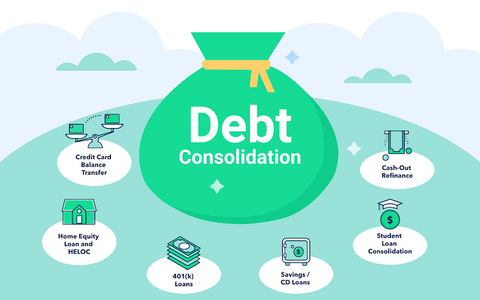
Common Debt Consolidation Structures
| Option | General Purpose | Important Consideration |
|---|---|---|
| Consolidation Loan | Combines eligible debts into one loan | New APR and term |
| Balance Transfer | Moves eligible credit card balances | Promotional terms and eligibility |
| Debt Management Plan | Structured repayment arrangement | Program terms and creditor participation |
| Home Equity Financing | Uses home equity as collateral | Secured debt and property risk |
| Personal Loan | May be used for eligible debt consolidation | Credit and income requirements |
Not every option is appropriate for every financial situation. Borrowers should review the terms and risks associated with each approach.
Importance
Managing several debts can make household budgeting more complicated. Different accounts may have different interest rates, payment dates, balances, and repayment periods.
Debt consolidation can potentially simplify this structure by replacing multiple eligible balances with one account and one scheduled payment.
It may be relevant to consumers who are managing:
- Multiple credit card balances
- Several unsecured debts
- Different monthly payment dates
- High-interest revolving balances
- Multiple repayment schedules
Factors to Review
Before considering a debt consolidation loan, borrowers commonly evaluate:
- Current debt balances
- Existing interest rates
- New loan APR
- Loan term
- Monthly payment
- Origination fees
- Total repayment amount
- Credit score
- Income
- Existing debt obligations
- Debt-to-income ratio
A lower monthly payment does not necessarily mean a lower total repayment amount. Extending the repayment period can reduce the monthly payment while increasing the amount of interest paid over time.
Credit Requirements
There is no universal credit score requirement for debt consolidation loans. Individual lenders establish their own underwriting criteria.
A lender may consider:
- Credit history
- Credit score
- Income
- Employment information
- Existing debts
- Debt-to-income ratio
- Requested loan amount
- Repayment term
- Payment history
A stronger credit profile may improve eligibility for certain loan terms, but approval and pricing depend on the lender and the complete application.
Interest Rates and APR
Interest rates can significantly influence the repayment structure of a consolidation loan. APR can provide a broader comparison because it may include the interest rate and certain finance charges.
When comparing consolidation options, borrowers should examine the actual payment schedule and disclosures rather than focusing only on the advertised rate.
Recent Updates
The U.S. consumer lending environment continued evolving during 2025 and 2026, with changes in interest-rate conditions, household debt levels, digital lending processes, and credit assessment technologies.
Digital Lending
Many financial institutions now use digital processes for:
- Loan applications
- Identity verification
- Electronic documentation
- Credit assessment
- Application tracking
- Electronic disclosures
- Account management
Digital processes can simplify administration, but consumers should verify the identity of the lender and carefully review loan documentation.
Automated Credit Assessment
Financial institutions increasingly use automated systems to evaluate credit applications. These systems may process information such as credit history, income, debt obligations, and other permitted application data.
The specific factors and models used vary between lenders.
Consumer Debt Trends
Credit card balances, interest rates, household budgets, and repayment obligations remain important considerations for U.S. consumers. Changing economic conditions can affect borrowing rates and the financial attractiveness of different consolidation strategies.
Because lending terms change over time, consumers should compare current APRs, fees, repayment periods, and eligibility requirements rather than relying on older examples.
Laws or Policies
Debt consolidation loans in the United States are subject to federal and state consumer-credit laws. Regulations can address credit disclosures, fair lending, credit reporting, debt collection, privacy, and lending practices.
Important federal laws and regulatory areas include:
- Truth in Lending Act (TILA)
- Equal Credit Opportunity Act (ECOA)
- Fair Credit Reporting Act (FCRA)
- Fair Debt Collection Practices Act (FDCPA)
- Electronic Fund Transfer Act (EFTA)
- State lending and interest-rate regulations
The Consumer Financial Protection Bureau (CFPB) provides consumer information and federal oversight related to many financial products and lending activities.
TILA generally requires applicable creditors to provide standardized information about the terms and costs of consumer credit.
ECOA prohibits discrimination in credit transactions based on protected characteristics established by federal law.
State requirements can add additional rules concerning lending, interest rates, disclosures, licensing, and debt-management activities.
Consumers should also distinguish between a debt consolidation loan and a debt settlement arrangement. They are different financial products and can have different effects on credit, taxes, fees, and repayment obligations.
Tools and Resources
Several resources can help consumers evaluate debt consolidation options and organize repayment information.
Useful tools include:
- Debt consolidation calculators
- Loan payment calculators
- APR comparison tools
- Amortization schedules
- Debt-to-income calculators
- Credit-report resources
- Credit-score monitoring tools
- Debt repayment worksheets
- Monthly budget templates
- CFPB consumer resources
- Federal Trade Commission consumer information
- State financial regulator resources
Debt Consolidation Comparison Checklist
Before accepting a consolidation loan, consumers can compare:
- Current debt balances
- Current APRs
- New loan APR
- Monthly payment
- Loan term
- Origination fees
- Other finance charges
- Total repayment amount
- Prepayment terms
- Late-payment provisions
- Automatic-payment requirements
A complete comparison helps show whether the new arrangement actually changes the repayment structure in a meaningful way.
Frequently Asked Questions
What is a debt consolidation loan?
A debt consolidation loan is financing used to combine multiple eligible debts into a single loan. The borrower then repays the new loan according to its terms.
What credit score is needed for debt consolidation?
There is no universal minimum credit score. Each lender establishes its own eligibility criteria and may consider credit history, income, existing debt, and other financial information.
Can debt consolidation lower monthly payments?
It can in some circumstances, particularly when the new loan has a longer repayment period or different interest rate. However, a lower monthly payment can result in a longer repayment period and potentially more total interest.
Does debt consolidation affect credit scores?
Applying for credit can result in a hard credit inquiry, depending on the lender's application process. Opening a new account and closing or maintaining existing accounts can also affect credit history and utilization. The impact varies by individual circumstances.
Is debt consolidation the same as debt settlement?
No. Debt consolidation generally involves combining debts into a new repayment structure, while debt settlement involves negotiating with creditors regarding repayment of outstanding debts. They have different financial and credit implications.
Conclusion
Debt consolidation loans can provide a structured approach for consumers managing multiple eligible debts by combining them into a single repayment arrangement. Understanding debt consolidation loan rates, APR, credit requirements, eligibility factors, fees, and repayment options is important when evaluating whether consolidation fits a particular financial situation.
During 2025 and 2026, digital lending, automated credit assessment, electronic documentation, and changing consumer-credit conditions have continued influencing the U.S. lending environment. These developments have made digital applications more common while increasing the importance of reviewing data privacy, security, and loan disclosures.
Understanding debt consolidation loans, credit requirements, interest rates, repayment options, and consumer-credit regulations provides a useful foundation for comparing available approaches. Loan terms and legal requirements vary by lender and state, so consumers should review current disclosures and applicable regulations before entering into a credit agreement.

Related Post...
Guide to Mortgage Loans: Interest Rates, Qualification Criteria, and Financing Option
Updated: August 12, 2026
Read More
Guide to Bankruptcy Law: Chapter 7, Chapter 13, and Debt Relief Information
Updated: August 12, 2026
Read More
Guide to Mortgage Loans: Interest Rates, Qualification Criteria, and Financing Options
Updated: August 12, 2026
Read More