Corporate Treasury Technology Guide: Cash Visibility, Bank Connectivity, Liquidity Forecasting, and Financial Controls
Corporate treasury teams manage the movement, availability, and financial use of company funds across bank accounts, business units, currencies, and legal entities. As organizations expand, maintaining an accurate view of cash becomes more challenging. Financial information may be spread across banking portals, accounting systems, spreadsheets, enterprise resource planning platforms, and payment applications.
Without a coordinated technology framework, finance teams may struggle to reconcile balances, identify liquidity gaps, forecast upcoming obligations, or detect unusual transactions. Delayed information can also make it harder to coordinate funding decisions and maintain effective financial controls.
Corporate treasury technology brings these activities into a more connected operating environment. It can consolidate bank information, automate selected processes, improve cash forecasting, monitor financial exposures, and support consistent reporting for management.
The objective is not simply to automate treasury tasks. It is to establish reliable financial visibility, strengthen controls, reduce avoidable manual work, and help decision-makers understand the company's cash position before taking significant financial actions.
What Is Corporate Treasury Technology?
Corporate treasury technology refers to software, data connections, automation tools, and financial control systems used to manage an organization's cash, banking relationships, liquidity, payments, debt, and related financial exposures.
The technology may include a treasury management system (TMS), bank connectivity platforms, cash forecasting applications, payment hubs, reconciliation tools, and reporting dashboards. Some organizations use an integrated treasury platform, while others connect specialized applications to an existing enterprise resource planning system.
Core capabilities commonly include:
Consolidating balances from multiple bank accounts.
Importing bank statements and transaction information.
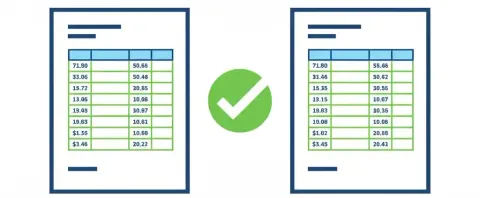
Reconciling bank activity with accounting records.
Forecasting receipts, payments, and future cash balances.
Monitoring borrowing, debt maturities, and financial commitments.
Managing payment approvals and authorization controls.
Tracking currency and interest rate exposures.
Producing treasury reports for finance leadership and auditors.
The appropriate configuration depends on the company's size, geographic reach, banking arrangements, transaction volume, and internal control requirements. A smaller business may need centralized cash reporting and reliable reconciliations, while a multinational organization may require multi-currency forecasting, intercompany funding analysis, and connectivity across numerous banks.
Why Treasury Technology Matters for Businesses
Treasury technology can improve the quality and timeliness of financial information used for daily operations and strategic planning.
Better cash visibility: Consolidated balances help treasury teams understand where funds are held and whether they are available for immediate use.
More consistent forecasting: Automated data collection and standardized forecasting methods can reduce dependence on disconnected spreadsheets.
Improved payment governance: Configurable approvals, role-based access, and transaction monitoring can strengthen oversight of outgoing payments.
Efficient reconciliation: Matching bank transactions with accounting records can help identify missing entries, unexpected payments, and processing differences.
Stronger liquidity planning: Forecasts and scenario analysis can reveal potential funding shortfalls before they affect operational commitments.
More reliable reporting: Consistent data definitions and reporting schedules help management compare cash positions, funding needs, and exposures across business units.
Auditability: Properly configured systems can preserve transaction histories, approvals, reconciliations, and changes to important financial records.
These benefits depend on implementation quality. Technology cannot compensate for inaccurate source data, unclear responsibilities, weak authorization rules, or unrealistic forecasts.
Cash Visibility and Centralized Cash Positioning
Cash visibility is the ability to obtain an accurate and timely view of cash balances across bank accounts, currencies, subsidiaries, and operating units.
A company may maintain separate accounts for payroll, collections, supplier payments, tax obligations, borrowing, and foreign operations. When information is collected manually from each bank, the consolidated position may be delayed or incomplete.
Treasury technology can bring these balances into a central dashboard and classify them according to the organization's reporting requirements.
Important capabilities include:
Account aggregation: Consolidating balances from participating banks and financial institutions.
Currency normalization: Displaying balances in account currency and, where appropriate, a common reporting currency.
Restricted cash identification: Separating pledged, blocked, escrowed, or otherwise restricted balances from readily available funds.
Entity-level reporting: Showing balances by subsidiary, country, business unit, or legal entity.
Intraday visibility: Receiving updated transaction and balance information during the banking day when supported by the institution and connectivity arrangement.
Cash position reconciliation: Comparing reported bank balances with accounting records and identifying unexplained differences.
Cash visibility should distinguish between the amount shown in an account and the amount that can actually be used. Funds may be restricted by lending agreements, regulatory requirements, local transfer rules, or operational limitations.
For international businesses, the dashboard should also identify the time of the latest update. A balance received earlier in the day should not be presented as if it were necessarily current.
Bank Connectivity and Financial Data Integration
Bank connectivity allows treasury systems to exchange information with banks and related financial platforms. It is a critical component of treasury automation because the quality of consolidated cash reporting depends on the reliability of the underlying data connections.
Common connectivity approaches include:
Host-to-host connections: Direct electronic connections between a corporate system and a bank for supported payment or reporting activities. These may require technical setup, security configuration, and bank-specific testing.
Bank APIs: Application programming interfaces that allow authorized systems to exchange selected data or instructions. Available features, data freshness, and authorization requirements differ by bank and market.
Electronic bank statements: Standardized files containing account balances and transaction records that can be imported into treasury or accounting applications.
SWIFT connectivity: Financial messaging infrastructure used by eligible institutions and corporate participants for supported financial messages. Access arrangements and message capabilities depend on the participant and service configuration.
Banking portals and controlled file uploads: Manual or semi-automated methods that may remain necessary for banks without suitable direct integration.
Common data formats include ISO 20022 message standards and established bank statement formats such as BAI2, where supported. A format's availability does not guarantee that every bank will provide every message type or data field.
A robust connectivity framework should include:
Secure authentication and authorization.
Data validation and duplicate detection.
Monitoring for failed, delayed, or incomplete transfers.
Clear ownership of interface maintenance.
Reconciliation between imported records and source bank information.
Procedures for outages and manual processing.
Periodic testing after bank, system, or format changes.
Companies should assess the total integration effort before selecting a platform. The number of banks, account structures, countries, data formats, and payment channels can materially affect implementation complexity.
Liquidity Forecasting and Cash Flow Planning
Liquidity forecasting estimates how much cash an organization is likely to have available at future dates. It supports payment planning, funding decisions, debt management, and working capital oversight.
Treasury systems may combine bank balances with information from accounts receivable, accounts payable, payroll, tax schedules, debt agreements, purchasing systems, and business forecasts.
Forecasts commonly operate across several time horizons.
Daily forecasts: Support immediate payment planning and short-term cash positioning.
Weekly forecasts: Help treasury teams assess near-term receipts, supplier commitments, and liquidity requirements.
Monthly forecasts: Connect cash planning with operating budgets, capital expenditure, and financing schedules.
Long-term forecasts: Support strategic funding decisions, debt maturity planning, investment programs, and liquidity resilience.
A useful forecast records the expected date and amount of each material cash flow, its source, and the confidence level associated with the estimate.
For example, a confirmed loan repayment date should generally be treated differently from a projected customer receipt based on historical payment patterns. Forecasting systems should preserve these distinctions rather than treating every expected transaction as equally certain.
Key analytical features include:
Forecast-versus-actual comparison: Identifies where actual receipts or payments differ from expectations.
Rolling forecasts: Update future projections as new transactions and business information become available.
Scenario modeling: Tests how changes in collection timing, expenditure, borrowing rates, or currency values affect liquidity.
Minimum cash thresholds: Highlights periods when projected balances may fall below internal liquidity requirements.
Funding gap analysis: Estimates the additional liquidity required when projected outflows exceed available cash and eligible funding.
Forecast accuracy should be reviewed regularly. Repeated errors may indicate poor source data, outdated assumptions, inconsistent business-unit submissions, or insufficient visibility into operational transactions.
Payment Automation and Financial Controls
Payment automation helps organizations prepare, validate, approve, and transmit payments through controlled workflows. Because payment instructions can move substantial funds, automation must be designed around strong security and authorization controls.
Typical capabilities include payment file generation, beneficiary validation, approval routing, payment status tracking, and reconciliation of completed transactions.
Important safeguards include:
Segregation of duties: Separate payment preparation, approval, and release responsibilities where practicable.
Role-based access: Limit system permissions according to each user's responsibilities.
Dual authorization: Require additional approval for defined transactions, beneficiaries, or amounts.
Beneficiary verification: Validate changes to bank details using an independent, approved process.
Transaction limits: Apply approved limits by payment type, currency, entity, or user.
Audit trails: Retain records of payment creation, edits, approvals, transmission, and status changes.
Exception monitoring: Flag unusual amounts, duplicate instructions, unexpected beneficiaries, or transactions outside established rules.
Emergency procedures: Define how payments are handled securely during system or connectivity outages.
Business email compromise and fraudulent beneficiary changes remain important risks in payment operations. A payment system should not rely solely on an email request or a single user's confirmation to validate a change to bank account details.
Controls should be tested periodically, and access should be removed promptly when employees change roles or leave the organization.
Debt, Banking Relationships, and Financial Exposure Monitoring
Corporate treasury technology can also consolidate information about loans, credit facilities, deposits, guarantees, derivatives, and other financial arrangements.
Centralized records help finance teams track contractual obligations and evaluate how financing arrangements affect liquidity.
Useful capabilities include:
Debt maturity tracking: Records repayment dates, interest reset dates, refinancing milestones, and required notices.
Facility utilization: Compares outstanding borrowing with available committed limits, subject to the facility's conditions and borrowing requirements.
Covenant monitoring: Tracks financial ratios and other obligations defined in lending agreements.
Counterparty exposure reporting: Consolidates balances and financial transactions by bank or other counterparty.
Foreign exchange monitoring: Tracks foreign-currency receivables, payables, loans, and other relevant exposures.
Interest rate sensitivity: Estimates how changes in benchmark rates may affect borrowing expense or investment income.
Guarantee and collateral registers: Tracks relevant commitments, expiry dates, collateral requirements, and renewal milestones.
The technology should distinguish between contractual commitments and actual available liquidity. An undrawn facility may not be immediately accessible if conditions precedent, covenant requirements, or other contractual restrictions have not been satisfied.
Treasury teams should periodically reconcile system records against executed agreements, bank confirmations, and accounting information.
Treasury Reporting, Dashboards, and Management Information
Treasury dashboards convert financial data into a structured view of liquidity, funding, and operational performance. Effective reporting focuses on measures that help users make decisions rather than simply displaying large amounts of data.
| Metric | Purpose |
|---|---|
| Consolidated cash balance | Shows recorded cash across included accounts |
| Available liquidity | Estimates cash and eligible funding accessible under defined assumptions |
| Forecast minimum balance | Identifies the lowest projected cash position |
| Forecast variance | Compares projected cash movements with actual results |
| Bank concentration | Measures dependence on individual banks or institutions |
| Facility utilization | Shows borrowing relative to applicable facility limits |
| Debt maturity profile | Highlights upcoming repayment and refinancing dates |
| Payment exception rate | Tracks transactions requiring additional investigation |
| Reconciliation completion | Measures the status of bank-to-ledger matching |
| Interface failure rate | Identifies reliability issues in data connections |
Every dashboard should state its reporting date, update time, currency basis, included accounts, and relevant assumptions. Otherwise, two apparently different cash figures may simply reflect different reporting scopes.
Management reports should identify material changes, emerging risks, threshold breaches, and outstanding actions. Detailed transaction listings can be maintained separately for treasury specialists, finance teams, and auditors.
Cybersecurity, Data Governance, and Operational Resilience
Treasury platforms handle sensitive financial information and may connect directly to banking and payment infrastructure. Security and resilience therefore need to be included from the beginning of system design.
Identity and access management: Apply strong authentication, least-privilege access, and periodic permission reviews.
Data encryption: Protect financial information during transmission and, where supported, while stored.
Interface monitoring: Detect failed data transfers, unexpected changes, missing statements, and abnormal system behavior.
Data governance: Define authoritative sources, ownership, retention periods, reconciliation rules, and procedures for correcting inaccurate records.
Business continuity: Establish backup procedures, recovery objectives, and secure alternative workflows for critical treasury activities.
Vendor risk management: Evaluate the security controls, resilience arrangements, subcontractors, incident notification procedures, and data handling practices of technology providers.
Change management: Test system updates, interface changes, approval workflows, and financial calculations before introducing them into production.
Incident response: Define how to respond to suspected payment fraud, unauthorized access, data exposure, or a prolonged bank connectivity outage.
Automation and artificial intelligence may support anomaly detection, forecasting, or exception classification. However, critical financial decisions should retain appropriate human review, transparent assumptions, and documented approval authority.
Selecting and Implementing Treasury Technology
Selecting a treasury platform requires an understanding of the organization's existing processes, systems, and control environment.
A structured selection process can help reduce integration problems and unnecessary complexity.
1. Document current processes. Map bank accounts, reporting routines, forecasting methods, payment flows, reconciliations, and approval procedures.
2. Define business requirements. Identify essential capabilities, such as consolidated cash visibility, bank connectivity, multi-currency reporting, liquidity forecasting, and payment controls.
3. Assess integration requirements. Review compatibility with the organization's ERP, accounting systems, banking partners, and existing security infrastructure.
4. Evaluate control capabilities. Test role management, segregation of duties, approval rules, audit trails, and exception handling.
5. Review data and reporting. Confirm how the platform handles restricted cash, multiple currencies, legal entities, forecast assumptions, and historical records.
6. Plan implementation in phases. Consider beginning with a defined group of accounts or entities before expanding to additional banks, regions, and processes.
7. Validate outputs. Reconcile balances, test payment workflows, compare forecasts, and verify calculations against trusted source records.
8. Train users and establish ownership. Assign responsibility for data quality, interface monitoring, access management, incident handling, and system maintenance.
9. Measure performance. Track reconciliation timeliness, forecast accuracy, interface reliability, payment exceptions, and manual processing requirements.
The implementation plan should account for data migration, bank testing, employee training, business continuity, and ongoing support. A platform should be assessed on its fit with the organization's needs and control requirements, not solely on the number of features it advertises.
Treasury Technology Considerations for Businesses in India
Businesses operating in India may need to coordinate treasury systems with domestic banking arrangements, cross-border operations, corporate accounting requirements, and applicable regulatory obligations.
Relevant considerations include:
Integration with participating banks and the payment channels they support.
Reconciliation of domestic and foreign-currency accounts.
Approval controls for corporate payments and changes to beneficiary details.
Reporting across subsidiaries, branches, and legal entities.
Handling of cross-border transactions under applicable foreign exchange requirements.
Retention of financial records and supporting documentation.
Appropriate oversight of outsourced technology providers and sensitive financial data.
Where relevant, companies should review applicable Reserve Bank of India directions, foreign exchange regulations, corporate law requirements, and accounting standards. Requirements vary by transaction type, entity classification, sector, and the nature of the payment or financial arrangement.
An organization should not assume that a treasury platform automatically ensures regulatory compliance. Compliance depends on system configuration, transaction controls, user behavior, underlying records, and the rules applicable to the specific activity.
Tools and Resources
Treasury teams can use the following categories of tools to build and maintain a coordinated financial control environment.
Treasury management systems: Consolidate cash positions, financial instruments, debt schedules, forecasts, and treasury workflows.
Bank connectivity platforms: Exchange account information, statements, and payment messages with participating banks.
ERP and accounting systems: Provide general ledger data, receivables, payables, purchasing information, and financial records.
Cash forecasting applications: Support rolling forecasts, scenario analysis, and forecast-versus-actual comparisons.
Payment management platforms: Manage payment preparation, validation, approval, transmission, and exception tracking.
Identity and access management tools: Control user permissions and support access reviews.
Business intelligence platforms: Present treasury indicators, trends, and management reports.
Official regulatory resources: Consult relevant publications from the Reserve Bank of India, Ministry of Corporate Affairs, and other applicable authorities.
Before selecting a tool, evaluate its integration capabilities, security architecture, reporting features, support arrangements, implementation requirements, and suitability for the organization's banking and regulatory environment.
Frequently Asked Questions
1. What is the difference between a treasury management system and an ERP?
An ERP generally supports broad business processes such as accounting, procurement, sales, and financial reporting. A treasury management system focuses more specifically on cash positioning, bank connectivity, liquidity forecasting, financial exposures, and treasury operations. Some functions overlap, and organizations may integrate the two systems.
2. How does bank connectivity improve cash visibility?
Bank connectivity allows account balances and transaction information to flow into a central platform. This can reduce manual data collection and help finance teams consolidate balances across participating banks. The timeliness and completeness of the information depend on the bank, connection method, and reporting arrangement.
3. Can treasury technology improve liquidity forecasting?
Yes. It can combine bank balances, expected receipts, scheduled payments, debt obligations, and business forecasts. Rolling forecasts and scenario analysis help treasury teams evaluate possible future cash positions, although accuracy still depends on the quality of the data and assumptions.
4. What financial controls should a treasury system include?
Important controls include role-based access, segregation of duties, approval workflows, payment limits, beneficiary verification, audit trails, reconciliations, and exception monitoring. The appropriate configuration depends on transaction risk, company structure, and applicable requirements.
5. Is treasury technology suitable for small and medium-sized businesses?
Yes. Smaller organizations may begin with consolidated bank reporting, automated statement imports, controlled payment approvals, and basic cash forecasting. More advanced capabilities can be introduced as transaction volume, banking complexity, and financial exposure increase.
Conclusion
Corporate treasury technology connects cash visibility, bank connectivity, liquidity forecasting, payment processing, and financial controls within a coordinated operating framework. When supported by accurate data and clear accountability, it can help businesses understand available funds, anticipate financial commitments, monitor exposure, and maintain more consistent oversight.
Successful implementation depends on more than software selection. Organizations should establish clear requirements, validate bank connections, strengthen authorization controls, reconcile financial records, and review system performance regularly.
A treasury technology framework that fits the company's size, banking arrangements, and risk profile can support better liquidity decisions and more dependable financial governance as the business grows.

Related Post...