Corporate Accounts Reconciliation Guide: Intercompany Balances, General Ledger Accuracy, Financial Close, and Audit Controls
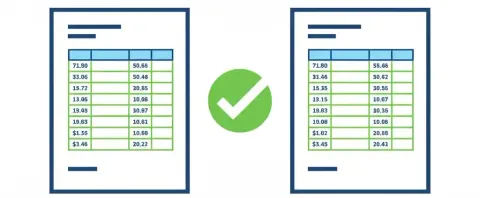
Corporate accounts reconciliation is a fundamental part of financial management. It helps organizations verify that accounting records agree with supporting documents, transactions are recorded in the correct accounts, and differences are investigated before financial statements are finalized.
For companies operating through multiple subsidiaries, business units, branches, or legal entities, reconciliation can become particularly complex. Transactions between related entities may appear as revenue in one company's records and expenses in another. Loans, management fees, shared expenses, inventory transfers, dividends, and cash movements can also create balances that must be matched and reviewed.
A weak reconciliation process can leave unexplained differences in the general ledger, delay the financial close, distort reported balances, and increase audit risk. A well-controlled process helps finance teams identify errors early, maintain consistent records, and produce more reliable financial information.
Four areas deserve particular attention:
Intercompany balances: Ensuring that related entities record corresponding transactions consistently.
General ledger accuracy: Confirming that account balances agree with supporting records and appropriate accounting treatment.
Financial close: Completing reconciliations, adjustments, reviews, and reporting within established deadlines.
Audit controls: Maintaining evidence that balances were checked, differences were investigated, and adjustments were approved.
What Is Corporate Accounts Reconciliation?
Corporate accounts reconciliation is the process of comparing financial records from two or more sources to confirm that balances are consistent and differences are appropriately explained.
Depending on the account, the comparison may involve the general ledger, bank statements, accounts receivable and payable subledgers, intercompany confirmations, payroll reports, fixed asset registers, inventory systems, loan schedules, or external statements.
The purpose is not simply to make two figures match. Finance teams must determine whether the recorded transactions are complete, accurate, correctly classified, and supported by appropriate evidence.
For example, a company may report ₹12 lakh in its accounts payable ledger for a supplier. The supplier's statement may show ₹11.7 lakh. The ₹30,000 difference could result from an invoice not yet recorded, a payment in transit, a credit note, a timing difference, or an actual accounting error. The reconciliation should identify the reason and determine whether an adjustment is necessary.
A complete reconciliation generally includes:
Identifying the account and the period under review.
Collecting the relevant ledger balances and supporting records.
Comparing amounts, transaction dates, references, and currencies.
Investigating unmatched items and unexplained differences.
Recording approved corrections when required.
Obtaining an independent review where appropriate.
Retaining documentation for future reference and audit examination.
Why Corporate Accounts Reconciliation Matters
Reconciliation supports accurate reporting and stronger financial governance. Without a structured process, small errors can remain unresolved across multiple accounting periods or spread across related entities.
Important benefits include:
More reliable financial statements: Reconciled balances help reduce errors in reported assets, liabilities, income, and expenses.
Improved intercompany reporting: Related entities can identify mismatched balances before consolidation.
Faster financial close: Standardized workflows help teams resolve differences earlier and avoid last-minute adjustments.
Better cash visibility: Bank and treasury reconciliations help identify missing transactions, duplicate entries, and unrecorded movements.
Stronger audit readiness: Supporting schedules and approval records provide evidence of review.
Reduced financial control risk: Unusual transactions and unexplained differences can be escalated promptly.
Improved management decisions: Reliable accounting data supports budgeting, forecasting, working capital analysis, and performance reporting.
Reconciliation is especially important when an organization uses multiple accounting platforms, operates across jurisdictions, processes high transaction volumes, or prepares consolidated financial statements.
Types of Corporate Account Reconciliation
Different accounts require different reconciliation methods. Organizations should select procedures based on the nature of the balance, the volume of transactions, the level of risk, and applicable accounting policies.
1. General Ledger Reconciliation
General ledger reconciliation confirms that a ledger account is supported by appropriate records and reflects the correct balance at the reporting date.
Typical accounts include accrued expenses, prepaid expenses, fixed assets, tax balances, provisions, loans, payroll liabilities, and miscellaneous receivables.
The reviewer should examine the opening balance, movements during the period, closing balance, supporting schedules, and significant journal entries. Any difference between the ledger and supporting records should be explained and resolved or formally tracked.
2. Bank Reconciliation
Bank reconciliation compares accounting cash balances with bank statements.
Common differences include outstanding payments, deposits in transit, bank fees, interest, direct debits, foreign exchange movements, and transactions recorded by the bank before the company enters them into its books.
Timing differences should be distinguished from errors. For example, an outstanding cheque may be legitimate at the reporting date, whereas an unrecorded bank fee may require a journal entry.
Unusual transactions, duplicate payments, and unexplained withdrawals should receive prompt attention.
3. Accounts Receivable Reconciliation
Accounts receivable reconciliation compares customer balances in the subledger with the general ledger and, where appropriate, customer statements.
Reviewers should examine invoices, receipts, credit notes, write-offs, unapplied cash, disputed balances, and overdue amounts.
A difference may indicate a missing receipt, duplicate invoice, incorrect customer allocation, or a posting error. Unresolved balances should be assigned to a responsible team member and monitored until closure.
4. Accounts Payable Reconciliation
Accounts payable reconciliation verifies that supplier balances are complete and accurately recorded.
Relevant evidence may include supplier statements, invoices, purchase orders, goods receipt records, credit notes, payment confirmations, and ledger extracts.
Particular attention should be given to unrecorded liabilities, duplicate invoices, payments allocated to the wrong supplier, and discrepancies between received goods and recorded invoices.
5. Intercompany Reconciliation
Intercompany reconciliation compares transactions and balances between related legal entities within the same corporate group.
It may include intercompany receivables and payables, loans, interest, shared expenses, royalties, management fees, inventory transfers, dividends, and cash settlements.
Because each entity maintains its own accounting records, the same transaction must be recorded consistently by both parties. Differences can arise from timing, currency conversion, inconsistent account mapping, missing invoices, or different accounting periods.
Intercompany reconciliation is often one of the most challenging parts of group financial reporting because an unresolved difference in one entity can affect the consolidated financial statements.
Intercompany Balances: Common Challenges and Solutions
Intercompany accounting requires coordination between finance teams, clear transaction references, consistent accounting policies, and defined settlement procedures.
Common causes of intercompany differences
Timing differences: One entity records a transaction in the current month while the other records it in the following month.
Missing entries: A subsidiary records an expense or receivable without a corresponding entry in the related entity's books.
Currency differences: Entities record transactions in different functional currencies or apply inconsistent exchange rates.
Incorrect account mapping: One entity posts an amount to an intercompany payable account while the other uses an unrelated account.
Unmatched invoices: Entities use different invoice numbers, dates, amounts, or transaction references.
Settlement discrepancies: A payment is recorded by one entity but not allocated correctly by the other.
Different accounting treatment: Entities apply inconsistent policies to interest, fees, accruals, or transaction classification.
A practical intercompany reconciliation workflow
Extract intercompany balances from each participating entity.
Match transactions using entity identifiers, document numbers, dates, currencies, and amounts.
Separate exact matches from timing differences and unmatched items.
Assign each unresolved item to an owner at the relevant entities.
Investigate the original transaction and supporting evidence.
Agree on the correct accounting treatment and settlement approach.
Record approved adjustments in the appropriate entity ledgers.
Confirm that both entities have posted the required entries.
Review aged differences and escalate material or recurring issues.
Complete final confirmation before consolidation deadlines.
For example, Entity A records a management fee receivable of ₹8 lakh, but Entity B records a payable of ₹7.5 lakh. The ₹50,000 difference should not be eliminated by simply changing one balance. The teams should establish whether the invoice amount, allocation calculation, tax treatment, or posting entry is incorrect and then document the resolution.
Intercompany reconciliation matrix
| Reconciliation item | Entity A | Entity B | Required action |
|---|---|---|---|
| Intercompany loan | Receivable | Payable | Confirm principal and agreement |
| Management fee | Income | Expense | Match invoice and allocation |
| Interest accrual | Interest receivable | Interest payable | Verify rate and period |
| Inventory transfer | Receivable or sales | Payable or purchases | Match transfer and recognition |
| Cash settlement | Receipt | Payment | Confirm value date and allocation |
The exact accounting entries depend on the transaction structure, applicable accounting framework, and group policies.
General Ledger Accuracy and Journal Entry Controls
A general ledger is only as reliable as the transactions posted to it. Reconciliation should therefore be supported by controls over journal preparation, account classification, supporting evidence, and approval.
Verify opening and closing balances
Confirm that the opening balance agrees with the previous period's closing balance, subject to documented adjustments. Investigate unexpected movements and ensure that closing balances agree with supporting schedules.
Review manual journal entries
Manual entries can introduce errors when they are posted to the wrong account, assigned to the wrong period, duplicated, or recorded without adequate support.
Controls should require clear descriptions, appropriate documentation, authorized approval, and separation between preparation and review for material entries.
Check cut-off and period allocation
Transactions should be recorded in the correct accounting period under the organization's applicable accounting policies. Review accruals, prepaid expenses, revenue recognition, goods received, and unrecorded liabilities around period-end.
Validate account classification
An amount may be correct but still be recorded in the wrong account. For example, a capital expenditure may be incorrectly recorded as an operating expense, or an accrual may be classified as a trade payable without proper justification.
Investigate unusual movements
Compare current balances with prior periods, budgets, forecasts, or expected activity. Large fluctuations, negative balances in unexpected accounts, and repeated round-number adjustments may require additional review.
Analytical checks help identify potential problems, but they do not replace examination of the underlying transactions.
Financial Close: Building a Repeatable Reconciliation Process
The financial close process brings together reconciliations, journal entries, estimates, review procedures, and reporting activities to produce financial statements for a defined period.
A well-organized close calendar assigns responsibilities, deadlines, dependencies, and escalation routes.
Before period-end
Review the status of outstanding reconciliations.
Confirm that account owners and reviewers are assigned.
Resolve old reconciling items where possible.
Confirm intercompany transaction references and settlement schedules.
Review upcoming deadlines and significant unusual transactions.
Ensure that accounting systems and supporting schedules are accessible.
During the close
Complete bank, ledger, subledger, and intercompany reconciliations.
Record accruals, prepayments, depreciation, and other required adjustments.
Investigate unmatched balances and unusual movements.
Review foreign currency balances and applicable remeasurement entries.
Obtain required approvals for material journal entries.
Confirm that intercompany balances are aligned before consolidation.
After the close
Complete review and sign-off for assigned reconciliations.
Track unresolved items with owners, explanations, and target resolution dates.
Review material post-close adjustments.
Preserve supporting documents and approval evidence.
Conduct a close retrospective to identify recurring delays or errors.
Update procedures when root-cause analysis identifies weaknesses.
Measuring financial close performance
Finance teams can monitor several indicators:
Percentage of reconciliations completed by the deadline.
Number and value of unresolved reconciliation differences.
Age of outstanding reconciling items.
Number of late or post-close journal entries.
Number of intercompany mismatches at consolidation.
Frequency of recurring errors.
Time required to complete the close.
Percentage of reconciliations returned for additional evidence or correction.
Metrics should be interpreted together. A team that closes quickly but leaves significant unexplained balances has not necessarily achieved a high-quality close.
Audit Controls and Evidence Management
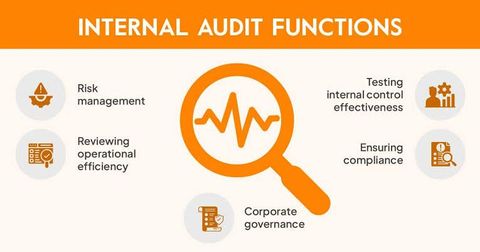
Audit controls help demonstrate that financial records were reviewed, differences were investigated, and adjustments were appropriately authorized.
Controls should be proportionate to the risk and complexity of each account.
Segregation of duties
Where practical, separate the preparation of a reconciliation from its review and approval. This reduces the chance that an individual can create, conceal, and approve an unsupported adjustment without independent scrutiny.
For smaller organizations with limited staffing, compensating controls may include senior management review, independent transaction sampling, or periodic oversight by a qualified external professional.
Supporting documentation
Each reconciliation should retain sufficient evidence to allow another qualified reviewer to understand the balance and reproduce the key checks.
Documentation may include:
General ledger extracts and trial balance reports.
Bank statements and transaction confirmations.
Supplier and customer statements.
Intercompany confirmations and transaction schedules.
Journal entry support and approval records.
Explanations for reconciling items.
Evidence of subsequent settlement where relevant.
Reviewer comments and final sign-off.
Aged-item monitoring
Unresolved differences should be categorized by age, value, account type, and risk. Material items, old balances, and recurring differences should be escalated according to defined thresholds.
Aged items should not be carried forward indefinitely without review. The organization should establish whether each item requires correction, settlement, reclassification, further investigation, or a documented explanation for continued treatment.
Access and change controls
Access to accounting systems should be restricted according to job responsibilities. Changes to account mappings, reconciliation rules, journal approval workflows, and master data should be authorized and logged.
Automated matching can improve efficiency, but exceptions and high-risk transactions still require appropriate review.
Audit trail and retention
Retain records according to applicable statutory requirements, organizational policy, and relevant audit needs. The documentation should show who prepared the reconciliation, who reviewed it, when the review occurred, and how significant differences were resolved.
Automation and Technology for Corporate Reconciliation
Technology can reduce repetitive work and improve visibility, especially when organizations process large volumes of transactions across several entities.
Enterprise resource planning systems: ERP platforms centralize accounting records, chart-of-account structures, journal entries, and reporting across business units.
Account reconciliation software: These tools help assign account owners, manage deadlines, standardize templates, document review, and monitor unresolved items.
Intercompany matching tools: Automated matching can compare transaction amounts, currencies, references, and dates across entities while routing unmatched items to designated owners.
Workflow automation: Rules can support recurring reconciliations, reminders, approvals, and escalation for overdue tasks.
Analytics and anomaly detection: Data analysis can flag unusual balances, duplicate transactions, unexpected account movements, and recurring differences.
Dashboards and reporting: Finance leaders can monitor completion rates, aged items, material exceptions, and close progress across entities.
Automation should be introduced with appropriate controls. Matching rules require testing, access should be restricted, and exceptions must remain visible. A system-generated match is not conclusive evidence that the accounting treatment is correct.
Common Reconciliation Mistakes to Avoid
Forcing balances to match: Adjusting figures without identifying the underlying cause can conceal accounting errors.
Relying on spreadsheets without controls: Spreadsheets may be useful, but uncontrolled versions, formulas, and access can create errors and weaken the audit trail.
Leaving intercompany issues until the final day: Late identification of mismatches can delay consolidation and increase pressure for rushed adjustments.
Failing to assign ownership: Unresolved items may remain open when no individual is accountable for investigation and closure.
Accepting unsupported journal entries: Every material adjustment should have an explanation, relevant evidence, and the required approval.
Ignoring recurring differences: Repeated mismatches often indicate a process, system integration, or policy problem rather than isolated errors.
Confusing timing differences with errors: Legitimate timing differences should be documented and monitored, while actual errors should be corrected through approved procedures.
Overlooking foreign currency effects: Differences may arise from exchange-rate application, remeasurement, or translation. The applicable accounting treatment should be established consistently.
Tools and Resources
Organizations can strengthen reconciliation through a combination of documented policies, standardized templates, technology, and periodic control reviews.
Useful resources include:
Reconciliation policy: Defines account coverage, frequency, materiality thresholds, preparation standards, and escalation requirements.
Close calendar: Lists deadlines, dependencies, account owners, and review responsibilities.
Intercompany matrix: Maps entity relationships, account codes, currencies, transaction categories, and confirmation procedures.
Journal entry policy: Establishes documentation, approval thresholds, and restrictions on manual adjustments.
Aged-item register: Tracks unresolved differences, responsible owners, investigation status, and expected resolution dates.
Audit evidence checklist: Specifies documents and sign-offs required for each account type.
Accounting standards guidance: Helps finance teams determine the appropriate recognition, measurement, presentation, and disclosure treatment.
System access review: Confirms that accounting permissions and approval rights remain appropriate.
Practical implementation checklist
Inventory all balance sheet and material income statement accounts requiring reconciliation.
Assign a preparer and independent reviewer where practical.
Set reconciliation frequency according to risk and transaction volume.
Standardize account schedules, supporting evidence, and sign-off requirements.
Establish intercompany matching and confirmation procedures.
Define materiality thresholds and escalation timelines.
Track aged items and recurring root causes.
Review journal entries, cut-off procedures, and account mappings.
Automate repetitive tasks while preserving exception review and approval.
Monitor close performance and update controls when weaknesses emerge.
Frequently Asked Questions
1. What is the main purpose of corporate accounts reconciliation?
Its main purpose is to confirm that accounting balances are accurate, complete, properly classified, and supported by evidence. It also helps identify errors, unexplained differences, and control weaknesses before financial reporting is finalized.
2. Why do intercompany balances fail to match?
Common causes include missing entries, timing differences, inconsistent transaction references, currency differences, incorrect account mapping, and different accounting treatments. The relevant entities should investigate the original transactions and document the resolution.
3. How often should general ledger accounts be reconciled?
Frequency depends on risk, materiality, transaction volume, reporting deadlines, and organizational policy. High-risk or frequently changing accounts may need monthly or more frequent reconciliation, while some lower-risk accounts may follow a different approved schedule.
4. What evidence should be retained for an account reconciliation?
Evidence typically includes the ledger balance, supporting statements or schedules, explanations for differences, adjustment documentation, approval records, and reviewer sign-off. Requirements should reflect the account's nature and applicable retention rules.
5. Can reconciliation software eliminate accounting errors?
No. Software can improve matching, workflow visibility, and documentation, but it cannot guarantee correct accounting treatment or complete source data. Human review, sound accounting policies, access controls, and exception investigation remain important.
Conclusion
Corporate accounts reconciliation supports reliable financial reporting by connecting general ledger balances to supporting records, identifying intercompany mismatches, and ensuring that adjustments are properly reviewed. It is also a key component of an efficient financial close and a well-documented internal control environment.
Organizations can improve results by assigning clear ownership, standardizing procedures, resolving aged differences, strengthening journal entry controls, and using automation where it adds measurable value. Consistent review and root-cause analysis help prevent recurring problems rather than merely correcting individual discrepancies.
A disciplined reconciliation framework gives finance leaders greater confidence in financial information, supports audit readiness, and provides a stronger foundation for group reporting and business decisions.

Related Post...