Construction Machinery Resources: Explore Equipment Basics, Uses and Insights
Construction machinery plays an important role in modern building, infrastructure, roadwork, mining, and land-development activities.
Understanding construction machinery resources can help readers learn about equipment basics, common uses, operating principles, maintenance considerations, and safety practices.
From excavators and loaders to cranes, compactors, and concrete equipment, each machine is designed for particular tasks. Reliable construction machinery information also helps students, site personnel, planners, and general readers understand how equipment fits into different construction activities.
Context
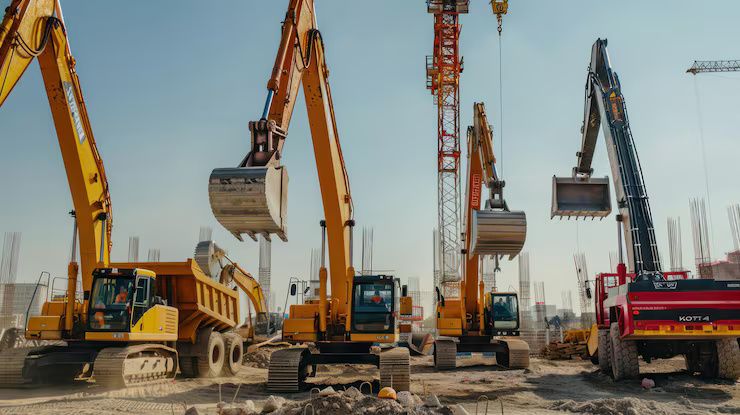
Construction machinery refers to mechanical equipment designed to perform tasks that would otherwise require substantial manual effort. These machines are commonly used for excavation, lifting, grading, hauling, compaction, demolition, drilling, material handling, and concrete-related activities.
The development of construction machinery is closely connected with the growth of large-scale infrastructure. Mechanized equipment has made it possible to complete demanding earthmoving and structural tasks with greater consistency and productivity.
Common categories include:
| Machinery category | Typical equipment | Common application |
|---|---|---|
| Earthmoving | Excavators, bulldozers | Digging and site preparation |
| Material handling | Loaders, forklifts | Moving materials |
| Lifting | Mobile cranes, tower cranes | Raising heavy loads |
| Road construction | Pavers, rollers | Roads and surface preparation |
| Concrete work | Mixers, pumps | Concrete placement |
| Drilling | Rotary drills, piling rigs | Foundations and ground work |
| Demolition | Hydraulic breakers, crushers | Structure removal |
Construction machinery resources generally provide information about machine specifications, operating principles, applications, safety requirements, maintenance practices, and technical terminology.
Importance
Understanding equipment basics matters because selecting and operating machinery requires knowledge of the task, working environment, machine capabilities, and applicable safety requirements.
Different projects create different equipment requirements. An excavator may be appropriate for trenching and digging, while a grader is designed primarily for preparing and shaping surfaces. Similarly, cranes are used for lifting, whereas compactors are intended to improve soil or pavement density.
Construction machinery knowledge affects several groups:
- Construction planners who determine equipment requirements
- Operators who need to understand machine functions
- Engineers who consider equipment capabilities during project planning
- Students learning construction technology
- Site supervisors responsible for safe equipment use
- Maintenance personnel monitoring machinery condition
Machine dimensions, operating weight, lifting capacity, attachment compatibility, ground conditions, visibility, and working radius can all influence how equipment should be used.
Safety is another major reason to understand machinery. Incorrect operation can create risks involving moving components, unstable loads, excavation areas, electrical systems, traffic, and nearby workers.
Recent Updates
Construction machinery continues to develop through improvements in automation, connectivity, energy efficiency, operator assistance, and data collection.
Telematics is increasingly used to collect information such as machine location, operating hours, fuel or energy consumption, fault codes, and maintenance indicators. These systems can help organizations understand equipment utilization and identify maintenance requirements.
Automation and machine-control technologies are also becoming more common. Some equipment can use positioning systems, sensors, cameras, and digital site models to support grading, excavation, and other precision tasks.
Electrification is another important development. Battery-electric compact equipment is being introduced for applications where reduced local emissions and lower noise levels are useful considerations. Larger machinery is also being researched and developed with alternative power systems.
Current developments include:
- Digital machine monitoring
- Automated grade-control systems
- Remote equipment diagnostics
- Battery-electric compact machinery
- Advanced operator-assistance systems
- Improved hydraulic and powertrain efficiency
- Connected construction sites
These developments do not eliminate the need for trained operators. Human supervision, site assessment, maintenance, and compliance remain important parts of construction equipment management.
Laws or Policies
Construction machinery is subject to different laws and technical requirements depending on the country, machine category, workplace, and project type. Regulations commonly address operator safety, equipment inspection, lifting operations, emissions, noise, workplace conditions, and maintenance.
In the United States, the Occupational Safety and Health Administration (OSHA) establishes workplace safety requirements covering areas such as cranes, earthmoving equipment, excavation, and powered machinery.
In the European Union, machinery requirements are established through EU legislation and harmonized technical standards. The Machinery Regulation is part of the European framework governing machinery placed on the EU market.
India also has workplace safety provisions relevant to construction activities. The Building and Other Construction Workers framework addresses occupational safety and working conditions, while other regulations and standards can apply depending on the equipment and activity.
Requirements can include:
- Equipment inspection and maintenance
- Safe operating procedures
- Operator competency requirements
- Load and lifting limitations
- Protective equipment
- Traffic and work-zone controls
- Environmental requirements
- Documentation and recordkeeping
Because regulations can change, readers should consult the relevant government authority or current legal text for the jurisdiction where machinery is being operated.
Tools and Resources
Several types of resources can help people understand construction machinery and its applications. Government agencies are useful for regulatory information, while technical organizations and equipment documentation can provide additional educational material.
Useful resource categories include:
- Government workplace-safety portals
- Construction safety manuals
- Manufacturer technical documentation
- Equipment operator manuals
- Engineering reference guides
- Machinery inspection checklists
- Equipment specification sheets
- Construction planning templates
Equipment specifications should be interpreted carefully. A machine's maximum rated capacity does not necessarily represent its appropriate capacity under every working condition. Load charts, attachments, terrain, operating radius, configuration, and manufacturer instructions can affect actual operating limits.
Simple calculations can also support construction planning. Examples include estimating material volume, calculating equipment cycle times, determining productivity rates, and assessing basic lifting requirements. More complex engineering calculations should be reviewed by qualified professionals.
Digital construction platforms can combine equipment information with project schedules, site models, maintenance records, and operational data. These systems are increasingly connected with broader construction-management workflows.
FAQs
What is construction machinery?
Construction machinery includes mechanical equipment used for activities such as excavation, lifting, grading, hauling, drilling, compaction, demolition, and concrete work.
What are the main types of construction machinery?
Common types include excavators, bulldozers, loaders, graders, cranes, rollers, pavers, concrete mixers, drilling equipment, and demolition machinery.
Why are construction machinery resources useful?
They help readers understand equipment functions, applications, specifications, safety principles, maintenance considerations, and terminology used in construction activities.
What factors affect machinery selection?
Important factors include the type of work, site conditions, material characteristics, required capacity, machine dimensions, attachments, operating environment, and applicable regulations.
Where can I find construction machinery safety information?
Government workplace-safety authorities, official technical standards, equipment manuals, and recognized construction-safety organizations are useful sources of current information.
Conclusion
Construction machinery resources provide practical knowledge about equipment basics, applications, operating principles, safety, maintenance, and technological developments. Understanding these areas helps people interpret how different machines contribute to construction and infrastructure activities.
As machinery becomes increasingly connected, automated, and energy-efficient, digital knowledge is becoming an important part of construction equipment education. However, safe operation still depends on appropriate training, site assessment, equipment inspection, and compliance with applicable requirements.
Reliable information should come from current government guidance, technical documentation, recognized standards, and manufacturer instructions. Comparing information across these sources can help readers develop a clearer understanding of construction machinery and its role in modern projects.

Related Post...

Textile Machinery Discover Guide: Learn About Spinning, Weaving, Knitting, and Finishing Equipment
Updated: September 22, 2026
Read More
Confectionery Equipment Guide: Explore Types, Uses, Processes, and Modern Technology
Updated: September 22, 2026
Read More
Paper Recycling Machines Help: Learn How Collection and Processing Systems Work
Updated: September 22, 2026
Read More