Commercial Waste Management Guide: Business Disposal Systems, Compliance, and Planning
Commercial waste management refers to the organized handling, collection, transportation, processing, recycling, treatment, and disposal of waste generated by businesses and commercial facilities.
Waste can come from offices, restaurants, retail facilities, warehouses, manufacturing sites, healthcare environments, construction activities, institutions, and other commercial operations.
The type of waste produced depends on the business. Common categories include:
General municipal waste
Paper and cardboard
Plastics
Food waste
Organic materials
Metals
Glass
Electronic waste
Construction and demolition materials
Used oils and chemicals
Universal waste
Hazardous waste
A commercial waste-management program should begin by identifying what materials a facility generates, how those materials are handled, which regulations apply, and what records need to be maintained.
Why Commercial Waste Management Matters
Businesses need organized waste processes for operational, environmental, safety, and compliance reasons.
Poorly managed waste can create problems such as:
Improper material storage
Workplace hazards
Contamination
Regulatory violations
Unnecessary landfill disposal
Poor recycling performance
Documentation gaps
Environmental risks
Increased operational complexity
A structured waste program can help an organization establish clear responsibilities from the point where waste is generated through its final destination.
For larger facilities, waste management may become part of broader environmental management, sustainability reporting, procurement planning, and facility operations.
Main Commercial Waste Categories
Different materials require different handling procedures.
| Waste Type | Typical Examples | Management Considerations |
|---|---|---|
| General waste | Packaging, office waste | Routine collection and disposal |
| Recyclables | Paper, cardboard, metals | Sorting and recycling streams |
| Organic waste | Food scraps, landscaping material | Composting or organic processing |
| Electronic waste | Computers, monitors, electronics | Specialized recycling considerations |
| Universal waste | Certain lamps and batteries | Specific handling requirements |
| Hazardous waste | Certain chemicals, solvents | Regulatory classification and controls |
| Construction waste | Concrete, wood, drywall | Material separation and recovery |
| Used oil | Automotive or industrial oils | Controlled collection and management |
| Medical waste | Certain clinical materials | Specialized regulatory requirements |
The same material can sometimes fall into different regulatory categories depending on its composition, contamination, source, or intended disposal method.
Waste Management Hierarchy
A common approach to waste planning is to prioritize options that reduce disposal requirements.
The hierarchy can generally be viewed as:
Reduce → Reuse → Recycle → Recover → Treat → Dispose
The U.S. Environmental Protection Agency's waste-management hierarchy places source reduction and reuse above recycling and energy recovery, with treatment and disposal lower in the hierarchy.
Businesses can use this framework when reviewing purchasing, packaging, inventory, production, and disposal practices.
Commercial Waste Collection Systems
Commercial facilities can organize waste collection around the materials and volumes generated.
Typical components include:
Waste containers
Recycling containers
Compactors
Balers
Organics containers
Secure storage areas
Collection schedules
Transfer arrangements
Material identification labels
Internal transportation procedures
Container selection depends on factors such as waste type, volume, available space, loading requirements, contamination risk, and applicable safety rules.
Facilities should also consider how waste moves internally.
For example:
Work Area → Collection Point → Storage Area → Loading Area → Transport → Processing or Disposal Facility
A clearly defined flow can reduce unnecessary handling and help separate incompatible materials.
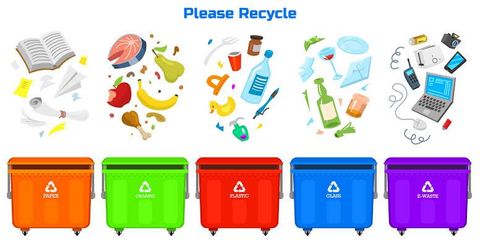
Waste Sorting and Recycling
Source separation is an important part of many commercial recycling programs.
Materials can be separated into categories such as:
Cardboard
Office paper
Metals
Glass
Plastics
Organics
Electronics
Specialized materials
Contamination can reduce the usefulness of recyclable material. Clear labels, employee education, appropriate containers, and consistent collection procedures can help improve material separation.
Organizations should verify the acceptance requirements of their local recycling or processing facilities because accepted materials can vary between jurisdictions and facilities.
Hazardous Waste Management
Some commercial waste may be classified as hazardous under applicable environmental regulations.
In the United States, the EPA's Resource Conservation and Recovery Act framework establishes requirements for hazardous-waste management from generation through treatment, storage, and disposal.
Businesses should determine whether a waste stream is regulated before deciding how it should be stored or handled.
Potential considerations include:
Waste identification
Classification
Container compatibility
Labeling
Accumulation requirements
Employee training
Transportation
Manifest requirements
Treatment
Recordkeeping
Final destination
Hazardous-waste requirements can vary according to waste characteristics, generator category, location, and applicable federal, state, or local rules.
Universal Waste
Universal waste is a regulatory category covering certain commonly generated hazardous wastes that are managed under streamlined requirements.
Examples under the federal U.S. framework include certain:
Batteries
Pesticides
Mercury-containing equipment
Lamps
The EPA maintains specific requirements for universal-waste management under its hazardous-waste regulations.
Businesses should verify whether a particular material qualifies as universal waste rather than assuming that every battery, lamp, or electronic item receives the same regulatory treatment.
Electronic Waste
Electronic waste can include discarded:
Computers
Servers
Monitors
Printers
Networking equipment
Mobile devices
Cables
Electronic components
Electronics can contain valuable materials as well as substances requiring appropriate handling.
A responsible electronics-management program can include:
Inventory → Data Security → Reuse Assessment → Material Separation → Recycling or Appropriate Disposal → Records
Businesses handling electronic equipment should also consider information-security requirements. Data-bearing equipment should be managed through appropriate data-removal or destruction procedures before leaving organizational control.
Food and Organic Waste
Restaurants, grocery operations, hospitality facilities, food manufacturers, and institutional kitchens can generate substantial organic waste.
Common materials include:
Food scraps
Spoiled food
Preparation waste
Yard materials
Compostable materials
Organic waste programs may include source separation, composting, anaerobic digestion, animal-feed pathways where appropriate, or other approved processing methods.
The appropriate approach depends on local infrastructure, contamination requirements, food-safety considerations, and applicable regulations.
Construction and Demolition Waste
Construction and demolition activities can generate large quantities of materials.
Examples include:
Concrete
Asphalt
Wood
Drywall
Metals
Roofing materials
Bricks
Fixtures
Packaging
Separating materials at the project site can make recovery and recycling easier.
Project planning can therefore include:
Material inventories
Separate collection areas
Reusable-material identification
Recycling targets
Contractor responsibilities
Documentation
Final-destination records
Certain construction materials may have specific environmental or hazardous-waste requirements.
Waste Transportation and Tracking
Waste transportation creates another important part of the management chain.
Organizations may need to document:
Material type
Quantity
Collection date
Transport information
Destination
Processing method
Disposal documentation
Hazardous waste can involve additional documentation and tracking requirements.
For example, EPA's hazardous-waste manifest system is designed to track hazardous waste from the generator through transportation to its receiving facility.
Recordkeeping helps organizations demonstrate how regulated materials moved through the waste-management system.
Environmental Compliance
Commercial waste management can involve multiple regulatory authorities.
Depending on the facility and material, businesses may need to consider:
Federal environmental regulations
State environmental requirements
Local waste rules
Hazardous-waste regulations
Recycling requirements
Air and water regulations
Occupational-safety requirements
Transportation rules
Recordkeeping requirements
The EPA regulates several waste categories under federal environmental programs, while states can operate authorized or additional programs with their own requirements.
Therefore, a national waste-management policy may need location-specific procedures.
OSHA and Workplace Safety
Waste handling can also create workplace hazards.
Potential risks include:
Sharp materials
Heavy containers
Chemical exposure
Slips and falls
Equipment movement
Compactor hazards
Vehicle traffic
Ergonomic strain
OSHA's general industry standards include requirements relevant to workplace conditions, hazardous materials, machinery, personal protective equipment, and other operational risks.
Businesses should establish procedures appropriate to the waste streams and equipment present at their facilities.
Waste Management Planning
A commercial waste-management plan can begin with a waste audit.
A basic assessment might include:
1. Identify
Determine which materials the facility generates.
2. Measure
Estimate quantities, frequency, and seasonal changes.
3. Classify
Determine whether materials are general, recyclable, organic, universal, hazardous, electronic, or another category.
4. Map
Document where waste is generated, stored, moved, and collected.
5. Evaluate
Identify contamination, handling risks, unnecessary disposal, and process gaps.
6. Establish Procedures
Create written procedures for collection, storage, labeling, and documentation.
7. Monitor
Review waste volumes, recycling rates, incidents, and compliance records.
Waste Audit Checklist
| Area | Question |
|---|---|
| Waste sources | Where is waste generated? |
| Materials | What types of waste are produced? |
| Volume | How much material is generated? |
| Frequency | How often are collection points serviced? |
| Separation | Are recyclable materials separated? |
| Hazardous materials | Are regulated waste streams correctly identified? |
| Storage | Are waste areas appropriate and secure? |
| Transportation | Is material movement documented where required? |
| Destination | Where does each waste stream go? |
| Records | Are required records maintained? |
| Safety | Are handling hazards addressed? |
| Improvement | Can source reduction or recovery be increased? |
Recent Developments
Commercial waste management is increasingly connected with circular-economy planning, material recovery, data tracking, and sustainability programs.
Organizations are also paying greater attention to the entire lifecycle of materials rather than focusing only on final disposal.
Digital tracking can help organizations monitor:
Waste volumes
Collection activity
Recycling streams
Material destinations
Compliance documentation
Facility-level trends
Another important development is the expansion of extended-producer-responsibility programs and product-specific recycling policies in some jurisdictions.
Requirements vary significantly by location and material, so organizations should monitor changes affecting their specific operations.
Laws and Policies
Commercial waste regulations differ significantly by jurisdiction.
In the United States, important federal frameworks can include:
Resource Conservation and Recovery Act (RCRA)
Hazardous-waste regulations
Universal-waste requirements
Used-oil management rules
Electronic-waste requirements at the state level
State and local recycling regulations
The EPA explains that RCRA provides the federal framework for managing solid and hazardous waste.
Businesses should not rely solely on federal requirements because state and local rules may impose additional obligations.
Tools and Resources
Organizations researching commercial waste management can consult authoritative resources such as:
U.S. Environmental Protection Agency: Information on RCRA, hazardous waste, recycling, sustainable materials management, and waste-management requirements.
EPA RCRA Online: Regulatory information and interpretations concerning the Resource Conservation and Recovery Act.
EPA Waste Management Hierarchy: Guidance for prioritizing source reduction, reuse, recycling, recovery, treatment, and disposal.
OSHA: Workplace-safety information relevant to material handling and waste operations.
State environmental agencies: Local requirements for waste classification, recycling, permits, and reporting.
Local solid-waste authorities: Information about accepted materials and local collection systems.
High-RPC Keyword Themes
Commercial waste management, business waste management, commercial waste disposal, industrial waste management, waste management systems, business recycling programs, commercial recycling services, hazardous waste management, waste disposal compliance, waste management compliance, commercial waste recycling, industrial recycling systems, waste management software, waste tracking systems, environmental compliance management, waste audit management, business waste disposal, commercial recycling management, waste management planning, corporate waste management.
Frequently Asked Questions
What is commercial waste management?
Commercial waste management is the organized handling, collection, transportation, processing, recycling, treatment, and disposal of waste generated by businesses and commercial facilities.
What types of waste do businesses generate?
Businesses can generate general waste, recyclables, organic materials, electronic waste, construction materials, universal waste, hazardous waste, and industry-specific waste streams.
What is a waste audit?
A waste audit is an assessment of the materials a facility generates, including their types, quantities, sources, handling methods, and final destinations. It can help identify opportunities for better separation and resource recovery.
Is commercial waste regulated?
Yes. Waste requirements depend on the type of material, facility, location, quantity, and applicable federal, state, and local rules. Hazardous waste generally has additional regulatory requirements.
Why is waste classification important?
Classification helps determine how material should be stored, transported, processed, recycled, treated, or disposed of. Incorrect classification can create safety and compliance problems.
What is the waste-management hierarchy?
The waste-management hierarchy generally prioritizes reducing waste and reusing materials before recycling, recovery, treatment, and final disposal.
Conclusion
Commercial waste management involves much more than collecting discarded material. It combines waste classification, source separation, storage, transportation, recycling, treatment, disposal, safety, documentation, and regulatory compliance.
A practical business program begins by understanding the facility's waste streams. From there, organizations can establish appropriate collection points, separate materials, identify regulated waste, maintain records, and review opportunities for source reduction and material recovery.
Regulations vary considerably by jurisdiction and waste type. Businesses should therefore evaluate federal, state, and local requirements together rather than relying on a single general waste-management procedure.
As businesses increasingly focus on resource efficiency and environmental reporting, waste-management planning can become part of broader facility, sustainability, and operational strategies.

Related Post...
Commercial Waste Management Guide: Business Disposal Systems, Compliance, and Planning
Updated: September 09, 2026
Read More
Supplier Risk Analytics Guide: Vendor Data, Risk Monitoring, and Business Resilience
Updated: September 22, 2026
Read More
Online MBA Programs: Accreditation, Financial Aid, and MBA Specializations
Updated: August 04, 2026
Read More