Commercial Trade Compliance Management Guide: Import Documentation, Export Controls, Sanctions Screening, and Regulatory Reporting
Commercial trade compliance is the process of ensuring that international business transactions follow the customs, export control, sanctions, licensing, documentation, and reporting rules that apply to the goods, technology, parties, and countries involved.
Businesses engaged in international sourcing, manufacturing, distribution, logistics, and technology transfers must manage requirements across multiple jurisdictions. A shipment may need accurate customs declarations, correct product classification, evidence of origin, appropriate licenses, and screening of customers, intermediaries, banks, and other transaction participants.
Trade compliance extends beyond preparing shipping documents. It involves identifying regulatory obligations before a transaction proceeds, verifying information throughout the shipment lifecycle, maintaining reliable records, and escalating potential violations for review.
Four areas are especially important:
Import documentation: Ensuring that declarations, invoices, origin records, permits, and supporting documents are complete and accurate.
Export controls: Determining whether goods, software, technology, or technical information require authorization before export or transfer.
Sanctions screening: Checking relevant parties, ownership structures, destinations, vessels, and transactions against applicable restrictions.
Regulatory reporting: Submitting required declarations, reports, licenses, and supporting records within the prescribed timeframes.
A structured compliance framework can help businesses reduce shipment delays, identify regulatory exposure, strengthen internal controls, and maintain better visibility across international operations.
What Is Commercial Trade Compliance Management?
Commercial trade compliance management is the coordinated system of policies, procedures, technology, responsibilities, and records used to ensure that cross-border transactions meet applicable legal requirements.
The framework may involve procurement, finance, logistics, customs specialists, legal teams, information technology, sales operations, and external customs representatives. Each function contributes different information, so responsibilities must be clearly defined.
For example, a company importing industrial equipment may need to confirm the product's customs classification, declared value, country of origin, import eligibility, applicable duties, and permit requirements. If the equipment contains controlled technology or is intended for a restricted end user, additional screening may be necessary.
An effective framework typically includes:
Identifying applicable countries, regulations, and authorities.
Classifying products, software, and relevant technology.
Verifying suppliers, customers, intermediaries, and end users.
Preparing accurate import and export documentation.
Obtaining required permits or authorizations before shipment.
Monitoring regulatory changes and transaction exceptions.
Maintaining records that demonstrate compliance.
Investigating potential violations and implementing corrective action.
The exact requirements depend on the goods, transaction structure, destination, parties involved, and applicable national and international rules.
Why Trade Compliance Matters
Trade compliance affects operational continuity, financial planning, market access, and legal risk. Inaccurate documents or overlooked restrictions can result in customs holds, additional duties, shipment delays, penalties, or loss of export privileges in certain circumstances.
A well-designed program helps organizations:
Reduce errors in customs declarations and shipping records.
Identify restricted parties and prohibited destinations before transactions proceed.
Determine whether export licenses or other approvals are required.
Improve consistency across subsidiaries, distributors, and logistics partners.
Maintain evidence for customs audits and regulatory inquiries.
Support accurate duty calculations and country-of-origin determinations.
Improve coordination between procurement, logistics, legal, and finance teams.
Establish escalation procedures for unusual or potentially restricted transactions.
Compliance also supports commercial planning. When regulatory requirements are assessed early, businesses can identify documentation needs, licensing lead times, and destination restrictions before committing to a shipment schedule.
Import Documentation: Essential Records and Verification
Import documentation provides customs authorities with information about the goods, their value, origin, classification, shipment route, and regulatory status.
The required documents vary by jurisdiction, product category, customs procedure, and trade agreement. A standard document checklist is useful, but it should be tailored to each transaction.
Commercial invoice
A commercial invoice generally identifies the seller, buyer, goods, quantities, unit values, total value, currency, and agreed transaction terms. Depending on the transaction, additional information may be needed to support customs valuation or regulatory review.
Descriptions should be specific enough to identify the goods. Vague descriptions can lead to requests for clarification or incorrect classification.
Packing list
A packing list describes the shipment's contents, packaging, quantities, weights, and dimensions. It helps customs authorities and logistics teams compare the physical shipment with the accompanying documents.
Bill of lading or air waybill
Transport documents provide information about the carrier, shipment, route, and relevant parties. The applicable document depends on the mode of transport and contractual arrangements.
Certificate or declaration of origin
Origin documentation may be needed to determine the country of origin or to support preferential tariff treatment under a relevant trade agreement.
The country from which goods are shipped is not necessarily their country of origin. Origin rules may consider where goods were produced or whether sufficient processing occurred in a particular country.
Customs declaration
Import declarations contain information required by the relevant customs authority, including classification, value, origin, quantity, and other prescribed details.
The declaration must be consistent with the underlying commercial and transport records. Businesses should review the applicable filing procedure and ensure that the responsible importer or authorized representative understands their obligations.
Licenses, permits, and product certificates
Certain products may require additional approvals. Examples include regulated chemicals, pharmaceuticals, food products, medical devices, strategic goods, and specified electronic equipment.
A product's eligibility for import should be verified before shipment rather than assumed from the fact that the supplier can dispatch it.
Document verification checklist
Before submitting import documents, confirm that:
Names and addresses of relevant parties are consistent.
Product descriptions match the goods actually shipped.
Quantities, weights, and packaging details agree.
Declared values and currencies are supported by transaction records.
Classification and origin information have an appropriate basis.
Required permits and certificates are valid for the transaction.
Transport documents correspond to the shipment.
Corrections and amendments are documented and approved.
Customs Classification, Valuation, and Country of Origin
Classification, valuation, and origin are three separate customs concepts that can significantly affect a shipment's regulatory treatment.
Customs classification
Goods are classified using the applicable tariff nomenclature, often based on the Harmonized System and additional national tariff subdivisions.
Classification can influence duty rates, licensing obligations, trade remedies, and statistical reporting. Similar-looking products may receive different classifications because of their composition, function, technical characteristics, or intended use.
Businesses should maintain product descriptions, technical specifications, classification rationale, and any relevant customs rulings or expert determinations. A classification assigned to one product should not automatically be applied to a materially different item.
Customs valuation
Customs valuation establishes the value used to calculate duties and certain taxes. The transaction value may be relevant, but adjustments and alternative valuation methods can apply under the governing rules.
Potentially relevant items include assists, royalties, commissions, freight, insurance, and related-party transaction conditions. Their treatment varies according to the applicable valuation framework and facts.
Finance and customs teams should work together to ensure that declared values are supported by invoices, contracts, payment records, and required adjustments.
Country of origin
Origin rules can affect tariff preferences, trade remedies, marking obligations, import restrictions, and reporting requirements.
A product may contain components from several countries. Determining origin may require analysis of manufacturing processes, material sourcing, substantial transformation rules, or product-specific requirements.
Where preferential tariff treatment is claimed, businesses should retain the required origin evidence and confirm that the goods satisfy the relevant agreement's rules.
Export Controls: Classification, Licensing, and End-Use Review
Export controls regulate the movement or transfer of certain goods, software, technology, and technical information. Depending on the applicable rules, controls may cover physical exports, electronic transfers, technical assistance, re-exports, or transfers to another party within the same country.
Export control obligations are not limited to military equipment. Some commercial technologies, advanced electronics, industrial machinery, encryption products, aerospace components, and technical information may also be subject to controls.
Product and technology classification
Businesses should determine whether items fall within a controlled category under the relevant national framework. Classification may depend on technical specifications, performance characteristics, functionality, and intended application.
A product description from a supplier can be useful, but the exporter should verify whether the classification is appropriate for the transaction and jurisdiction.
License determination
After classification, the organization should assess the destination, end user, end use, transaction parties, and applicable restrictions to determine whether authorization is required.
A license may be necessary for certain destinations, controlled products, restricted end users, or specified applications. Other transactions may be prohibited regardless of whether a license is ordinarily available.
End-user and end-use screening
Businesses should examine the identity of the ultimate recipient and the intended application of the goods or technology. Warning signs may include inconsistent business information, unexplained changes in destination, reluctance to disclose the end user, or requests inconsistent with the product's normal use.
A potential red flag should be investigated rather than automatically treated as proof of a violation.
Re-export and onward transfer controls
Some regulatory frameworks impose restrictions on goods or technology originally supplied by another country. A business may need to assess whether foreign-origin items remain subject to export controls when transferred onward.
This is particularly important for multinational manufacturers, distributors, software companies, and businesses using technology sourced from several jurisdictions.
Sanctions Screening: Parties, Ownership, and Destinations
Sanctions can restrict dealings with specified individuals, entities, governments, territories, sectors, goods, or financial activities. The applicable rules may depend on the countries involved, the parties' connections to particular jurisdictions, and the nature of the transaction.
A business should not assume that checking a single list is sufficient for every transaction.
Who may need to be screened?
Depending on the transaction and applicable rules, screening may cover:
Customers and prospective customers.
Suppliers and manufacturers.
Distributors, agents, and intermediaries.
Consignees and ultimate end users.
Relevant beneficial owners and controlling persons.
Banks and other financial institutions involved in payment.
Vessels, carriers, and other transport-related parties.
Destinations and other transaction details.
Ownership and control rules matter because an entity may be subject to restrictions even when its name does not directly appear on a sanctions list. The precise test varies across legal regimes.
When should screening occur?
Screening is generally most useful at multiple stages rather than only once. A program may check parties during onboarding, before order approval, before shipment, when payment details change, and when relevant lists or transaction information are updated.
The screening process should identify potential matches, route them to trained reviewers, and prevent restricted transactions from proceeding while material concerns remain unresolved.
Managing potential matches
A potential name match is not necessarily a confirmed match. Reviewers may compare legal names, aliases, addresses, registration information, dates of birth where relevant, ownership, and other identifiers.
The organization should document the basis for clearing or escalating a match. Where a confirmed restriction applies, the business must follow the relevant legal requirements, which may include stopping the transaction, seeking legal advice, blocking or freezing property where required, or submitting a report to the appropriate authority.
Avoiding common screening weaknesses
Common weaknesses include relying on outdated lists, screening only the immediate customer, ignoring ownership information, failing to re-screen changed transactions, and clearing matches without sufficient evidence.
Screening technology can help identify potential matches, but it does not replace legal analysis or a documented review process.
Regulatory Reporting and Recordkeeping
Regulatory reporting allows authorities to monitor cross-border trade, enforce restrictions, assess customs duties, and gather required trade statistics.
The reporting obligations depend on the country, transaction type, product, customs procedure, and any applicable license or authorization.
Common reporting activities
Depending on the jurisdiction and business activity, organizations may need to submit:
Import and export declarations.
Export license applications and required reports.
Customs valuation or origin documentation.
Records related to preferential tariff claims.
Trade statistics or periodic trade filings.
Reports required under applicable sanctions rules.
Records of controlled transactions or license use.
Notifications or disclosures concerning identified compliance issues.
The exact deadlines, formats, thresholds, and retention periods should be verified against current official requirements.
Building a reliable reporting process
A structured process should identify the report owner, relevant data sources, approval requirements, filing deadline, submission channel, and evidence of acceptance.
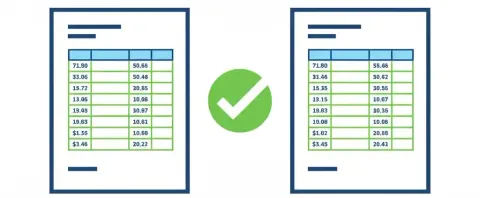
Organizations should reconcile reported information with commercial invoices, shipping records, customs declarations, and internal transaction systems. Amendments should be tracked so that the final record accurately reflects what was submitted and why any correction was necessary.
Record retention
Trade records may include invoices, purchase orders, classification decisions, licenses, screening results, shipping documents, customs declarations, communications, and approval records.
Retention requirements vary across jurisdictions and regulatory regimes. A company should apply the relevant rules and any applicable litigation or investigation hold rather than relying on a single universal retention period.
Trade Compliance Risks and Internal Controls
A trade compliance program should focus on preventing avoidable errors, detecting potential violations, and responding appropriately when issues arise.
Risk assessment
Assess exposure based on factors such as product sensitivity, destination, transaction volume, customer profile, intermediaries, regulatory complexity, and past compliance incidents.
High-risk transactions may require enhanced review, additional documentation, or approval from legal and compliance teams.
Clear ownership and accountability
Define the responsibilities of procurement, logistics, customs personnel, finance, sales, legal, and compliance teams. Employees should know who can approve a classification, authorize shipment, clear a screening alert, or escalate a potential violation.
Segregation of duties
Where practical, separate transaction preparation from approval for higher-risk activities. For example, the employee preparing export documents should not necessarily be the only person deciding whether a potential sanctions match can be cleared.
Training and escalation
Provide role-specific training on document accuracy, export controls, sanctions, restricted goods, and reporting requirements. Establish a confidential route for employees to raise concerns and a clear process for suspending transactions pending review.
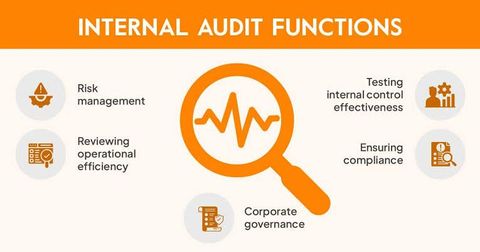
Internal audits
Periodic reviews can test whether classifications are supported, licenses are valid, declarations are accurate, screening records are complete, and reporting deadlines are met.
Findings should be documented, assigned to accountable owners, and monitored until corrective action is completed.
Trade Compliance Technology and Data Management
Technology can improve consistency across high-volume international transactions, but it must be configured around applicable regulatory requirements and reliable data.
Global trade management platforms: Support customs documentation, classification records, license workflows, shipment monitoring, and trade reporting.
Sanctions screening tools: Compare transaction parties and related information against selected sanctions and restricted-party data sources.
Enterprise resource planning systems: Connect purchase orders, invoices, inventory, shipping records, and financial transactions.
Product classification databases: Store product attributes, classification decisions, supporting documents, and review histories.
Document management systems: Preserve licenses, declarations, origin evidence, and approval records in a searchable repository.
Regulatory change monitoring: Helps compliance teams identify changes that may affect products, destinations, licenses, and reporting obligations.
Data analytics: Can flag incomplete declarations, unusual routing, repeated screening alerts, missing approvals, and inconsistencies between invoices and shipment records.
Technology should support—not replace—human judgment. Product classification, sanctions ownership analysis, licensing decisions, and ambiguous regulatory questions may require specialist review.
Practical Trade Compliance Implementation Checklist
Map the countries, goods, technology, parties, and transaction routes involved.
Identify the customs, export control, sanctions, and reporting rules that apply.
Maintain accurate product descriptions and documented classification decisions.
Establish a standard import and export document checklist.
Verify license and permit requirements before shipment.
Screen relevant transaction parties and investigate potential matches.
Assess ownership, end-use, destination, and re-export risks where applicable.
Define approval responsibilities and escalation procedures.
Reconcile customs declarations with commercial and logistics records.
Maintain required documents, screening evidence, and reporting confirmations.
Conduct periodic risk-based audits and employee training.
Track corrective actions and update procedures when regulations change.
Trade Compliance in India and International Markets
Businesses operating in India should verify requirements under the applicable customs framework, Foreign Trade Policy, relevant Directorate General of Foreign Trade (DGFT) procedures, and other rules affecting particular products or transactions. Depending on the goods and activity, additional requirements may apply through sector-specific regulators or other government authorities.
For exports from India, organizations should determine whether an export authorization, restricted-goods approval, or other prescribed documentation is required. For imports, they should verify classification, valuation, origin, customs declarations, applicable duties, and product-specific permissions.
International transactions may also trigger requirements under the laws of other jurisdictions. For example, United States export controls or sanctions rules may apply to certain transactions involving U.S.-origin items, U.S. persons, or other relevant connections. European Union and United Kingdom rules may also be relevant depending on the parties, goods, destinations, and transaction structure.
These regimes are not interchangeable. A transaction permitted under one jurisdiction's rules may still be restricted under another applicable legal framework. Organizations should assess jurisdictional connections carefully and seek qualified advice when the analysis is complex.
Frequently Asked Questions
1. What documents are commonly required for international trade compliance?
Common documents include commercial invoices, packing lists, transport documents, customs declarations, origin evidence, and relevant licenses or permits. Requirements vary according to the product, route, destination, and customs procedure.
2. What is the difference between export controls and sanctions screening?
Export controls regulate the export, transfer, or re-export of certain goods, software, technology, and technical information. Sanctions impose restrictions on specified parties, destinations, sectors, or activities. A transaction may need to satisfy both sets of requirements.
3. How often should businesses screen customers and suppliers?
Screening frequency depends on the applicable rules, transaction risk, and changes in party or transaction information. Many programs screen during onboarding and again at relevant transaction stages, with additional checks when lists, ownership information, destinations, or other risk factors change.
4. What should a business do if a potential sanctions match is identified?
The business should follow its escalation procedure, review relevant identifiers and ownership information, and avoid proceeding with a transaction while a material restriction remains unresolved. Confirmed restrictions may require specific actions or reporting under applicable law. Qualified legal or compliance advice may be necessary.
5. How can trade compliance technology improve accuracy?
Technology can standardize document preparation, maintain classification records, screen transaction parties, track licenses, and flag inconsistencies. However, reliable source data, appropriate configuration, documented decisions, and human review remain necessary.
Conclusion
Commercial trade compliance management brings together import documentation, export controls, sanctions screening, and regulatory reporting within a coordinated risk-management framework. Each element helps organizations understand their obligations before transactions proceed and maintain evidence that required checks were completed.
Businesses can strengthen compliance by maintaining accurate product and party data, documenting classification and licensing decisions, screening transactions at appropriate stages, and monitoring regulatory changes. Clear ownership, consistent procedures, reliable records, and periodic audits help identify weaknesses before they disrupt international operations.
Because trade rules vary by jurisdiction and can change quickly, compliance procedures should be reviewed regularly and supported by current official guidance and qualified specialists.

Related Post...