Commercial Construction Defect Insurance Guide: Structural Claims, Contractor Liability, Policy Exclusions, and Risk Assessment
Commercial construction projects involve multiple parties, including property owners, developers, general contractors, subcontractors, architects, engineers, and material suppliers. Each party has distinct responsibilities, and defects in design, materials, workmanship, or construction methods can create substantial financial and legal exposure.
A construction defect may become apparent during a building inspection, after a tenant occupies the premises, or years after the project reaches completion. Examples include water penetration through exterior walls, foundation settlement, roof failures, defective concrete, inadequate fire protection, and structural movement.
Commercial construction defect insurance is a broad term used to describe insurance arrangements that may respond to certain liabilities or losses arising from construction defects. It is not necessarily a single, standardized policy. Depending on the circumstances, relevant protection may involve commercial general liability insurance, professional liability insurance, builders risk coverage, completed operations coverage, or specialized construction defect policies.
Understanding these distinctions is essential because a policy that covers accidental property damage may not cover the expense of correcting defective workmanship itself. Coverage depends on the policy wording, applicable law, timing of the damage, and facts surrounding the claim.
What Is Commercial Construction Defect Insurance?
Commercial construction defect insurance refers broadly to insurance protection that may apply when construction-related deficiencies lead to covered property damage, third-party claims, professional negligence allegations, or other insured losses.
A construction defect generally involves a failure to meet applicable building requirements, contractual specifications, accepted construction practices, or professional standards. However, a defect does not automatically establish negligence, liability, or insurance coverage.
Common categories include:
Design defects: Errors or omissions in architectural plans, engineering calculations, specifications, or building-system designs.
Workmanship defects: Improper installation, inadequate sealing, incorrect reinforcement placement, or other construction deficiencies.
Material defects: Materials that fail to meet specified performance standards or prove unsuitable for their intended application.
Structural defects: Problems involving foundations, load-bearing walls, columns, beams, slabs, or other structural elements.
Building-envelope defects: Failures involving roofing, windows, exterior walls, waterproofing, insulation, and drainage.
Mechanical and electrical defects: Deficiencies in plumbing, ventilation, electrical installations, fire protection, or related systems.
The financial consequences may include repair expenses, investigation fees, temporary relocation, business interruption, legal defense, and claims from affected tenants or neighboring property owners. Whether any of these losses are insured depends on the applicable coverage.
Why Construction Defect Risk Assessment Matters
Early risk assessment helps commercial property owners and construction businesses identify potential weaknesses before they develop into major disputes.
1. Financial exposure
A relatively small defect can affect several floors, adjoining structures, or an entire building envelope. Repairing concealed damage may require opening walls, removing finishes, replacing materials, and conducting additional engineering inspections.
2. Contractual liability
Construction contracts often allocate responsibilities for design coordination, workmanship, testing, inspections, warranties, and defect correction. Disputes can arise when several parties contribute to the same problem or disagree about responsibility.
3. Occupant safety
Structural movement, electrical deficiencies, fire-protection failures, and severe water intrusion can create safety concerns. Immediate mitigation may be necessary even while the parties investigate insurance coverage or liability.
4. Project financing and property transactions
Unresolved defects can affect property valuations, financing decisions, lease negotiations, due diligence, and planned transfers of ownership.
5. Claims management
Documented inspections, maintenance records, photographs, construction drawings, and incident reports can help establish when a defect appeared, how it developed, and which parties may be responsible.
Common Construction Defect Claims
Commercial construction claims differ according to the affected building component, the type of damage, and the parties involved.
Structural damage claims
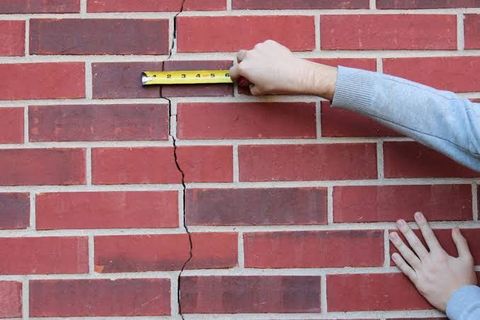
Structural claims may concern foundation settlement, cracking in load-bearing components, inadequate reinforcement, excessive deflection, or failures involving structural connections. A qualified structural engineer may need to determine whether the condition results from design assumptions, soil conditions, construction methods, material quality, later alterations, or inadequate maintenance.
Water intrusion and building-envelope claims
Water penetration can result from defective flashing, failed waterproofing membranes, poorly sealed windows, roof installation deficiencies, or inadequate drainage. Consequences may include damaged interiors, corrosion, mold growth, and deterioration of building materials.
Concrete and foundation claims
Concrete defects can involve cracking, inadequate curing, improper mix specifications, reinforcement problems, or insufficient foundation preparation. The presence of cracks alone does not establish a construction defect; the location, pattern, severity, and progression must be evaluated.
Mechanical, electrical, and plumbing claims
Incorrectly installed piping, inadequate ventilation, electrical deficiencies, or improperly commissioned equipment can lead to leaks, system failures, property damage, and operational disruption.
Fire-protection and life-safety claims
Deficiencies involving fire doors, sprinkler systems, alarms, smoke-control systems, or fire-resistant assemblies may raise serious compliance and occupant-safety concerns. Prompt assessment by appropriately qualified professionals is important.
Defective materials claims
A component may fail because it does not meet contractual specifications, applicable standards, or its intended performance requirements. Establishing the cause may require laboratory testing, supplier records, product documentation, and installation evidence.
Insurance Policies That May Respond to Construction Defects
The correct insurance analysis begins by identifying the type of loss and the policy that may apply.
Commercial general liability insurance
Commercial general liability policies may respond to certain third-party bodily injury or property damage claims arising from construction operations or completed work. Coverage depends on the policy's insuring agreement, exclusions, endorsements, and applicable legal principles.
The cost of correcting defective work alone may be treated differently from resulting damage to other property. Some policies contain specific provisions concerning damage to the insured's work, subcontractor work, or particular construction activities.
Completed operations coverage
Completed operations coverage is commonly associated with liability arising from work after construction or installation has been completed. It may be relevant when a defect in completed work allegedly causes covered property damage or bodily injury.
The policy's definitions of completed work, applicable time periods, and exclusions must be reviewed carefully. A completed operations provision does not automatically cover every defect discovered after project handover.
Professional liability insurance
Architects, engineers, and other design professionals may carry professional liability coverage for certain claims alleging negligent professional acts, errors, or omissions.
This coverage differs from general liability insurance and may address design-related allegations rather than physical construction workmanship alone. Policy terms, retroactive dates, reporting requirements, and exclusions can materially affect a claim.
Builders risk insurance
Builders risk insurance generally addresses specified physical loss or damage to property during construction, subject to policy terms and exclusions. It is not a universal substitute for construction defect liability coverage.
Certain defective materials, faulty workmanship, design errors, or resulting damage may be treated differently depending on the policy wording and endorsements.
Contractors pollution liability
Where a construction defect causes or contributes to a pollution condition, such as a qualifying release of contaminants, contractors pollution liability may warrant review. Ordinary water intrusion or mold-related allegations are not automatically covered under every pollution policy.
Specialized construction defect coverage
Some insurers provide specialized arrangements for particular construction risks, projects, or types of property. Availability, covered events, exclusions, deductibles, and reporting conditions vary. The policy must be assessed against the actual project exposure rather than its product name.
Contractor Liability and Allocation of Responsibility
Construction defect disputes frequently involve multiple parties. Identifying the responsible party requires examining contractual obligations, technical evidence, and applicable law.
General contractors
General contractors may face allegations involving project coordination, subcontractor oversight, construction sequencing, quality-control procedures, or failure to meet contractual requirements.
Subcontractors
Subcontractors may be responsible for deficiencies within their trade, such as roofing, waterproofing, concrete placement, plumbing, electrical installation, or mechanical systems.
Architects and engineers
Design professionals may face allegations involving inadequate specifications, errors in calculations, failure to address known site conditions, or negligent professional decisions. The specific duty depends on the engagement and applicable law.
Developers and property owners
Developers may have contractual, statutory, or other responsibilities depending on their role and jurisdiction. Owners may also face exposure arising from maintenance, later modifications, or failure to address known hazards.
Manufacturers and suppliers
Manufacturers or suppliers may be implicated when a product is defective or does not meet applicable specifications. Product liability principles and contractual remedies may be relevant.
Responsibility is not necessarily exclusive to one party. A single defect may involve several contributing factors, and contractual indemnity provisions or additional-insured endorsements may influence how claims are handled.
Policy Exclusions and Coverage Limitations
Policy exclusions can determine whether a construction defect claim is covered, partially covered, or excluded. The exact language matters more than the general label of the policy.
Common limitations to examine include:
Faulty workmanship exclusions: Provisions addressing defective installation, construction methods, or work that fails to meet specifications.
Defective materials exclusions: Terms governing materials that are unsuitable, defective, or incorrectly incorporated into a project.
Damage to the insured's work: Restrictions concerning damage to work performed by the insured or its subcontractors.
Professional services exclusions: Provisions that may affect allegations involving architectural, engineering, or other professional activities.
Wear, deterioration, and maintenance: Exclusions or limitations involving gradual deterioration, corrosion, neglect, or inadequate maintenance.
Known defects and prior damage: Restrictions relating to conditions known before coverage began or damage that had already occurred.
Pollution and mold limitations: Terms addressing contamination, fungi, mold, or related remediation expenses.
Contractual liability provisions: Limitations affecting liability assumed under contracts, subject to applicable exceptions and endorsements.
Deductibles, limits, and sublimits: Financial provisions that determine the amount potentially payable under covered circumstances.
An exclusion for defective work does not necessarily answer whether resulting damage is covered. Some policies distinguish between repairing the defective component and repairing other property damaged as a consequence. Courts and regulators may interpret these provisions differently across jurisdictions.
How to Assess a Construction Defect Insurance Claim
A structured assessment helps the parties identify the cause of the defect, preserve evidence, and determine which insurance arrangements may be relevant.
Step 1: Establish the facts
Record the date the problem was discovered, the affected area, visible damage, safety concerns, recent weather events, maintenance history, and any previous repairs. Preserve photographs, videos, inspection reports, and communications.
Step 2: Arrange a technical inspection
Engage an appropriately qualified professional to assess the condition. Structural problems may require a structural engineer, while moisture intrusion may require building-envelope specialists or other qualified investigators.
Do not disturb potentially important evidence unnecessarily. If immediate repairs are required to protect occupants or prevent additional damage, document the original condition as thoroughly as practical.
Step 3: Review contracts and project records
Collect construction contracts, design documents, change orders, inspection records, commissioning reports, warranties, subcontractor agreements, and handover documents.
Identify relevant requirements for workmanship, materials, testing, defect correction, notice, and dispute resolution.
Step 4: Identify potentially applicable policies
Gather policies held by the property owner, developer, general contractor, subcontractors, and design professionals where available. Review the policy period, named insureds, coverage grants, exclusions, endorsements, limits, and notice requirements.
Step 5: Notify insurers promptly
Follow the applicable notice provisions and cooperate with reasonable claim investigations. Avoid assuming that a claim can wait until the full extent of the damage is established. Late-notice consequences depend on policy terms and governing law.
Step 6: Separate the defect from resulting damage
Document the allegedly defective component separately from any resulting physical damage, bodily injury, or operational disruption. This distinction may be important when insurers assess exclusions and coverage obligations.
Step 7: Quantify the claimed losses
Organize estimates for investigation, temporary protection, repair, replacement, engineering work, and documented consequential losses. Distinguish confirmed expenses from projected expenses and avoid double-counting overlapping items.
Step 8: Preserve recovery options
Depending on the circumstances, consider contractual indemnity, warranties, contribution claims, or recovery against responsible parties. Legal deadlines and notice requirements may apply even while insurance discussions continue.
Risk Prevention and Construction Quality Controls
Insurance is only one part of a broader construction risk management program. Preventive controls can reduce defects and improve the quality of claim evidence.
Preconstruction planning
Conduct geotechnical and site-condition assessments where appropriate.
Confirm design coordination across structural, architectural, and building-system disciplines.
Define material specifications and acceptance criteria.
Review contractor qualifications and relevant project experience.
Identify responsibilities for inspections, testing, and quality documentation.
During construction
Use documented inspection and testing plans.
Track approved drawings, revisions, and change orders.
Verify installation against manufacturer instructions and project specifications.
Record concealed work before it is covered.
Address nonconformities through a formal corrective-action process.
Maintain records of material batches, test results, and subcontractor activities.
Before handover
Complete commissioning and functional testing.
Resolve outstanding deficiencies through a documented punch list.
Obtain required inspection approvals and compliance records.
Provide operation, maintenance, and warranty documentation.
Explain defect-reporting procedures to the property owner.
After completion
Maintain a scheduled inspection program.
Respond promptly to leaks, movement, unusual cracking, or system failures.
Keep records of repairs and building alterations.
Review warranty deadlines and contractual notification procedures.
Reassess risk after major renovations or changes in building use.
Construction Defect Insurance Considerations in India and the United States
Insurance arrangements and construction liability rules differ by jurisdiction. Commercial property owners and contractors should confirm the applicable requirements for the project location.
India
Construction projects may involve contractual obligations, applicable building regulations, local authority requirements, and relevant Indian laws governing contracts, consumer matters, product liability, and professional responsibilities. The Real Estate (Regulation and Development) Act, 2016, includes defect-liability provisions for promoters in specified circumstances, including a statutory period for certain defects reported by allottees. Its application depends on the project, the nature of the claim, and the statutory conditions.
That statutory framework should not be treated as equivalent to an insurance policy. The parties should separately review their contracts, applicable local building rules, insurance wording, and any relevant limitation periods.
United States
Construction defect claims may be affected by state-specific building codes, contract law, statutes of limitation, statutes of repose, and rules governing liability and insurance coverage. The treatment of faulty workmanship and resulting property damage can vary by state and policy wording.
Commercial general liability policies may contain completed operations provisions, exclusions, or endorsements that materially change the outcome. Project owners and contractors should review state-specific requirements and the actual policy language rather than relying on a general description of coverage.
International projects
Cross-border construction projects may involve different governing laws, insurance territories, local admission requirements, and dispute-resolution clauses. Confirm which policy responds, where claims must be reported, and whether local legal requirements affect enforcement.
Tools and Resources for Construction Risk Assessment
Useful records and professional resources include:
Building codes and local authority guidance: Verify current requirements for structural design, fire safety, accessibility, and building-envelope performance.
Engineering inspection reports: Obtain documented assessments from qualified structural, geotechnical, mechanical, or building-envelope professionals as appropriate.
Construction quality-management systems: Track inspections, nonconformities, corrective actions, approved drawings, and testing records.
Insurance policy schedules and endorsements: Compare coverage periods, limits, exclusions, additional-insured provisions, and reporting obligations.
Contract and warranty registers: Track contractual responsibilities, defect-notification procedures, and relevant deadlines.
Claims documentation systems: Maintain photographs, correspondence, incident reports, estimates, invoices, and expert findings in a consistent record.
Legal and insurance professionals: Seek jurisdiction-specific advice when responsibility, coverage, deadlines, or dispute resolution is uncertain.
Digital inspection platforms and document-management systems can improve traceability, but software records do not replace professional judgment or formal compliance verification.
Frequently Asked Questions
1. Does commercial construction defect insurance cover every building defect?
No. Coverage depends on the particular policy, the cause of the defect, the type of resulting loss, exclusions, and applicable law. Some policies may respond to certain third-party property damage or liability claims while excluding the expense of correcting defective work itself.
2. Is structural cracking automatically an insured event?
No. Cracking can arise from settlement, temperature changes, shrinkage, design issues, construction deficiencies, or other causes. A technical investigation is usually needed to determine the cause, severity, and potential coverage implications.
3. Who is responsible for a construction defect: the contractor or the developer?
Responsibility depends on the contracts, the parties' roles, the cause of the defect, and applicable law. A general contractor, subcontractor, designer, developer, manufacturer, or property owner may be implicated, and responsibility may be shared.
4. What documents are important when reporting a construction defect claim?
Relevant documents may include the insurance policy, construction contract, approved drawings, inspection reports, photographs, maintenance records, repair estimates, warranties, and communications about the defect. The insurer may request additional evidence during its investigation.
5. Can a defect discovered years after completion still be covered?
Possibly, but discovery alone does not establish coverage. The applicable policy periods, occurrence or claims-made wording, completed operations provisions, reporting deadlines, exclusions, and statutory deadlines must be considered. Obtain prompt professional advice when a defect is discovered.
Conclusion
Commercial construction defect risk involves more than the visible failure of a building component. Structural damage, water intrusion, defective materials, design errors, and inadequate installation can create complex questions about responsibility, insurance coverage, and repair obligations.
Property owners, developers, contractors, and design professionals can improve their position through careful contract review, documented quality controls, prompt technical investigations, and timely communication with insurers. They should also distinguish between the cost of correcting defective work and any resulting damage that may fall within an applicable policy.
A sound assessment combines engineering evidence, contractual analysis, insurance wording, and jurisdiction-specific legal requirements. No single policy name guarantees protection against every construction defect, so coverage should be confirmed against the actual risks and project circumstances.

Related Post...