Cold Isostatic Pressing Insights: Avoid Common Process Mistakes Before It’s Too Late
Cold isostatic pressing is a powder-compaction method that applies pressure evenly around a material to create dense and consistent shapes.
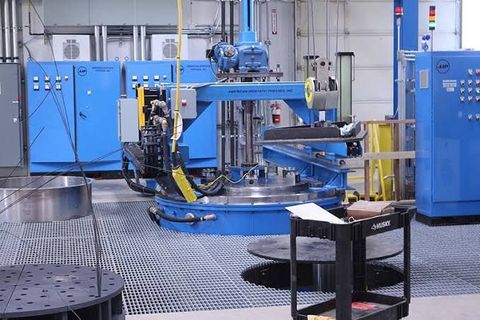
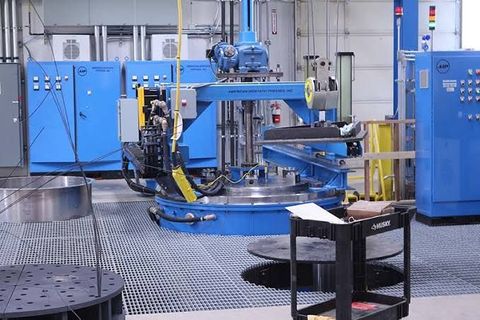
Cold isostatic pressing equipment is used for ceramics, metals, powders, and other engineered materials where controlled compaction is important. A cold isostatic pressing machine can use a liquid pressure medium to transmit pressure uniformly to a flexible mold. Understanding the process, equipment choices, operating conditions, and common mistakes helps readers understand how CIP pressing equipment fits into modern manufacturing.
Understanding Cold Isostatic Pressing
What cold isostatic pressing means
Cold isostatic pressing, commonly called CIP, uses fluid pressure to compact powder inside a flexible mold. Unlike conventional pressing, where force is mainly applied from one or more directions, isostatic pressure surrounds the mold and acts across its surface.
The process generally involves filling a flexible mold with prepared powder, removing or controlling trapped air, sealing the mold, placing it within a pressure vessel, and applying high pressure through a liquid medium. After pressure is released, the compacted shape is removed for further processing.
A cold isostatic press machine can therefore produce shapes that may be difficult to form with conventional uniaxial pressing. The method is particularly relevant when uniform density and complex geometry are important.
Wet bag and dry bag methods
Two common configurations are wet bag and dry bag systems. In a wet bag cold isostatic press, the flexible mold is removed from the pressure vessel after each pressing cycle. A dry bag cold isostatic press keeps the mold positioned within the pressure vessel, allowing powder loading and unloading through an integrated arrangement.
| Process feature | Wet bag CIP | Dry bag CIP |
|---|---|---|
| Mold arrangement | Removable flexible mold | Fixed or integrated mold |
| Loading approach | Mold prepared separately | Powder loaded into integrated tooling |
| Flexibility | Suitable for varied shapes | Suitable for repeated production |
| Automation potential | Moderate | Higher |
| Typical consideration | Tool change flexibility | Cycle consistency |
Both approaches can be configured as a wet bag CIP system or dry bag CIP system depending on production requirements, part geometry, powder characteristics, and desired operating sequence.
Why Process Control Matters
Preventing density variation
One of the main purposes of an industrial cold isostatic press is to create relatively uniform green density throughout a compact. However, pressure alone does not correct poor powder preparation or an unsuitable mold.
Particle-size distribution, powder flow, moisture, binder content, packing behavior, and trapped air can influence the final compact. A CIP processing equipment setup therefore needs to be considered together with powder preparation and mold design.
Avoiding common process mistakes
Several process errors can reduce consistency or create defects. Common issues include:
- Uneven powder filling inside the mold
- Excessive trapped air
- Incorrect pressure or holding time
- Poor mold sealing
- Incompatible mold materials
- Inconsistent powder moisture or binder levels
- Improper pressure-release rates
- Insufficient inspection between cycles
A high pressure CIP system also requires careful control because pressure vessels, seals, valves, pumps, and related components must operate together within defined engineering limits.
Understanding pressure and dwell time
Pressure is only one part of the process. The rate at which pressure increases, the time maintained at the selected level, and the rate at which pressure is released can influence compact behavior.
For example, rapid decompression can create unwanted stresses in some materials. A controlled cycle can help reduce process variability, although the appropriate parameters depend on powder composition, mold design, geometry, and downstream processing.
Applications Across Industries
Ceramics and powder metallurgy
Cold isostatic pressing for ceramics is widely associated with advanced ceramic components because ceramic powders often require controlled compaction before sintering. Ceramic CIP pressing equipment can be configured around different shapes, powder formulations, and production volumes.
Powder metallurgy applications can also use a powder metallurgy CIP system to compact metal powders before subsequent thermal or mechanical processing. Metal powder CIP equipment may be relevant for components requiring controlled green density and specific geometries.
Aerospace, medical, and automotive applications
CIP methods are also used in areas where engineered materials require carefully controlled forming processes. Examples include:
- CIP equipment for aerospace components
- CIP equipment for medical implants
- Cold isostatic pressing for aerospace
- Cold isostatic pressing for medical
- Cold isostatic pressing for automotive
The exact application depends on material composition, component geometry, required density, sintering conditions, and applicable quality controls.
Recent Developments in CIP Processing
Greater automation and process monitoring
Recent development trends from 2024 through 2026 have focused on automation, monitoring, data collection, and improved process repeatability. An automated cold isostatic press can integrate pressure controls, cycle sequencing, sensors, and programmable operating parameters.
An automatic CIP pressing system may also connect pressure generation, mold handling, loading, unloading, and inspection steps. A CIP automation system can reduce manual intervention while creating more consistent records of operating conditions.
More attention to digital process data
Modern CIP production system designs increasingly consider digital monitoring. Sensors can track pressure, temperature, cycle duration, and equipment conditions, while control software can record process information for later analysis.
An advanced CIP processing system may therefore combine mechanical equipment with programmable controls and data-management functions. These developments are particularly relevant where manufacturers need traceability across repeated production cycles.
Flexible equipment configurations
Custom cold isostatic press configurations are another continuing trend. A custom CIP equipment arrangement may be developed around component dimensions, pressure requirements, mold design, production sequence, and automation level.
A turnkey CIP system can integrate several process stages into one coordinated production arrangement, while a CIP system integrator may coordinate equipment, controls, pressure systems, and supporting components.
Laws, Safety Rules, and Industrial Policies
Pressure equipment requirements
Cold isostatic pressing equipment operates with substantial pressure, so pressure-vessel safety is an important regulatory consideration. Requirements vary by country and application, but industrial facilities commonly need appropriate vessel design, inspection, pressure protection, operating procedures, and maintenance records.
In India, industrial facilities may need to consider applicable factory safety requirements, pressure-vessel provisions, electrical safety requirements, and standards relevant to the equipment configuration. The exact obligations depend on the state, facility, pressure-vessel classification, and intended use.
Product and workplace controls
Manufacturers using CIP equipment may also need to address workplace safety, electrical protection, machine guarding, noise, material handling, and environmental controls. Where the resulting components enter regulated sectors such as medical devices or aerospace, additional sector-specific quality requirements may apply.
A cold isostatic press supplier or CIP equipment manufacturer may provide technical documentation, but the operating facility remains responsible for determining which local rules apply to its installation and process.
Tools and Resources for Process Understanding
Pressure and process calculations
Basic engineering calculations can help explain the relationship between pressure, vessel dimensions, cycle time, and production requirements. More detailed system design generally requires engineering analysis of pressure vessels, pumps, seals, molds, and control systems.
Useful resources can include:
- Pressure-unit conversion calculators
- Material-property databases
- Powder characterization references
- Equipment operating manuals
- Pressure-vessel inspection records
- Process parameter worksheets
- Quality-control checklists
- Preventive-maintenance schedules
Process documentation
A CIP engineering system benefits from organized process documentation. A simple worksheet can record powder batch information, mold identification, pressure cycle, holding period, decompression sequence, inspection observations, and production results.
For an industrial CIP pressing system, documenting these variables makes it easier to identify process changes when compact quality varies. Documentation can also support internal quality procedures and equipment maintenance planning.
FAQs
What is cold isostatic pressing?
Cold isostatic pressing is a powder-compaction process that applies fluid pressure uniformly around a flexible mold. It is used for materials such as ceramics, metals, and other engineered powders before additional processing.
How does cold isostatic pressing equipment work?
Cold isostatic pressing equipment places a sealed flexible mold containing powder inside a pressure vessel. A liquid medium transmits pressure around the mold, compacting the powder from multiple directions.
What is the difference between a wet bag and dry bag CIP system?
A wet bag CIP system generally uses removable molds that are placed into and taken out of the pressure vessel. A dry bag CIP system keeps the mold arrangement within the vessel, which can support more integrated and repeatable loading processes.
What should be checked before using a high pressure cold isostatic press?
Operators should verify mold condition, sealing, powder preparation, pressure settings, safety controls, instrumentation, and the intended pressure-release sequence. Equipment documentation and applicable workplace requirements should also be reviewed.
Where is a ceramic cold isostatic press used?
A ceramic cold isostatic press can be used to compact ceramic powders before processes such as drying, machining, or sintering. Applications can include engineered ceramic components with shapes or density requirements that benefit from uniform compaction.
Conclusion
Cold isostatic pressing uses fluid pressure to compact powders within flexible molds and is applied across ceramics, powder metallurgy, aerospace, medical, and automotive manufacturing. Process consistency depends on more than pressure alone, with powder preparation, mold design, sealing, cycle control, and decompression all playing important roles. Recent CIP developments increasingly involve automation, sensor monitoring, digital records, and integrated production systems. Understanding these fundamentals provides useful context for evaluating how CIP equipment and process controls contribute to modern powder-compaction operations.

Related Post...
Industrial Water Pumps: Facts to Know for Reliable Performance Under Pressure
Updated: September 30, 2026
Read More
Submersible Pump Manufacturing: Insights Into Modern Production and Reliability
Updated: September 30, 2026
Read More
Automated Optical Inspection Insights: Discover Trends You Should Know Now
Updated: September 28, 2026
Read More