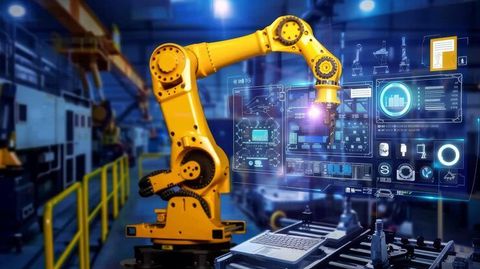
A CNC punch press machine works by using a punching tool to create holes or shapes in flat metal sheets. The process is controlled through digital programs that define the exact position, depth, and sequence of operations. This automation allows for consistent results across large production volumes.
Over time, advancements in computing and automation have made CNC punching systems more accessible and accurate. Industries such as automotive, construction, electronics, and appliance manufacturing rely on these machines to produce components with uniform quality. Understanding CNC punch press basics helps explain how modern metal fabrication has become faster and more precise.
Importance
CNC punch press machines play a significant role in industries that depend on sheet metal fabrication. They help streamline production by reducing manual effort and improving consistency. This is particularly useful in environments where large quantities of identical parts are required.
One of the main challenges in manufacturing is maintaining accuracy while increasing speed. CNC punch press functions address this by combining automation with programmable control. This reduces the likelihood of human error and ensures that each piece meets the required specifications.
These machines also contribute to material efficiency. By optimizing cutting patterns, they help reduce waste, which is important for both economic and environmental reasons. For everyday consumers, this translates into more reliable products, from household appliances to vehicles and infrastructure components.
In addition, CNC punch press machines support flexible production. Manufacturers can quickly switch between designs by updating digital programs rather than reconfiguring physical tools. This adaptability is important in a market where product designs change frequently.
Recent Updates
Recent developments in CNC punch press technology focus on automation, connectivity, and precision. One notable trend is the integration of smart manufacturing systems, where machines are connected through industrial networks. This allows operators to monitor performance, detect issues, and adjust processes remotely.
Another update is the use of advanced software for simulation and programming. These tools allow users to test designs virtually before actual production begins. This reduces errors and improves efficiency in CNC punching operations.
Energy efficiency has also become an area of focus. Newer CNC punch press machines are designed to consume less power while maintaining performance. This aligns with broader efforts in manufacturing to reduce environmental impact.
Hybrid machines are another emerging trend. These combine punching with other processes such as laser cutting, allowing multiple operations to be performed in a single setup. This reduces handling time and improves workflow efficiency.
Laws or Policies
CNC punch press machines are subject to safety and manufacturing regulations in many countries. These rules are designed to protect workers and ensure that machinery operates within defined standards. In India, for example, industrial safety regulations require proper machine guarding, operator training, and regular maintenance checks.
Environmental regulations also influence how CNC punching operations are conducted. Guidelines may address issues such as noise levels, energy usage, and waste management. Manufacturers are often required to follow standards that minimize environmental impact.
In addition, quality standards play a role in CNC punch press usage. Organizations may follow international frameworks such as ISO standards to ensure consistency and reliability in production. These standards help maintain uniform practices across different industries.
Compliance with these regulations is essential for safe and efficient operation. It also ensures that products meet expected quality and safety requirements.
Tools and Resources
Several tools and resources support the effective use of CNC punch press machines. These include software platforms, measurement tools, and training materials that help operators and engineers manage production processes.
Commonly used resources include:
- CAD (Computer-Aided Design) software, which allows users to create detailed digital designs of components
- CAM (Computer-Aided Manufacturing) systems, which convert designs into machine instructions
- Simulation software, which helps visualize CNC punch press functions before actual production
- Tool libraries, which store information about different punching tools and their applications
- Maintenance tracking systems, which monitor machine performance and schedule inspections
The following table outlines key components of a CNC punch press machine and their roles:
| Component | Function Description |
|---|---|
| Control Unit | Processes programmed instructions and controls operations |
| Punching Tool | Creates holes or shapes in the metal sheet |
| Worktable | Supports and positions the material |
| Tool Turret | Holds multiple tools for different operations |
| Drive System | Moves the machine parts with precision |
| Software Interface | Allows users to input and manage programs |
These tools and components work together to ensure that CNC punching processes are accurate and efficient.
FAQs
What are CNC punch press machines used for?
CNC punch press machines are used to cut, shape, and form sheet metal into specific designs. They are commonly used in industries such as automotive, electronics, and construction.
How do CNC punch press functions improve accuracy?
CNC punch press functions rely on computer-controlled programming, which ensures precise positioning and consistent results. This reduces errors that can occur with manual operation.
What materials can a CNC punch press machine handle?
These machines typically work with materials such as steel, aluminum, brass, and copper. The choice of material depends on the application and machine capabilities.
Are CNC punch press machines suitable for small-scale production?
Yes, CNC punch press machines can handle both small and large production volumes. Their programmable nature allows quick adjustments for different designs.
What is the difference between CNC punching and laser cutting?
CNC punching uses a physical tool to create shapes by pressing through material, while laser cutting uses a focused beam of light to cut. Each method has its own advantages depending on the application.
Conclusion
CNC punch press machines are an important part of modern manufacturing, enabling precise and efficient sheet metal processing. Their ability to automate complex tasks helps improve consistency and reduce manual effort. With ongoing advancements in software and machine design, CNC punching continues to evolve alongside industry needs. Understanding their basics and functions provides insight into how many everyday products are made.