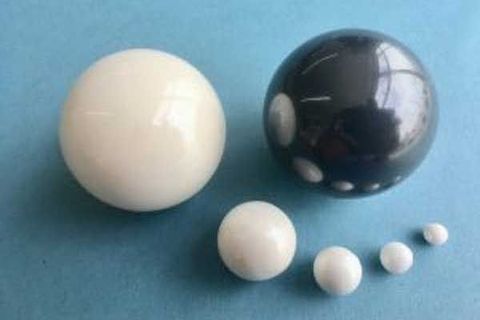
Ceramic Balls: Types, Properties, Manufacturing, and Industrial Applications
Ceramic balls are precision-engineered components widely used in industrial machinery, bearings, chemical processing, grinding systems, and advanced engineering applications.
They are manufactured from specialised ceramic materials that provide excellent hardness, wear resistance, corrosion resistance, and thermal stability.
Compared with conventional steel balls, ceramic balls offer several performance advantages in applications where low weight, reduced friction, electrical insulation, and resistance to harsh environments are important.
Different ceramic materials provide different mechanical and chemical properties. Zirconia, silicon nitride, alumina, and silicon carbide are among the most commonly used materials for manufacturing industrial ceramic balls.
As industries increasingly require durable, efficient, and high-performance components, ceramic balls are becoming important in precision engineering, automotive manufacturing, aerospace technology, and chemical processing.
What Are Ceramic Balls?
Ceramic balls are spherical components manufactured from advanced ceramic materials through specialised forming, sintering, and finishing processes.
They are designed to provide accurate dimensions, smooth surfaces, and consistent mechanical performance.
Depending on their material composition and manufacturing quality, ceramic balls can withstand demanding operating conditions, including high temperatures, abrasive environments, chemical exposure, and repeated mechanical contact.
They are commonly used in:
Ceramic ball bearings
Precision industrial machinery
Grinding and milling equipment
Chemical processing systems
Automotive components
Aerospace applications
Medical and laboratory equipment
Valve and pump assemblies
The selection of ceramic balls depends on the operating environment, load requirements, temperature, chemical exposure, and required dimensional accuracy.
Types of Ceramic Balls
Ceramic balls are available in different material compositions. Each type offers specific properties that make it suitable for particular industrial applications.
1. Zirconia Ceramic Balls
Zirconia ceramic balls are manufactured from zirconium dioxide. They are valued for their high strength, toughness, wear resistance, and corrosion resistance.
Compared with many traditional ceramics, zirconia offers relatively high fracture toughness, making it suitable for applications involving mechanical contact and repeated loading.
Key properties:
High mechanical strength
Excellent wear resistance
Good corrosion resistance
Low thermal conductivity
Electrical insulation
Good surface finish
Industrial applications:
Precision ceramic bearings
Chemical processing equipment
Pump components
Valve assemblies
Grinding media
Medical equipment
Zirconia balls are particularly useful in applications where corrosion resistance and mechanical durability are important.
2. Silicon Nitride Ceramic Balls
Silicon nitride balls are widely used in high-performance precision bearings and demanding engineering applications.
They combine low density with high hardness, strength, and thermal stability. Their properties make them suitable for high-speed machinery and specialised operating environments.
Key properties:
Low density
High hardness
Excellent wear resistance
High-temperature performance
Good thermal shock resistance
Electrical insulation
Industrial applications:
High-speed ceramic bearings
Aerospace equipment
Automotive systems
Machine tool spindles
Precision instruments
Industrial motors
Silicon nitride balls are particularly suitable for applications where reduced centrifugal forces, high-speed performance, and durability are required.
3. Alumina Ceramic Balls
Alumina ceramic balls are manufactured from aluminium oxide. They are widely used because of their hardness, chemical stability, and resistance to wear.
They are available in different purity grades depending on the intended application.
Key properties:
High hardness
Good chemical resistance
Excellent wear resistance
Electrical insulation
High-temperature stability
Good dimensional stability
Industrial applications:
Grinding and milling media
Chemical processing
Industrial filtration systems
Ceramic bearings
Catalyst support applications
Material processing equipment
Alumina balls are especially useful in applications requiring chemical stability and resistance to abrasive wear.
4. Silicon Carbide Ceramic Balls
Silicon carbide ceramic balls offer excellent hardness, thermal conductivity, and resistance to chemical corrosion.
They are suitable for demanding industrial environments where high temperatures and abrasive conditions may affect conventional materials.
Key properties:
Very high hardness
Excellent wear resistance
High thermal conductivity
Good thermal shock resistance
Strong chemical resistance
High-temperature capability
Industrial applications:
High-temperature equipment
Chemical processing machinery
Specialised bearings
Industrial pumps
Mechanical seals
Advanced engineering components
5. Zirconia-Toughened Ceramic Balls
Zirconia-toughened ceramic materials are developed to improve the mechanical performance of selected ceramic compositions.
Their properties depend on the material formulation and manufacturing process.
Key properties:
Improved fracture toughness in suitable formulations
Good wear resistance
High hardness
Chemical stability
Dimensional consistency
Industrial applications:
Precision machinery
Specialised bearings
Industrial valves
Wear-resistant components
Engineering equipment
Important Properties of Ceramic Balls
Ceramic balls are selected for their ability to deliver reliable performance under specific operating conditions.
1. High Hardness
Ceramic materials generally have high hardness, allowing ceramic balls to resist surface wear and deformation.
This property is particularly important in bearings, grinding systems, and precision machinery.
2. Excellent Wear Resistance
Ceramic balls can provide long service life in applications involving repeated contact, friction, and abrasive particles.
Their wear resistance depends on material composition, surface finish, and operating conditions.
3. Corrosion Resistance
Many advanced ceramic materials resist chemical attack from moisture, acids, alkalis, and industrial fluids.
This makes them suitable for certain chemical processing and marine-related environments.
4. Low Density
Some ceramic materials, especially silicon nitride, have lower density than conventional bearing steel.
Reduced mass can help lower centrifugal forces in high-speed rotating applications.
5. Thermal Stability
Advanced ceramic materials can maintain useful mechanical properties at temperatures that may be challenging for conventional materials.
However, the maximum operating temperature depends on the ceramic composition and surrounding conditions.
6. Electrical Insulation
Most engineering ceramics are electrical insulators.
This property makes ceramic balls useful in selected electrical motors, generators, and precision systems where electrical isolation is required.
7. Dimensional Accuracy
Precision ceramic balls can be manufactured with tightly controlled dimensions and surface finishes.
This is important for applications requiring smooth movement, consistent contact, and reliable mechanical performance.
Ceramic Balls vs Steel Balls
Ceramic balls and steel balls are both used in bearings and industrial equipment, but their material properties differ.
Feature | Ceramic Balls | Steel Balls |
|---|---|---|
Density | Generally lower | Generally higher |
Hardness | Typically very high | Depends on steel grade and heat treatment |
Corrosion resistance | Often excellent | Varies by steel type |
Electrical conductivity | Generally insulating | Conductive |
Wear resistance | Excellent in suitable applications | Good to excellent |
Thermal behaviour | Depends on ceramic type | Depends on steel composition |
Cost | Generally higher | Often more economical |
Impact tolerance | Can be brittle | Generally more ductile |
Ceramic balls may be preferred for high-speed, corrosive, or electrically sensitive applications, while steel balls remain suitable for many general-purpose and heavy-load applications.
Manufacturing Process of Ceramic Balls
The manufacturing of ceramic balls involves several controlled stages to achieve the required material properties, dimensions, and surface quality.
1. Raw Material Selection
The process begins with selecting suitable ceramic powders, such as zirconia, silicon nitride, alumina, or silicon carbide.
Material purity and particle characteristics influence the final product's strength, hardness, and consistency.
2. Powder Preparation
Ceramic powders are prepared through controlled processing to achieve suitable particle distribution and material uniformity.
Depending on the formulation, manufacturers may incorporate binders and other processing additives.
3. Forming
The prepared ceramic material is shaped into spherical blanks using suitable forming technologies.
Common techniques include powder compaction, granulation-based forming, and other specialised ceramic shaping methods.
4. Sintering
Sintering involves heating the formed ceramic material under controlled conditions to develop a dense and mechanically strong structure.
The process parameters depend on the ceramic composition and desired properties.
5. Grinding
After sintering, ceramic balls undergo grinding operations to achieve accurate dimensions and improve surface geometry.
Precision grinding is particularly important for bearing applications.
6. Lapping and Polishing
Lapping and polishing improve surface smoothness, roundness, and dimensional consistency.
These finishing operations help achieve the quality required for precision engineering applications.
7. Quality Inspection
Finished ceramic balls undergo inspection to evaluate important characteristics, including:
Diameter and dimensional tolerance
Sphericity
Surface roughness
Hardness
Material density
Visual defects
Internal structural quality
Strict inspection is essential for ensuring consistent industrial performance.
Industrial Applications of Ceramic Balls
Ceramic balls are used across several industries because of their specialised mechanical, thermal, and chemical properties.
1. Ceramic Ball Bearings
Ceramic balls are widely used in precision bearing systems.
They can help reduce rotating mass and friction-related losses in suitable applications. Silicon nitride balls are particularly popular in high-performance bearing designs.
Applications include machine tools, electric motors, aerospace systems, and precision equipment.
2. Automotive Industry
The automotive industry uses ceramic balls in selected bearing and mechanical systems.
Their lightweight characteristics and wear resistance can support specialised performance requirements.
Potential applications include electric vehicle components, precision motors, and high-speed rotating equipment.
3. Aerospace Industry
Aerospace applications require materials that can deliver consistent performance under demanding conditions.
Silicon nitride and other advanced ceramics are used in selected bearings and precision engineering components.
4. Chemical Processing Industry
Ceramic balls can provide resistance to many corrosive chemicals and abrasive environments.
They are used in selected pumps, valves, processing equipment, and material handling systems.
5. Grinding and Milling Operations
Alumina and zirconia ceramic balls are widely used as grinding media.
They help reduce particle sizes and support mixing, dispersion, and material processing in industrial milling equipment.
Applications include ceramics, minerals, chemicals, pigments, and selected pharmaceutical manufacturing processes.
6. Electrical and Electronics Industry
Ceramic balls are useful in selected electrical and electronic systems because many ceramic materials provide electrical insulation.
They may be incorporated into specialised bearings and precision assemblies where electrical isolation is important.
7. Medical and Laboratory Equipment
Selected ceramic materials are used in medical and laboratory equipment because of their chemical stability, wear resistance, and suitability for specialised precision applications.
Material selection must consider relevant biocompatibility and regulatory requirements when products are intended for medical use.
Advantages of Using Ceramic Balls
Ceramic balls offer several benefits compared with conventional metallic alternatives in suitable applications.
Reduced weight: Lower density can improve performance in selected high-speed rotating systems.
High wear resistance: Hard ceramic surfaces can resist abrasive wear.
Corrosion resistance: Suitable ceramic compositions can perform in chemically demanding environments.
Electrical insulation: Ceramic materials can help prevent unwanted electrical conduction.
Thermal stability: Selected ceramics maintain useful properties at elevated temperatures.
Dimensional precision: Precision manufacturing supports accurate mechanical movement.
Long service life: Suitable operating conditions can help reduce wear-related replacement requirements.
Challenges and Limitations of Ceramic Balls
Despite their advantages, ceramic balls also have certain limitations that should be considered.
1. Higher Manufacturing Cost
Advanced ceramic materials and precision finishing operations can make ceramic balls more expensive than standard steel alternatives.
2. Brittleness
Ceramics generally have lower ductility than metals. They may fracture under excessive impact or unsuitable loading conditions.
3. Specialised Manufacturing Requirements
Producing high-precision ceramic balls requires specialised equipment, controlled processing conditions, and careful inspection.
4. Application-Specific Material Selection
Different ceramics have different thermal, mechanical, and chemical properties. Selecting an unsuitable material may reduce product performance.
5. Compatibility With Other Components
Bearing systems and mechanical assemblies must be designed to accommodate differences in material stiffness, thermal expansion, and contact behaviour.
How to Choose the Right Ceramic Balls
Selecting suitable ceramic balls requires evaluating several technical and commercial factors.
1. Identify the Material Requirements
Determine whether the application requires zirconia, silicon nitride, alumina, silicon carbide, or another specialised ceramic composition.
2. Evaluate Operating Conditions
Consider temperature, rotational speed, load, moisture, chemical exposure, and abrasive conditions.
3. Check Dimensional Accuracy
Review diameter tolerance, sphericity, and surface finish requirements.
4. Understand Load Conditions
Consider whether the application involves radial loads, axial loads, impact, vibration, or repeated contact.
5. Review Quality Standards
Evaluate the manufacturer's material specifications, testing procedures, quality documentation, and production consistency.
6. Compare Cost and Service Life
The purchase price should be considered alongside expected service life, maintenance requirements, operating efficiency, and replacement costs.
Future Trends in Ceramic Ball Technology
Advances in materials science and manufacturing are expanding the applications of ceramic balls.
Advanced Ceramic Materials
Researchers are developing improved ceramic formulations to achieve better fracture toughness, strength, thermal performance, and wear resistance.
Precision Manufacturing
Improved grinding, lapping, and inspection technologies are helping manufacturers produce ceramic balls with tighter dimensional tolerances and more consistent surface quality.
Electric Vehicle Applications
The growth of electric vehicles is creating additional opportunities for advanced bearing materials and electrically insulating components.
High-Speed Machinery
Modern industrial equipment increasingly requires precision components that can operate efficiently at higher speeds and under demanding conditions.
Sustainable Manufacturing
Manufacturers are exploring ways to improve material utilisation, reduce production waste, and increase the efficiency of ceramic processing operations.
Frequently Asked Questions
1. What Are Ceramic Balls Used For?
Ceramic balls are used in precision bearings, grinding systems, pumps, valves, chemical processing equipment, automotive systems, aerospace components, and industrial machinery.
2. What Are the Main Types of Ceramic Balls?
Common types include zirconia ceramic balls, silicon nitride balls, alumina ceramic balls, silicon carbide balls, and specialised zirconia-based ceramic compositions.
3. Are Ceramic Balls Better Than Steel Balls?
Ceramic balls can offer advantages in weight, corrosion resistance, electrical insulation, and high-speed performance. However, steel balls may be more suitable for certain heavy-load and impact applications. The best option depends on operating requirements.
4. Which Ceramic Material Is Best for Bearings?
Silicon nitride is widely used in high-performance ceramic bearing applications because of its low density, hardness, and wear resistance. Zirconia is also used in applications requiring good toughness and corrosion resistance.
5. Are Ceramic Balls Corrosion-Resistant?
Many ceramic materials offer excellent resistance to corrosion and chemical attack. However, performance depends on the specific ceramic composition and the chemicals involved.
6. Can Ceramic Balls Withstand High Temperatures?
Selected ceramic materials can operate at elevated temperatures. Their suitability depends on the material type, thermal conditions, mechanical loads, and surrounding environment.
7. What Is the Difference Between Zirconia and Silicon Nitride Balls?
Zirconia balls are known for their strength, toughness, and corrosion resistance. Silicon nitride balls are valued for their lower density, hardness, and suitability for high-speed precision bearings.
8. How Are Ceramic Balls Manufactured?
Ceramic balls are generally manufactured through raw material preparation, forming, sintering, grinding, lapping, polishing, and quality inspection.
Conclusion
Ceramic balls are important precision-engineered components used in modern manufacturing, mechanical engineering, and advanced industrial applications. Their hardness, wear resistance, corrosion resistance, and specialised thermal and electrical properties make them valuable alternatives to conventional metal balls in suitable operating environments.
Different materials, including zirconia, silicon nitride, alumina, and silicon carbide, provide specific advantages for bearings, grinding systems, chemical processing, aerospace equipment, and automotive applications.

Related Post...

Home Security Overview: Essential Protection Steps to Take Before Trouble Strikes
Updated: September 02, 2026
Read More
Beauty Product Distributors: Benefits, Services, and How to Choose the Right Partner
Updated: November 04, 2026
Read More
Top Cell Biology Lab Equipment Tips for Accurate Research and Analysis
Updated: October 28, 2026
Read More