Biometric Access Control Readers Insights for Strengthening Facility Security
Biometric access control readers have become an increasingly important part of modern facility security. Organizations responsible for protecting offices, industrial sites, healthcare facilities, research centers, and educational campuses are adopting identity-based authentication to improve access management while reducing dependence on traditional credentials.
As workplaces become more connected and security requirements continue to evolve, organizations seek access solutions that provide both convenience and stronger identity verification. Biometric technologies support this objective by authenticating individuals through unique physical or behavioral characteristics rather than relying solely on cards, keys, or passwords that can be misplaced or shared.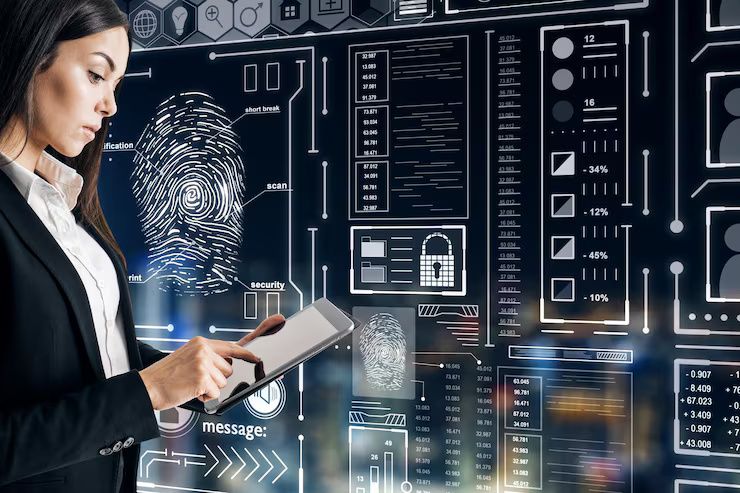
A practical understanding of biometric access control readers helps explain how they contribute to secure facilities, efficient operations, and improved visitor management. Examining their technologies, applications, operational considerations, and implementation practices provides valuable insight into their growing role across modern security environments.
Identity Verification at the Center of Modern Access Control
Facility security depends on accurately determining who should be permitted to enter specific areas. Conventional access methods verify possession of a credential, while biometric readers verify the identity of the individual presenting that credential.
This distinction significantly strengthens access control because biometric characteristics are inherently linked to a specific person. Organizations can therefore establish access permissions based on verified identity instead of relying only on physical access cards or numeric codes.
Biometric readers are commonly integrated into broader access control systems that manage entry permissions, monitor activity, record authentication events, and coordinate with building security infrastructure.
Common Biometric Authentication Technologies
Modern biometric access control readers support several authentication methods, each designed for different operational environments and security requirements.
Fingerprint recognition remains one of the most widely adopted technologies due to its balance of accuracy, speed, and ease of deployment. Fingerprint readers compare captured fingerprint patterns against securely stored biometric templates before granting access.
Facial recognition systems authenticate individuals using facial geometry and distinctive facial features. These readers are frequently deployed in locations where contactless authentication supports operational efficiency or hygiene requirements.
Iris recognition analyzes the unique patterns within the colored portion surrounding the pupil. Because iris characteristics remain highly stable throughout life, this technology is often selected for facilities requiring very high authentication confidence.
Some environments also use palm vein recognition or hand geometry systems, particularly where environmental conditions or operational workflows make alternative biometric methods more suitable.
Integration with Facility Security Infrastructure
Biometric readers rarely operate as standalone devices. Instead, they function as part of an integrated physical security ecosystem that connects multiple building systems.
A typical deployment may include:
- Electronic door controllers
- Access management software
- Identity databases
- Video surveillance systems
- Visitor management platforms
- Alarm monitoring systems
- Building management systems
Integration allows security personnel to coordinate authentication records with other facility events, improving visibility across protected locations while supporting centralized administration.
Modern network connectivity also enables administrators to update user permissions, monitor reader status, and review access activity from centralized management platforms.
Multi-Factor Authentication Enhances Security
Many organizations strengthen facility security by combining biometric verification with additional authentication methods.
Rather than depending exclusively on a single factor, access systems may require a biometric match alongside a proximity card, mobile credential, or personal identification number.
This layered approach provides additional protection for highly sensitive environments such as laboratories, financial institutions, pharmaceutical facilities, government buildings, and data centers. Even if one authentication factor becomes compromised, unauthorized access remains significantly more difficult.
The choice of authentication strategy depends on organizational security policies, operational requirements, and the sensitivity of protected areas.
Operational Considerations for Reliable Performance
Successful implementation extends beyond selecting appropriate reader technology. Organizations must also consider environmental conditions, user experience, maintenance requirements, and operational workflows.
Lighting conditions may influence facial recognition performance, while moisture, dust, or protective gloves can affect fingerprint authentication in industrial environments. Reader placement should support comfortable use while maintaining efficient pedestrian flow during busy periods.
Routine maintenance, software updates, and calibration help maintain reliable operation throughout the equipment lifecycle. Regular testing also ensures authentication accuracy remains consistent as facility requirements evolve.
Employee training contributes to successful adoption by helping users understand proper authentication procedures and expected system behavior.
Privacy and Data Protection Responsibilities
Biometric information requires careful handling because it represents uniquely identifiable personal data.
Organizations implementing biometric access systems typically establish policies governing data collection, storage, access authorization, retention periods, and deletion procedures. Rather than storing raw biometric images, many systems retain encrypted mathematical templates generated during enrollment.
Data security measures such as encryption, access controls, audit logging, and secure communication protocols help protect biometric information from unauthorized access.
Organizations should also ensure that biometric programs align with applicable privacy regulations and internal governance policies while maintaining transparency regarding how biometric information is managed.
Industry Applications Continue to Expand
Biometric access control readers are used across numerous industries where secure identity verification supports operational objectives.
Healthcare organizations protect restricted clinical areas and pharmaceutical storage locations while maintaining controlled staff access. Manufacturing facilities secure production zones, research laboratories, and hazardous material storage areas.
Corporate offices use biometric authentication to manage employee entry and protect confidential business information. Educational institutions secure administrative buildings, laboratories, and specialized research facilities.
Critical infrastructure operators, transportation hubs, financial institutions, and government organizations also incorporate biometric technologies as part of comprehensive physical security strategies.
Future Direction of Biometric Access Systems
Biometric access technologies continue evolving through improvements in sensor accuracy, artificial intelligence, and integrated security platforms.
Modern systems increasingly support contactless authentication, adaptive identity verification, and advanced anti-spoofing capabilities designed to distinguish genuine biometric characteristics from fraudulent attempts. Artificial intelligence also contributes to faster recognition, improved matching accuracy, and better performance under varying environmental conditions.
Cloud-based management platforms and unified security architectures further simplify administration across multiple facilities while providing centralized visibility into access activity. As organizations continue modernizing physical security programs, biometric access control readers are expected to play an increasingly important role in creating secure, efficient, and intelligently managed facilities.
Conclusion
Biometric access control readers strengthen facility security by verifying individual identity through unique biological characteristics rather than relying solely on traditional credentials. Their integration with broader security systems, support for multi-factor authentication, and ability to improve access management make them valuable components of modern physical security strategies.
As facilities continue balancing security, operational efficiency, and privacy considerations, biometric technologies will remain an important element in protecting people, assets, and critical infrastructure while supporting more reliable and intelligent access control.

Related Post...

Industrial Warehouse Robotics Automation: Insights Into Modern Warehouse Operations
Updated: October 06, 2026
Read More
Dedicated Enterprise Secure Fiber Leased Lines: Explore Modern Network Architecture
Updated: October 06, 2026
Read More
Industrial Fire Suppression System Inspection: A Guide to Equipment Readiness
Updated: October 02, 2026
Read More