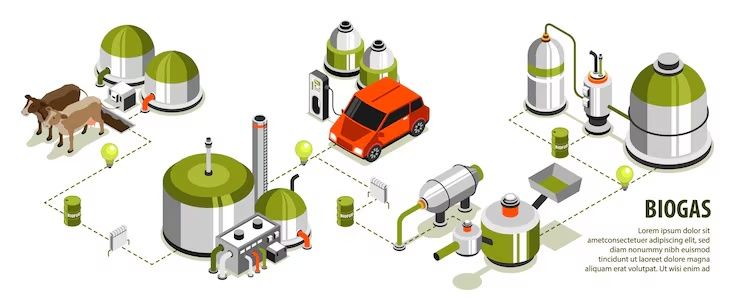
The idea behind biogas technology emerged as a response to two pressing global issues: the growing need for renewable energy and the challenge of managing organic waste responsibly. Instead of relying solely on fossil fuels, biogas plants provide a way to generate clean energy while also reducing the burden on landfills and greenhouse gas emissions.
Importance: Why biogas plants matter today
Biogas plants are gaining importance worldwide due to their environmental, social, and economic benefits. They provide solutions for multiple challenges:
-
Energy security: Biogas serves as a renewable substitute for fossil fuels, supporting energy independence.
-
Waste management: Organic waste is effectively recycled, reducing landfill use.
-
Environmental benefits: Methane emissions from waste are captured and used as energy instead of being released into the atmosphere.
-
Agricultural support: Digestate, the by-product of biogas production, works as a nutrient-rich organic fertilizer.
-
Economic opportunities: Biogas plants create jobs in engineering, operations, and maintenance.
For rural communities, in particular, biogas plants help provide affordable cooking fuel and electricity, improving quality of life.
Recent updates in biogas plant engineering
In the past year, several global developments have reshaped how biogas plants are being implemented:
-
Technological improvements (2024–2025): More efficient digesters and upgraded biogas purification systems have made energy yields higher and operations more cost-effective.
-
Biomethane expansion: Countries in Europe and Asia have increased investment in upgrading biogas to biomethane, which can be injected into natural gas grids.
-
Decentralized plants: Small-scale biogas systems are being promoted in rural areas to encourage community-level energy solutions.
-
Carbon credits and sustainability: Governments are aligning biogas with carbon credit programs, allowing companies to offset emissions through renewable energy production.
-
Integration with smart grids: Research is underway to connect biogas energy generation with digital energy management systems, ensuring efficient distribution.
These updates highlight the growing role of biogas plants in global sustainability efforts.
Laws and policies impacting biogas energy
Biogas development is strongly influenced by national and international regulations. Key policies include:
-
India: The National Bio-Energy Mission and SATAT (Sustainable Alternative Towards Affordable Transportation) initiative support biogas production and use in vehicles.
-
European Union: The Renewable Energy Directive requires member states to increase renewable gas, including biogas, in their energy mix.
-
United States: Federal tax credits and state-level incentives support the construction of anaerobic digesters and renewable natural gas (RNG) facilities.
-
Climate policies: Many countries include biogas as part of their commitments to reduce carbon emissions under the Paris Agreement.
-
Waste management laws: Stricter landfill regulations worldwide encourage investment in waste-to-energy solutions like biogas.
Such laws and programs not only encourage innovation but also reduce financial risks for investors and operators.
Tools and resources for biogas plant engineering
Engineers, researchers, and policymakers can access a variety of tools to design, manage, and monitor biogas plants:
Planning and design tools:
-
RETScreen Expert – Energy project feasibility tool
-
HOMER Energy – Software for hybrid renewable energy system design
-
Biogas Calculator by FAO – Estimates energy output from feedstock
Regulatory and research resources:
-
International Energy Agency (IEA Bioenergy Task 37) – Technical guidelines on biogas
-
National Renewable Energy Laboratory (NREL) – Research data on anaerobic digestion
Educational resources:
-
Coursera / edX courses – Renewable energy and biogas engineering programs
-
Biogas World – Industry directory and knowledge hub
Monitoring tools:
-
SCADA systems – For real-time monitoring of plant operations
-
IoT-based sensors – Track methane content, pressure, and feedstock performance
These resources support both beginners and professionals in understanding and implementing biogas technology.
FAQs about biogas plant engineering
Q1. What raw materials are needed for a biogas plant?
Biogas plants use organic waste such as kitchen waste, crop residues, animal manure, and sewage sludge.
Q2. How long does it take to produce biogas?
Depending on feedstock, the digestion process usually takes 30–60 days to produce usable biogas.
Q3. Can biogas replace LPG or natural gas?
Yes, purified biogas (biomethane) can replace conventional cooking gas and be used for heating, electricity, and even transportation.
Q4. Is biogas production cost-effective?
While initial setup costs may be high, operational savings, energy independence, and government incentives make biogas plants cost-effective in the long run.
Q5. What are the environmental benefits of biogas?
Biogas reduces methane emissions, lowers dependence on fossil fuels, and provides eco-friendly fertilizer from digestate.
Final thoughts
Biogas plant engineering represents a practical and sustainable solution to two global challenges: clean energy generation and waste management. Its role in achieving energy security, reducing emissions, and supporting agricultural productivity makes it a vital part of the renewable energy landscape.
With recent advances in technology, supportive government policies, and growing awareness, biogas plants are moving from niche applications to mainstream energy systems. By using reliable tools, adhering to regulations, and leveraging updated resources, stakeholders can maximize the potential of biogas for a greener and more resilient future.