AI for Business: Automation Tools, Applications and Productivity Benefits
Artificial intelligence (AI) is changing how businesses manage everyday activities, communicate with customers, analyse information and organise their operations. Tasks that once required repeated manual effort can increasingly be supported by AI-powered software, automation platforms and intelligent assistants.
For a small business, AI might help prepare marketing drafts, organise customer enquiries, summarise documents or identify patterns in sales records. A larger organisation might use AI to forecast demand, monitor supply chains, support financial analysis, automate internal workflows and assist employees with complex information.
AI for business does not necessarily mean replacing an entire department or building advanced technology from the beginning. Many organisations start with existing software that includes AI features and gradually introduce automation into specific processes.
The most useful approach is to identify a genuine business problem, select an appropriate tool, test its performance and measure whether it improves accuracy, turnaround time or employee productivity.
Why AI Matters for Modern Businesses
Businesses operate with increasing amounts of information, digital communication and customer expectations. Managing these activities manually can create delays, inconsistent records and repetitive workloads.
AI can help organisations address these challenges by processing information, recognising patterns, generating drafts, assisting with decisions and automating selected steps.
Some important reasons businesses are exploring AI include:
Improved productivity: Employees can use AI to prepare summaries, organise information and complete repetitive administrative activities.
Faster communication: AI assistants can help draft emails, respond to common enquiries and organise customer interactions.
Better data analysis: AI-powered systems can identify trends and relationships in large datasets.
Workflow efficiency: Automation can connect different business applications and reduce repeated data entry.
Consistent operations: Standardised automated workflows can help teams follow established processes.
Decision support: AI can provide forecasts, comparisons and insights that support management decisions.
AI should be treated as a productivity and decision-support capability rather than a guarantee of business growth. Results depend on the quality of data, employee skills, process design and appropriate human oversight.
Major Applications of AI in Business
1. Marketing and Content Development
Marketing teams use AI to support research, campaign planning, content development and performance analysis.
Common applications include:
Preparing initial drafts for articles, newsletters and advertisements.
Generating content ideas based on customer interests.
Organising marketing calendars.
Summarising campaign performance reports.
Analysing customer feedback and engagement patterns.
Creating variations of promotional messages for different audiences.
Tools such as ChatGPT, Google Gemini and Microsoft Copilot can assist with research, drafting and summarisation. Marketing teams should review factual claims, brand tone, copyright considerations and advertising requirements before publishing AI-assisted material.
2. Customer Support and Communication
AI-powered customer support systems can help businesses manage frequently asked questions, organise incoming enquiries and direct customers to relevant information.
Typical applications include:
Automated responses to common questions.
Customer enquiry classification.
Support ticket prioritisation.
Conversation summaries for support employees.
Suggested replies for email and chat.
Multilingual communication assistance.
A well-designed system can reduce repetitive work for support teams. However, sensitive complaints, financial disputes, complex technical issues and unusual customer situations should have a clear route to human assistance.
3. Finance and Accounting
Finance departments handle invoices, transaction records, expense information, financial reports and compliance documentation. AI and automation can support several parts of these workflows.
Examples include:
Extracting information from invoices.
Classifying transactions for review.
Identifying unusual payment patterns.
Preparing preliminary financial summaries.
Matching records across documents.
Supporting cash flow analysis.
Organising expense reports.
Accounting software with automation features can reduce manual data entry, but AI-generated classifications and financial calculations should be checked before they are used in official records.
4. Sales and Customer Relationship Management
Sales teams can use AI to organise customer information, prepare communications and identify opportunities for follow-up.
Applications include:
Summarising customer conversations.
Preparing meeting notes.
Drafting follow-up emails.
Organising leads by relevant criteria.
Analysing sales trends.
Supporting sales forecasts.
Identifying accounts that may require attention.
CRM platforms with AI capabilities can help teams work with customer records more efficiently. Businesses should ensure that customer information is collected and used appropriately.
5. Human Resources and Workforce Administration
HR teams can use AI to assist with administrative work and internal communication.
Examples include:
Drafting internal policies and announcements.
Preparing training materials.
Organising employee feedback.
Summarising workforce surveys.
Supporting onboarding documentation.
Answering routine questions about internal procedures.
AI should not independently make important employment decisions. Recruitment screening, performance evaluation, compensation and other decisions affecting individuals require appropriate human review, fairness checks and compliance with applicable employment laws.
6. Supply Chain and Inventory Management
Manufacturing, retail, logistics and distribution businesses can use AI to analyse operational data and identify patterns.
Common applications include:
Demand forecasting.
Inventory planning.
Delivery schedule analysis.
Supplier performance monitoring.
Production planning.
Identifying unusual supply chain disruptions.
Predictive maintenance support.
AI-based forecasts are only as reliable as the information used to produce them. Businesses should account for seasonal changes, supplier disruptions, market conditions and unexpected events.
Popular AI and Business Automation Tools
Different tools address different business requirements. Some focus on writing and research, while others connect applications, manage customer information or automate repetitive processes.
| Tool | Main business applications |
|---|---|
| ChatGPT | Research assistance, drafting, summarisation, analysis and productivity support |
| Google Gemini | Writing, information analysis and assistance across supported Google workflows |
| Microsoft Copilot | Assistance with documents, spreadsheets, presentations, email and workplace tasks |
| Zoho Zia | AI assistance across supported Zoho business applications |
| Salesforce Einstein | CRM insights, sales assistance and customer relationship workflows |
| Zapier | Connecting applications and automating multi-step workflows |
| Make | Visual workflow automation and application integrations |
| Microsoft Power Automate | Business process automation across supported applications |
| UiPath | Robotic process automation and enterprise workflow automation |
| QuickBooks and Tally-related automation features | Accounting workflows, transaction organisation and financial administration, depending on the product and integration |
Tool capabilities, pricing, availability and integrations can change. Businesses should review the current product documentation, data-handling terms and subscription conditions before selecting a platform.
AI Automation vs Traditional Business Automation
AI automation and traditional automation are related, but they are not identical.
Traditional automation generally follows predefined rules. AI-enabled automation can additionally interpret information, classify content, generate responses or work with less structured inputs.
| Area | Traditional automation | AI-enabled automation |
|---|---|---|
| Data entry | Transfers information using fixed rules | Can extract and interpret information from supported documents |
| Customer enquiries | Sends predefined responses | Can classify questions and generate contextual draft responses |
| Reporting | Produces reports using established formats | Can summarise results and identify possible patterns |
| Document processing | Uses templates and fixed fields | Can analyse selected unstructured documents |
| Forecasting | Applies predefined formulas | Can use models to identify patterns and estimate outcomes |
| Workflow decisions | Follows programmed conditions | Can provide recommendations based on available information |
AI-enabled systems may be more flexible, but they can also make mistakes, produce inconsistent outputs or misunderstand context. A combination of traditional automation, AI assistance and human approval is often more reliable than allowing a system to operate without supervision.
Productivity Benefits of AI Automation
The value of AI should be evaluated through measurable business outcomes rather than the number of tools an organisation adopts.
Reduced Repetitive Work
Employees often spend time copying information, preparing routine documents, sorting messages and updating records. Automation can reduce some of this work and allow employees to focus on activities requiring experience, judgement and communication.
Faster Document Processing
AI tools can summarise lengthy reports, extract selected information and prepare preliminary drafts. This can help teams review information more quickly, although important documents still require verification.
Improved Access to Business Information
AI assistants can help employees locate information, summarise internal documents and understand complex material. These capabilities are especially useful when organisations maintain large collections of policies, reports and operational records.
More Consistent Workflows
Automation platforms can apply standard steps to recurring activities such as invoice routing, approval notifications and customer enquiry classification. This can reduce missed steps when workflows are properly configured.
Better Management Insights
AI-powered analytics can help management teams identify trends in sales, inventory, customer activity and operational performance. These insights can support planning, but they should be considered alongside financial records and professional judgement.
Practical Examples of AI in Different Industries
| Industry | Example AI application | Potential business benefit |
|---|---|---|
| Banking and finance | Transaction monitoring and document analysis | Faster review and improved risk identification |
| Retail and e-commerce | Demand forecasting and customer analysis | Better inventory and campaign planning |
| Healthcare administration | Appointment communication and document summarisation | Reduced administrative workload |
| Manufacturing | Predictive maintenance and production analysis | Improved equipment planning |
| Logistics | Route analysis and delivery forecasting | More informed operational scheduling |
| Real estate | Property document analysis and enquiry management | Faster information organisation |
| Education | Learning material preparation and administrative assistance | More efficient academic support |
| Professional firms | Research assistance and document summarisation | Improved preparation and information handling |
These are examples of possible applications, not guaranteed outcomes. Regulated industries may have additional requirements concerning confidentiality, accuracy, professional responsibility and human supervision.
How to Introduce AI into a Business
A structured implementation plan can help an organisation avoid unnecessary complexity and focus on useful applications.
Step 1: Identify Repetitive Business Activities
Review daily operations and identify tasks that consume substantial employee time. Examples include preparing routine reports, organising customer enquiries, extracting invoice details and updating records.
Start with a process that is frequent, clearly defined and relatively low-risk.
Step 2: Set a Measurable Objective
Decide what the organisation wants to improve. Possible objectives include:
Reducing the time required to prepare reports.
Improving response times for routine enquiries.
Reducing repeated data entry.
Improving document organisation.
Identifying inventory trends more quickly.
A measurable objective makes it easier to evaluate whether the technology is useful.
Step 3: Select Appropriate Tools
Compare available platforms based on their features, security arrangements, integration options, usability and total subscription requirements.
A small organisation may begin with AI features already available in its existing office or accounting software. Larger organisations may require dedicated workflow automation, data management and governance systems.
Step 4: Run a Controlled Pilot
Test the selected tool with a limited group of employees and a clearly defined process.
Compare the results with the previous workflow. Check accuracy, processing time, employee experience and the amount of manual correction required.
Step 5: Establish Human Review
Decide which activities can be automated and which require approval.
For example, an AI system may prepare an invoice summary, but an authorised employee should verify important financial details before payment approval.
Step 6: Train Employees
Employees need to understand how to use AI tools, verify outputs, protect confidential information and identify unreliable responses.
Training should cover both technical usage and responsible decision-making.
Step 7: Monitor and Improve
Review performance regularly. Update workflows when business processes change, software features are modified or new risks emerge.
Measuring the Business Impact of AI
Businesses can use operational indicators to understand whether AI adoption is producing meaningful results.
| Measurement | What it indicates |
|---|---|
| Task completion time | Time required to complete a process |
| Error rate | Frequency of mistakes or corrections |
| Employee productivity | Work completed relative to available working time |
| Customer response time | Speed of handling customer enquiries |
| Workflow completion rate | Percentage of processes completed successfully |
| Manual intervention rate | How often employees need to correct or take over |
| Return on investment | Financial benefit compared with implementation and operating expenditure |
A simple way to evaluate an automation project is to compare the time and resources required before and after implementation.
For example, if a team previously spent several hours each week preparing routine reports, the business can measure whether an AI-assisted workflow reduces preparation time without lowering report accuracy.
The evaluation should also include implementation, training, subscription, integration, security and maintenance expenses.
Risks and Challenges of Using AI in Business
AI adoption creates opportunities, but businesses should understand its limitations before connecting it to important operations.
Data Privacy and Confidentiality
Employees may unintentionally share customer records, financial information, employee details or confidential business documents with external AI platforms.
Organisations should establish clear rules about which information can be entered into each tool and review how providers process, retain and protect submitted data.
Incorrect or Misleading Outputs
Generative AI can produce inaccurate facts, calculations, references and summaries. Important outputs should be checked against reliable records and authoritative sources.
Cybersecurity Risks
AI tools connected to company systems may create additional security considerations. Access controls, authentication, monitoring and secure integrations are important safeguards.
Integration Difficulties
A new AI platform may not work smoothly with existing accounting, CRM, inventory or enterprise systems. Businesses should evaluate compatibility before deploying it across multiple departments.
Employee Training and Change Management
Employees may be uncertain about how AI affects their responsibilities. Clear communication, training and opportunities to provide feedback can support a smoother transition.
Unclear Accountability
Businesses should identify who is responsible for reviewing AI-generated work, approving automated actions and responding when a system makes an error.
Recent AI Developments Relevant to Indian Businesses
AI adoption in India is moving from experimentation towards wider operational use.
Deloitte's 2026 enterprise research: Published on 24 March 2026, Deloitte's India findings reported that 40% of surveyed Indian respondents described AI usage in their organisations as significant or full. The research identified product development, strategy and operations, marketing and sales, and supply chain as important areas of scaled deployment. It also highlighted security, compliance and data management as investment priorities.
India's AI Governance Guidelines: On 15 February 2026, the Government of India published information about its principle-based AI governance framework. The framework emphasises responsible innovation, accountability, safety, transparency and coordination across institutions.
Growing enterprise investment: ServiceNow's September 2026 research reported a substantial increase in Indian enterprise AI investment, while highlighting that governance and risk-assessment capabilities have not developed at the same pace in many organisations.
These developments suggest that businesses are increasingly considering not only how to introduce AI, but also how to manage its security, reliability and organisational impact.
Laws, Regulations and Responsible AI Use in India
Businesses using AI in India should consider existing legal obligations alongside emerging AI governance guidance. There is not one single law that covers every business use of artificial intelligence.
Important areas include:
1. Digital Personal Data Protection Act, 2023
The DPDP Act establishes requirements for processing digital personal data in India. Businesses using AI to process identifiable customer, employee or other personal information should assess their responsibilities as Data Fiduciaries or other applicable entities.
Relevant considerations include lawful processing, appropriate notices, consent where required, security safeguards and individual rights.
2. Digital Personal Data Protection Rules, 2025
The Government notified the DPDP Rules on 14 November 2025. The Rules provide implementation details and a phased compliance timeline. Businesses should review the applicable commencement dates and requirements rather than assuming that every obligation applies from the same date.
3. Information Technology Act, 2000 and applicable IT Rules
Existing information technology laws and rules may apply to online platforms, electronic records, cybersecurity incidents and certain digital content activities. Organisations should assess their responsibilities based on the type of platform and activity involved.
4. Copyright and Intellectual Property
AI-generated content can raise questions about copyrighted training material, third-party content, ownership and permitted use. Businesses should review the terms of the AI platform and ensure that published or commercial material does not improperly use protected content.
5. Sector-Specific Requirements
Financial institutions, healthcare organisations, insurance businesses and other regulated entities may have additional obligations concerning confidentiality, recordkeeping, customer information, security and professional accountability.
Businesses should maintain an AI usage policy that identifies approved tools, permitted information, human approval requirements, recordkeeping practices and escalation procedures.
Tools and Resources for Business AI Adoption
The following resources can help organisations understand AI capabilities and responsible implementation:
IndiaAI Mission: Government initiative supporting India's AI ecosystem, infrastructure and innovation.
Ministry of Electronics and Information Technology (MeitY): Official updates on digital policy, data protection and AI-related governance.
NITI Aayog: Policy research and guidance relating to technology adoption and responsible AI.
NIST AI Risk Management Framework: A reference framework for identifying and managing AI-related risks.
Microsoft Learn: Learning resources for AI, Microsoft Copilot and business automation.
Google Cloud AI documentation: Technical information about AI capabilities and enterprise applications.
OpenAI documentation: Guidance on AI models, product capabilities and responsible use.
Businesses should consult official documentation for current features, security arrangements, integration requirements and regulatory updates.
Frequently Asked Questions
1. What is AI for business?
AI for business refers to using artificial intelligence technologies to support business activities such as communication, marketing, financial analysis, customer support, document processing, forecasting and workflow automation.
2. Which AI tools are useful for small businesses?
Small businesses may explore ChatGPT, Google Gemini, Microsoft Copilot, Zoho Zia, Zapier and Make. The appropriate choice depends on the business process, existing software, employee skills and data protection requirements.
3. Can AI automate daily business operations?
AI can assist with activities such as document processing, customer enquiry classification, report preparation and data analysis. Some workflows can be automated end to end, while others require human approval or intervention.
4. How can a business measure AI productivity improvements?
Businesses can compare task completion time, error rates, manual intervention, employee workload and operating expenditure before and after implementation. Results should be measured over a suitable period.
5. Is AI safe for handling business information?
AI can be used responsibly when organisations select suitable platforms, understand data-handling terms, restrict access, protect confidential information and establish review procedures. No tool should be assumed to be suitable for sensitive information without checking its security and privacy arrangements.
Conclusion
AI for business is becoming an important part of modern operations, supporting activities across marketing, finance, customer communication, sales, human resources, manufacturing and supply chain management.
The most effective approach is not to automate everything at once. Businesses should begin with clearly defined processes, choose tools that address genuine operational needs, train employees and measure performance using reliable indicators.
As AI adoption expands in India, organisations will also need to pay greater attention to data protection, cybersecurity, transparency and human accountability. A balanced approach combining automation with employee judgement can help businesses improve productivity while maintaining control over important decisions.

Related Post...

Business Credit Cards: Explore Rewards, Credit Limits and Financial Benefits
Updated: November 06, 2026
Read More
Ecommerce Business: Discover Platforms, Payment Systems and Growth Strategies
Updated: November 06, 2026
Read More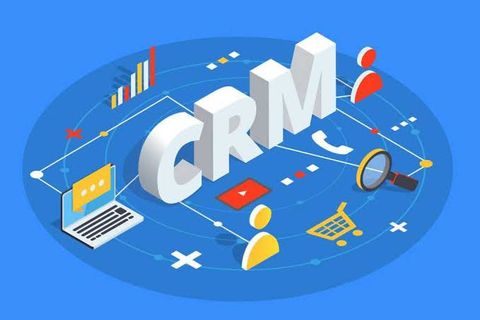
CRM Software for Business: Explore Customer Management, Automation and Sales Tools
Updated: November 06, 2026
Read More