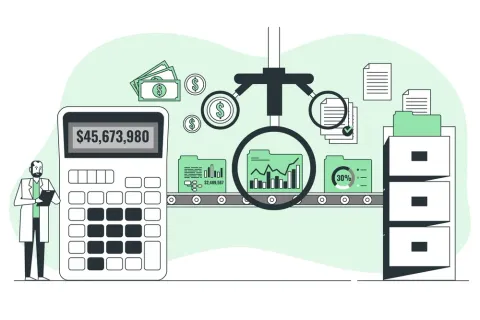
Accounting Services Guide: Bookkeeping, Financial Reporting, Tax Preparation, and Compliance
Accounting is the process of recording, organizing, analyzing, and reporting financial information. Businesses use accounting practices to understand revenue, expenses, assets, liabilities, cash flow, taxes, and overall financial performance.
Accounting activities can range from routine bookkeeping to financial reporting, tax preparation, payroll accounting, auditing support, and regulatory compliance.
Bookkeeping generally focuses on recording financial transactions, while accounting involves interpreting financial information and preparing reports that support business and tax decisions.
Common accounting activities include:
Bookkeeping and transaction recording
Accounts payable and accounts receivable
Bank and account reconciliation
Financial statement preparation
Tax preparation and reporting
Payroll accounting
Budgeting and forecasting
Financial analysis
Internal controls
Regulatory compliance
For businesses, accurate accounting records can provide a foundation for financial planning and reporting. The exact accounting requirements depend on the business structure, industry, location, size, and applicable tax rules.
Importance
Accounting matters because financial records provide information about how a business is performing and what obligations it may have.
Business owners, finance teams, investors, lenders, tax authorities, and other stakeholders can rely on financial information for different purposes.
Accurate records can help identify cash-flow patterns, outstanding receivables, operating expenses, tax obligations, and changes in assets and liabilities.
| Accounting area | Primary purpose |
|---|---|
| Bookkeeping | Record financial transactions |
| General ledger | Organize accounting entries |
| Bank reconciliation | Compare records with financial accounts |
| Accounts payable | Track amounts owed |
| Accounts receivable | Track amounts due |
| Financial reporting | Present financial performance and position |
| Tax preparation | Calculate and report applicable taxes |
| Payroll accounting | Record compensation and payroll-related liabilities |
| Budgeting | Plan expected income and expenses |
| Compliance | Support applicable reporting requirements |
Financial statements are particularly important. Common statements include the income statement, balance sheet, and cash flow statement.
The income statement generally summarizes revenue and expenses over a period. The balance sheet presents assets, liabilities, and equity at a specific point in time. The cash flow statement provides information about cash movements from operating, investing, and financing activities.
Recent Updates
Accounting technology continues to change rapidly, particularly through cloud accounting, automation, electronic invoicing, artificial intelligence, and integrated financial management platforms.
One major development is the growing use of automated transaction categorization and reconciliation. These tools can reduce repetitive data-entry tasks, although financial records still require appropriate review and oversight.
Artificial intelligence is also being incorporated into accounting workflows. Potential applications include anomaly detection, document extraction, invoice processing, financial analysis, and assistance with accounting research.
Another important development is the increasing adoption of electronic invoicing and digital tax reporting in jurisdictions around the world. Businesses operating internationally may need to understand different electronic reporting and indirect-tax requirements.
In the United States, federal tax reporting continues to move toward digital processes. The IRS has expanded electronic filing capabilities across many tax forms and continues to encourage taxpayers and businesses to use electronic methods where available. (irs.gov)
The IRS also continues to update tax forms, instructions, thresholds, and filing procedures each year, making current-year information important when preparing tax returns.
Accounting professionals are also paying increased attention to cybersecurity. Cloud accounting platforms, payroll systems, banking integrations, and tax records can contain sensitive financial information, making access controls, authentication, backups, and secure data handling important.
Laws or Policies
Accounting and tax requirements depend on the country, state or province, business structure, industry, and type of financial activity.
In the United States, businesses can have federal, state, and local tax obligations. The IRS provides guidance covering recordkeeping, business income, deductible expenses, employment taxes, estimated taxes, and different business structures. (irs.gov)
Businesses are generally expected to maintain records that support items reported on tax returns. The IRS explains that taxpayers should keep records sufficient to establish income, deductions, and credits reported on their returns. (irs.gov)
Financial reporting requirements can also depend on the organization's circumstances. Public companies in the United States are subject to Securities and Exchange Commission reporting requirements, while private companies can follow different reporting frameworks depending on their needs and applicable rules.
The Financial Accounting Standards Board (FASB) establishes accounting standards used by entities that follow U.S. Generally Accepted Accounting Principles (GAAP). (fasb.org)
Businesses may also have requirements involving payroll taxes, sales taxes, employment records, information reporting, and industry-specific regulations.
Because tax and accounting rules can change, businesses should use current government guidance and qualified accounting professionals when dealing with specific compliance obligations.
Tools and Resources
Modern accounting workflows can use software, spreadsheets, financial dashboards, document-management systems, and government resources.
Accounting software: Cloud-based accounting platforms can support transaction recording, invoicing, reconciliation, reporting, and financial data organization.
Spreadsheet tools: Spreadsheets can be useful for budgeting, financial analysis, reconciliation worksheets, and internal reporting.
Payroll systems: Payroll software can help calculate wages, deductions, payroll taxes, and related records, subject to applicable requirements.
Tax resources: The IRS provides business tax information, forms, publications, filing guidance, and electronic-filing resources. (irs.gov)
Financial reporting resources: FASB publishes accounting standards and related information for organizations using U.S. GAAP. (fasb.org)
Useful accounting records can include:
General ledgers
Bank statements
Invoices
Receipts
Payroll records
Tax returns
Expense records
Asset registers
Loan documentation
Reconciliation reports
Financial statements
Supporting documentation for deductions
Regular reconciliation and organized recordkeeping can make financial reporting and tax preparation easier to manage.
FAQs
What is the difference between bookkeeping and accounting?
Bookkeeping primarily involves recording and organizing financial transactions. Accounting generally includes broader activities such as financial analysis, reporting, reconciliation, tax preparation, and interpretation of financial information.
What are the main financial statements?
The three commonly used financial statements are the income statement, balance sheet, and cash flow statement. Each provides a different view of financial performance or financial position.
Why is financial reporting important?
Financial reporting provides structured information about revenue, expenses, assets, liabilities, equity, and cash flows. Businesses can use this information for planning, analysis, reporting, and decision-making.
How long should accounting records be kept?
The appropriate retention period depends on the type of record, applicable tax rules, business requirements, and jurisdiction. In the United States, the IRS provides specific recordkeeping guidance and recommends retaining records for the periods relevant to the tax documents they support. (irs.gov)
Can accounting software replace an accountant?
Accounting software can automate many routine tasks, but it does not eliminate the need for appropriate review, judgment, tax interpretation, financial analysis, or compliance oversight. The level of professional involvement depends on the business and its circumstances.
Conclusion
Accounting provides the financial foundation for recording transactions, preparing reports, managing tax information, and understanding business performance.
Bookkeeping, financial reporting, tax preparation, payroll accounting, reconciliation, budgeting, and compliance each address different aspects of financial management. Modern accounting software and automation can streamline repetitive processes, while professional judgment remains important for complex accounting and tax matters.
Businesses should establish organized recordkeeping practices, maintain supporting documentation, reconcile financial accounts regularly, and monitor applicable reporting deadlines.
Because tax laws, accounting standards, and reporting requirements can change, businesses should verify current requirements through relevant government and professional resources.

Related Post...

Retirement Income Planning Guide: Distribution Strategies, Tax Considerations, and Long-Term Planning
Updated: September 14, 2026
Read More
Accounts Receivable Management Guide: Collections, Invoicing, and Cash Flow Planning
Updated: September 18, 2026
Read More
Corporate Card Management Guide: Spending Controls, Reporting, and Employee Expenses
Updated: September 18, 2026
Read More