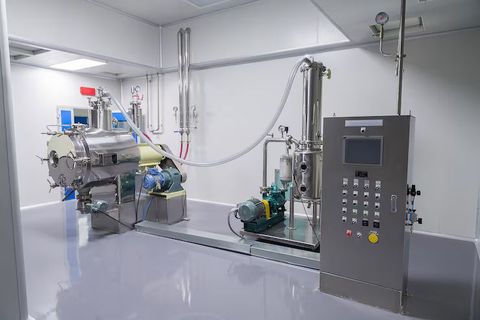
A homogenizer machine typically works by applying mechanical force, pressure, or ultrasonic energy to reduce particle size and ensure consistent distribution. This process helps improve texture, stability, and overall quality in various products. Different types of homogenizer machines exist, each suited for specific applications and materials.
Understanding how homogenizer machines function provides useful insight into many everyday products, from packaged foods to personal care items. Although the underlying technology can be complex, the purpose remains straightforward: to create a smooth, stable, and evenly blended mixture.
Importance
Homogenizer machines play a significant role in modern manufacturing and processing. Many industries rely on them to maintain product consistency, which is essential for safety, usability, and shelf stability.
In food processing, homogenization ensures that liquids like milk, sauces, and beverages maintain a uniform texture. Without this process, separation can occur, affecting both appearance and taste. In pharmaceuticals, homogenizer machines help produce stable formulations where active ingredients are evenly distributed, which is important for accurate dosing.
Some key reasons why homogenizer machines are important include:
- Improved product stability, reducing separation over time
- Enhanced texture, making products smoother and more appealing
- Better absorption, especially in pharmaceutical and cosmetic formulations
- Increased efficiency in mixing and processing
Homogenization also addresses practical challenges such as uneven particle sizes and inconsistent formulations. By creating uniform mixtures, manufacturers can maintain consistent quality across batches, which is essential for meeting regulatory standards and consumer expectations.
Recent Updates
Recent developments in homogenizer machines reflect broader trends in automation, sustainability, and precision engineering. Manufacturers are increasingly focusing on improving energy efficiency and reducing environmental impact.
One noticeable trend is the integration of digital controls and monitoring systems. Modern homogenizer machines often include sensors that track pressure, temperature, and flow rates in real time. This allows operators to maintain precise conditions during the homogenization process.
Another development is the use of high-pressure homogenizer machines for advanced applications. These systems are capable of producing extremely fine emulsions and nanoparticles, which are useful in biotechnology and advanced material research.
Current trends include:
- Adoption of automated systems for consistent operation
- Increased use of high-pressure homogenization in research and industry
- Development of compact designs for smaller production setups
- Focus on reducing energy consumption and waste
Ultrasonic homogenizer machines are also gaining attention for their ability to process delicate materials without excessive heat. This makes them suitable for applications where temperature sensitivity is a concern.
Laws or Policies
The use of homogenizer machines is influenced by various regulations depending on the industry and country. These regulations focus on safety, hygiene, and product quality.
In food processing, equipment must comply with food safety standards that ensure materials used in homogenizer machines do not contaminate products. Surfaces in contact with food are often required to be made of specific materials that are easy to clean and resistant to corrosion.
Pharmaceutical applications are subject to stricter guidelines. Homogenizer machines used in drug production must meet Good Manufacturing Practice (GMP) standards. These rules ensure that equipment operates reliably and that products remain consistent and safe for use.
Common regulatory considerations include:
- Equipment design and material safety
- Cleanability and maintenance requirements
- Process validation and documentation
- Worker safety standards during operation
In many countries, regulatory bodies provide guidelines on how homogenizer machines should be used and maintained. Compliance helps ensure that products meet safety and quality expectations.
Tools and Resources
Several tools and resources help individuals and organizations understand and work with homogenizer machines more effectively. These resources support both learning and practical application.
Educational platforms and technical guides provide detailed explanations of homogenization processes and machine types. These materials are useful for beginners as well as professionals seeking to deepen their understanding.
Simulation software and calculators can assist in estimating process parameters such as pressure levels, flow rates, and particle size reduction. These tools help users plan and optimize homogenization processes without extensive trial and error.
Common tools and resources include:
- Technical manuals that explain machine operation and maintenance
- Online calculators for pressure and flow estimation
- Industry publications covering trends and innovations
- Training modules focused on safe equipment handling
Below is a simple comparison table of common types of homogenizer machines and their typical uses:
| Type of Homogenizer Machine | Working Principle | Common Applications |
|---|---|---|
| High-pressure homogenizer | Forces liquid through narrow gaps under pressure | Dairy, beverages, pharmaceuticals |
| Ultrasonic homogenizer | Uses sound waves to break particles | Laboratory research, nanomaterials |
| Mechanical homogenizer | Uses blades or rotors for mixing | Cosmetics, food preparation |
| Microfluidizer | Uses microchannels for uniform particle size | Biotechnology, advanced materials |
These tools and resources help users better understand how different homogenizer machines function and where they are most effective.
FAQs
What is a homogenizer machine used for?
A homogenizer machine is used to create a uniform mixture by reducing particle size and evenly distributing components in a liquid. It is commonly used in food processing, pharmaceuticals, and cosmetics.
How does a high-pressure homogenizer machine work?
A high-pressure homogenizer machine forces liquid through a narrow space at high pressure. This process breaks down particles and creates a stable, uniform mixture with improved consistency.
What industries use homogenizer machines?
Homogenizer machines are used in several industries, including food and beverage production, pharmaceuticals, cosmetics, biotechnology, and chemical processing. Each industry uses different types based on specific needs.
Are ultrasonic homogenizer machines suitable for sensitive materials?
Ultrasonic homogenizer machines are often suitable for sensitive materials because they can process mixtures without generating excessive heat. This makes them useful for applications where temperature control is important.
What factors affect the performance of homogenizer machines?
Performance depends on factors such as pressure level, processing time, temperature, and the type of material being processed. Proper adjustment of these variables helps achieve consistent results.
Conclusion
Homogenizer machines are essential tools that help create stable and uniform mixtures across many industries. Their ability to improve consistency and quality makes them important in both everyday products and specialized applications. Advances in technology continue to refine how these machines operate, making them more efficient and precise. Understanding their purpose and function provides useful insight into modern manufacturing and processing systems.