A Complete Guide to AI Innovations in Robotics and Entertainment
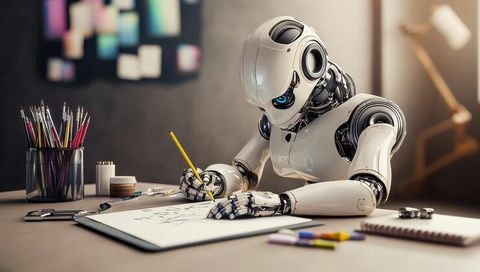
Artificial intelligence (AI) is changing how machines operate and how people experience entertainment. By combining machine learning, computer vision, natural language processing, and advanced robotics, developers are creating machines and digital characters that can understand instructions, respond to their surroundings, and perform increasingly complex activities.
Robotics traditionally focused on mechanical movements, programmed instructions, and repetitive operations. However, AI has introduced more flexible capabilities. Modern intelligent robots can recognize objects, interpret certain human gestures, process spoken instructions, and adjust their actions based on environmental information.
Entertainment is experiencing a similar transformation. Artificial intelligence is becoming part of video game development, animation, filmmaking, virtual characters, music production, and interactive attractions. These technologies allow creators to develop experiences that respond to audience preferences and real-time interactions.
The combination of AI and robotics creates opportunities across two connected industries:
Industrial and humanoid robotics: Intelligent machines that perform physical activities and interact with people.
Entertainment robotics: Robots designed for performances, attractions, exhibitions, and interactive experiences.
AI-powered gaming: Digital characters and environments that respond dynamically to players.
AI animation and filmmaking: Technologies that support visual effects, character development, video production, and storytelling.
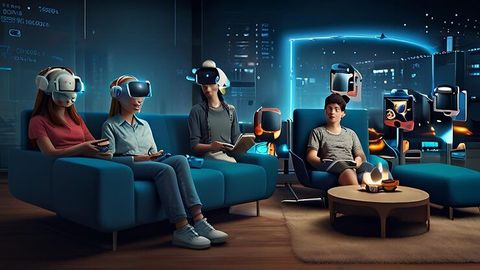
Interactive virtual experiences: Digital environments that combine conversational AI, simulated characters, and immersive technologies.
These developments demonstrate how artificial intelligence is moving beyond traditional computing and becoming part of physical and digital experiences.
Why AI-Powered Robotics and Entertainment Matter Today
Artificial intelligence matters because it helps machines process information, recognize patterns, and make decisions within defined operating conditions. In robotics, these capabilities can improve navigation, object recognition, movement planning, and human-machine interaction.
In entertainment, AI can help creators develop more responsive characters, personalized gaming experiences, and complex visual environments.
Improving Modern Robotics
AI-powered robotics is becoming increasingly relevant in manufacturing, healthcare environments, research laboratories, hospitality, and public entertainment spaces.
Traditional robots generally follow predefined instructions. AI-enabled robots can combine programmed actions with information collected through cameras, sensors, and other input systems.
Important applications include:
Humanoid robots: Machines designed with human-like physical structures for movement and interaction.
Autonomous navigation: Systems that identify obstacles and calculate suitable movement paths.
Computer vision: Technology that helps robots recognize objects, people, and environmental features.
Predictive maintenance: AI models that analyze machine information to identify possible equipment problems.
Collaborative robotics: Robots designed to operate alongside people within controlled environments.
These technologies can improve operational flexibility, although human supervision and physical safety measures remain important.
Transforming Gaming and Digital Entertainment
AI is also changing video game development and interactive entertainment.
Earlier games relied heavily on predefined character responses and scripted environments. Modern AI systems can support more dynamic interactions, allowing characters to respond to player instructions and changing situations.
Some important developments include:
Intelligent non-player characters (NPCs) with conversational capabilities.
Adaptive gaming environments that respond to player decisions.
AI-assisted animation and character design.
Procedural content generation for maps, objects, and virtual environments.
Automated testing to identify gameplay problems.
These developments can make digital experiences more interactive while helping development teams explore different creative approaches.
Supporting Creative Industries
Filmmakers, animators, musicians, and digital artists can use AI-powered production tools to experiment with visual concepts, sound, scripts, and character movements.
AI-assisted animation software and video generation systems can support early creative development. However, professional judgment remains important for storytelling, artistic direction, editing, and final production decisions.
Recent Developments in AI Robotics and Entertainment (2025–2026)
Developments during 2025 and 2026 demonstrate how AI is moving into practical entertainment environments rather than remaining limited to laboratory demonstrations.
Humanoid Robots Entering Entertainment Environments
On September 24, 2026, AGIBOT and Chimelong Group announced a large-scale deployment involving more than 300 robots at Chimelong Spaceship Park in Zhuhai, China.
The deployment combines entertainment, education, visitor interaction, and hotel operations. It demonstrates how embodied AI can coordinate physical machines across different public environments.
This development is significant because it moves beyond individual robot demonstrations toward coordinated deployments involving multiple machines.
Robot-Powered K-Pop Performances
On August 21, 2026, Galaxy Robot Park officially opened in Seoul, South Korea.
The entertainment facility featured AI-powered humanoid robots performing K-pop choreography and other activities. Visitors could also interact with robot dogs and participate in activities involving robotic performers.
This development illustrates how humanoid robotics, music, choreography, and interactive entertainment can be combined within a single attraction.
AI Robotics in Theme Park Experiences
On November 24, 2025, Walt Disney Imagineering revealed a robotic version of Olaf from the Frozen films.
The project demonstrated how advanced robotics and character design can bring familiar animated personalities into physical environments. Such developments highlight the potential of robotic characters in theme parks and immersive entertainment.
Advances in AI Video Generation
On May 20, 2025, Google DeepMind introduced Veo 3, Imagen 4, and Flow, expanding its generative media technologies.
These developments support AI-assisted video creation, image generation, and filmmaking workflows. They demonstrate how generative AI can help creative teams explore visual storytelling and production techniques.
AI-Powered Character Experiences
On June 3, 2026, Hasbro announced the launch of Sixth Wall, an AI-focused studio designed to develop interactive experiences around established entertainment characters.
The initiative introduced the concept of behavioral licensing, which addresses how recognizable characters can retain their established personalities and identities when used in AI-powered interactions.
Major Technology Trends
Technology | Development | Entertainment or robotics application |
|---|---|---|
Embodied AI | AI integrated with physical machines | Humanoid robots and interactive attractions |
Generative AI | Automated creation of digital content | Animation, video, and visual effects |
Computer vision | Recognition of visual information | Robot navigation and motion tracking |
Conversational AI | Natural language interaction | Intelligent game characters |
Motion capture AI | Analysis of human movement | Digital characters and animation |
Multi-robot coordination | Communication between multiple robots | Group performances and coordinated activities |
These developments suggest that the future of entertainment will increasingly combine physical robotics with intelligent digital technologies.
Laws, Regulations, and Government Policies Affecting AI Robotics and Entertainment
The development of AI-powered robotics and entertainment is influenced by regulations covering artificial intelligence, data protection, copyright, consumer safety, and intellectual property. Requirements differ between countries, so developers and entertainment organizations must consider the rules applicable to their operating locations.
European Union: Artificial Intelligence Act
The European Union's AI Act establishes a regulatory framework for artificial intelligence based on different levels of risk.
Important requirements include:
Transparency when people interact with certain AI systems.
Disclosure and identification requirements for certain AI-generated content.
Restrictions on prohibited AI practices.
Additional obligations for systems classified as high-risk.
Attention to data governance, safety, and human oversight.
As of August 2, 2026, most of the AI Act's general provisions and transparency requirements have entered their application phase. Some high-risk requirements have later implementation dates, including December 2027 and August 2028.
United States: Copyright and Digital Content
In the United States, copyright legislation affects AI-generated entertainment content, including music, films, animation, and digital characters.
The U.S. Copyright Office published the second part of its AI report on January 29, 2025. It explained that AI-generated material may qualify for copyright protection when sufficient human creative expression is present.
This distinction matters to filmmakers, animation studios, game developers, and digital artists who incorporate AI-generated material into their projects.
India: AI Governance and Digital Regulations
India is developing a framework for responsible AI adoption through its IndiaAI Mission and related governance initiatives.
On November 5, 2025, the Ministry of Electronics and Information Technology introduced the India AI Governance Guidelines. The framework emphasizes responsible innovation, transparency, accountability, and human-centered AI development.
India's Digital Personal Data Protection Act, 2023, is also relevant when AI applications process personal information, including information collected through interactive digital platforms.
Organizations developing robotics and entertainment technologies should consider:
Personal data protection and appropriate data handling.
Transparency about AI-generated characters and content.
Intellectual property rights and copyright compliance.
Physical safety when robots interact with audiences.
Responsible collection and processing of user information.
These policies provide an important foundation for developing AI technologies while considering individual rights and public safety.
Helpful AI Robotics and Entertainment Tools and Resources
Several platforms support the development, simulation, and production of AI-powered robotics and digital entertainment.
Robotics Development Platforms
1. NVIDIA Isaac Sim
A robotics simulation platform used for developing and testing robotic systems in virtual environments. It supports robotics research, simulation, and AI development.
2. ROS 2 (Robot Operating System 2)
An open-source robotics framework that supports communication between software components, sensors, and robotic hardware.
3. Unity
A real-time development platform used for interactive applications, virtual environments, simulation, and game development.
4. Unreal Engine
A real-time 3D development platform used for gaming, virtual production, animation, and immersive entertainment.
AI Content and Entertainment Tools
5. Blender
A 3D creation application used for modeling, animation, rendering, and visual effects.
6. Autodesk Maya
A professional 3D animation and modeling application used in film production, character animation, and visual effects.
7. Runway
An AI-powered creative platform supporting video generation, editing, and visual production workflows.
8. Google Veo
A generative video technology designed to create video content from text and other supported inputs.
9. ElevenLabs
An AI audio platform focused on voice generation, speech technology, and voice-based character experiences.
Important Areas to Explore
AI robotics simulation and testing.
Humanoid robot development.
Machine learning and computer vision.
AI animation software.
Game development and interactive storytelling.
Generative AI video production.
Motion capture and digital character design.
These resources help researchers, developers, and creative professionals understand the technologies connecting robotics and entertainment.
Frequently Asked Questions
How is AI changing modern robotics?
AI enables robots to recognize objects, understand certain instructions, navigate environments, and perform tasks with greater flexibility. It is increasingly used in humanoid robotics, manufacturing, research, and interactive entertainment.
How is artificial intelligence transforming video games?
AI supports intelligent non-player characters, adaptive environments, procedural content generation, automated testing, and personalized gameplay experiences. These technologies help developers create more interactive digital worlds.
Can AI-powered robots perform in entertainment events?
Yes. AI-powered robots can participate in dance performances, interactive exhibitions, theme park attractions, and live demonstrations. Their movements and responses can be coordinated through sensors, software, and robotic control systems.
What is the difference between AI and traditional robotics?
Traditional robotics primarily follows programmed instructions and predefined movements. AI-powered robotics combines programming with machine learning, computer vision, and decision-making capabilities to respond to changing information.
What challenges affect AI development in entertainment and robotics?
Major challenges include:
Physical safety and reliable robot operation.
Copyright and intellectual property concerns.
Data privacy and cybersecurity.
Development complexity and computing requirements.
Ethical questions surrounding AI-generated characters and human likenesses.
Maintaining human creativity and supervision.
Conclusion
Artificial intelligence is creating new possibilities for robotics and entertainment by connecting intelligent software with physical machines and digital experiences. Humanoid robots, interactive gaming characters, AI animation, and generative video technologies demonstrate how these industries are evolving.
Developments during 2025 and 2026 show increasing interest in combining robotics with live performances, theme parks, filmmaking, and interactive entertainment. However, safety, copyright protection, privacy, and responsible AI development remain important considerations.
As these technologies continue to advance, collaboration between engineers, researchers, filmmakers, game developers, and creative professionals will help shape the next generation of intelligent machines and entertainment experiences.

Related Post...
Global Cybersecurity Insights: Why Banks and Businesses Face Rising Threats
Updated: October 31, 2026
Read More
Discover How Alibaba Cloud's European Expansion Is Reshaping Cloud Competition
Updated: October 31, 2026
Read More
Explore Microsoft Copilot AI: Features, Benefits, Pricing and Usage
Updated: October 30, 2026
Read More