Originally introduced in the 1960s, industrial robots have evolved from simple mechanical arms into advanced systems integrated with artificial intelligence, sensors, and real-time data processing. Today, they are a core part of automation strategies in many sectorsfrom automotive manufacturing to electronics assembly and even food packaging.
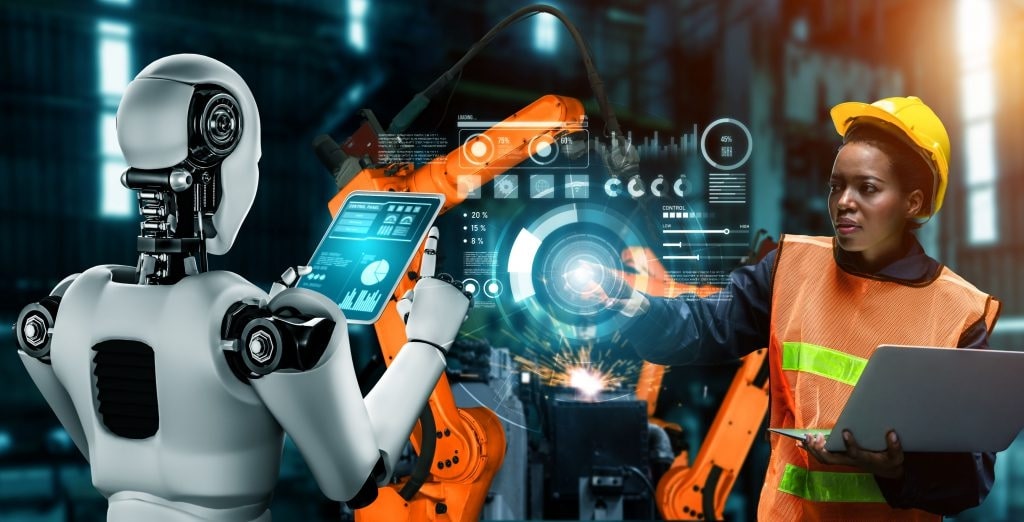
As we move further into the era of smart manufacturing and digital transformation, understanding industrial robots has become increasingly important for business owners, workers, and policymakers alike.
Why Industrial Robots Matter
Solving Modern Manufacturing Challenges
Industrial robots play a critical role in addressing several modern production and labor challenges:
Labor shortages: With declining working-age populations in countries like Japan, Germany, and South Korea, robots help fill gaps in industrial labor.
Precision and quality control: Robots provide consistent accuracy, reducing product defects and waste.
Operational efficiency: Automated systems can work 24/7 without fatigue, increasing production output.
Safety: Robots can handle dangerous tasks, reducing risks of injury in industrial settings.
Who Benefits?
Manufacturers: Improve efficiency, reduce costs, and maintain quality.
Employees: Freed from repetitive or dangerous tasks, employees can shift to supervisory or technical roles.
Consumers: Receive higher-quality, more consistent products.
Governments: Use automation to remain competitive in global manufacturing.
Recent Developments and Trends (2024–2025)
The field of industrial robotics continues to evolve rapidly. Here are some key updates from the past year:
1. Collaborative Robots (Cobots) Growth
Unlike traditional robots that are fenced off from humans, collaborative robots are designed to work safely alongside people. In 2024, cobot sales grew by over 20% globally (Source: IFR, December 2024), especially among small and medium-sized enterprises.
2. AI Integration and Vision Systems
Recent robots are increasingly equipped with AI algorithms and vision systems for adaptive decision-making. For example, robots can now inspect products for defects in real-time or adjust their path when encountering unexpected obstacles.
3. Rise in Flexible Manufacturing
Factories are shifting from mass production to flexible, demand-driven manufacturing, requiring robots that can quickly reprogram for different tasks. Modular robotic systems became popular in 2024 for this reason.
4. Robots in New Sectors
In addition to automotive and electronics, sectors like pharmaceuticals, agriculture, and construction have started to adopt robots for tasks like sorting, packaging, and 3D printing.
Laws, Standards, and Government Initiatives
Industrial robotics is subject to various regulations and incentives, especially related to workplace safety, data privacy, and labor impacts.
Global Safety Standards
ISO 10218: International safety requirements for industrial robots.
ISO/TS 15066: Safety standards specifically for collaborative robots.
Government Support Programs
| Country | Initiative/Policy | Focus Area |
|---|---|---|
| United States | Advanced Manufacturing Program (NIST) | R&D and robotics innovation |
| Germany | Industrie 4.0 (Federal Ministry for Economic Affairs) | Smart factories, robotic integration |
| Japan | Robot Strategy 2025 | AI + robotics for aging population |
| India | SAMARTH Udyog Bharat 4.0 | Automation in MSMEs |
| South Korea | Robot Industry Development Vision (2023) | Domestic robot manufacturing push |
Employment Regulations
Robotics implementation must comply with labor laws concerning:
Worker retraining and upskilling
Safe machine operation
Ethical AI and algorithm transparency
Helpful Tools and Resources
Whether you're a manufacturer exploring automation or a student learning the basics, these tools and platforms can help you get started.
Websites & Databases
IFR (International Federation of Robotics) – Industry statistics, reports, and news
Robotics Online – Educational resources, robot models, and case studies
Automation.com – Industry insights and technology trends
Software & Simulators
RoboDK – Offline programming and simulation for industrial robots
RobotStudio (ABB) – Realistic 3D simulation of robot tasks
Gazebo/ROS – Open-source tools used in academic and commercial robotics projects
Learning Platforms
Coursera & edX – Free and paid robotics courses from top universities
MIT OpenCourseWare – Introductory robotics classes
Udemy: Robotics for Beginners – Practical guides for entry-level learners
Certification Programs
RIA Certified Robot Integrator – Accreditation for companies and individuals working in robotics integration
SME Certified Manufacturing Technologist (CMfgT) – Includes automation and robotics modules
FAQs About Industrial Robots
Q1: Are industrial robots replacing human jobs?
A: Robots are more likely to change jobs than eliminate them. While they take over repetitive tasks, new roles emerge in programming, maintenance, and data analysis. Workforce reskilling is essential to this transition.
Q2: How safe are robots working near humans?
A: Modern collaborative robots follow strict safety standards (e.g., ISO/TS 15066). They include sensors and force-limiting technologies that prevent injuries.
Q3: What industries use industrial robots the most?
A: The top sectors include automotive, electronics, metal fabrication, food processing, and logistics. Newer applications are emerging in agriculture and healthcare.
Q4: Can small businesses afford to automate with robots?
A: Yes. The cost of entry-level robots has decreased, and modular or collaborative robots require less infrastructure, making them viable for small businesses.
Q5: What kind of education or training is needed to work with robots?
A: A background in mechanical, electrical, or software engineering is helpful, but many vocational programs offer targeted training. Certifications and hands-on experience with simulation tools are also valuable.
Final Thoughts: Looking Ahead at Automation
Industrial robots are shaping the next phase of global manufacturing. Their growing capabilities, affordability, and safety features are bringing automation within reach of more businesses and industries than ever before.
As technology progresses and labor markets shift, understanding how robots workand how to work with themwill become a basic skill in many careers. With the right resources and knowledge, anyone can begin exploring the potential of industrial automation.